• 文献检索
  • 文档翻译
  • 深度研究
  • 学术资讯
  • Suppr Zotero 插件Zotero 插件
  • 邀请有礼
  • 套餐&价格
  • 历史记录
应用&插件
Suppr Zotero 插件Zotero 插件浏览器插件Mac 客户端Windows 客户端微信小程序
定价
高级版会员购买积分包购买API积分包
服务
文献检索文档翻译深度研究API 文档MCP 服务
关于我们
关于 Suppr公司介绍联系我们用户协议隐私条款
关注我们

Suppr 超能文献

核心技术专利:CN118964589B侵权必究
粤ICP备2023148730 号-1Suppr @ 2026

文献检索

告别复杂PubMed语法,用中文像聊天一样搜索,搜遍4000万医学文献。AI智能推荐,让科研检索更轻松。

立即免费搜索

文件翻译

保留排版,准确专业,支持PDF/Word/PPT等文件格式,支持 12+语言互译。

免费翻译文档

深度研究

AI帮你快速写综述,25分钟生成高质量综述,智能提取关键信息,辅助科研写作。

立即免费体验

基于有序决策树的集成方法:以控制COVID-19疫情的每日局部增长率为例。

Ordinal Decision-Tree-Based Ensemble Approaches: The Case of Controlling the Daily Local Growth Rate of the COVID-19 Epidemic.

作者信息

Singer Gonen, Marudi Matan

机构信息

Faculty of Engineering, Bar-Ilan University, Ramat-Gan 52900, Israel.

Department of Industrial Engineering, Tel-Aviv University, Tel Aviv-Yafo 39040, Israel.

出版信息

Entropy (Basel). 2020 Aug 7;22(8):871. doi: 10.3390/e22080871.

DOI:10.3390/e22080871
PMID:33286642
原文链接:https://pmc.ncbi.nlm.nih.gov/articles/PMC7517475/
Abstract

In this research, we develop ordinal decision-tree-based ensemble approaches in which an objective-based information gain measure is used to select the classifying attributes. We demonstrate the applicability of the approaches using AdaBoost and random forest algorithms for the task of classifying the regional daily growth factor of the spread of an epidemic based on a variety of explanatory factors. In such an application, some of the potential classification errors could have critical consequences. The classification tool will enable the spread of the epidemic to be tracked and controlled by yielding insights regarding the relationship between local containment measures and the daily growth factor. In order to benefit maximally from a variety of ordinal and non-ordinal algorithms, we also propose an ensemble majority voting approach to combine different algorithms into one model, thereby leveraging the strengths of each algorithm. We perform experiments in which the task is to classify the daily COVID-19 growth rate factor based on environmental factors and containment measures for 19 regions of Italy. We demonstrate that the ordinal algorithms outperform their non-ordinal counterparts with improvements in the range of 6-25% for a variety of common performance indices. The majority voting approach that combines ordinal and non-ordinal models yields a further improvement of between 3% and 10%.

摘要

在本研究中,我们开发了基于有序决策树的集成方法,其中使用基于目标的信息增益度量来选择分类属性。我们展示了这些方法在使用AdaBoost和随机森林算法根据各种解释因素对流行病传播的区域每日增长因子进行分类任务中的适用性。在这样的应用中,一些潜在的分类错误可能会产生严重后果。该分类工具将通过提供有关局部遏制措施与每日增长因子之间关系的见解,使流行病的传播得以跟踪和控制。为了从各种有序和无序算法中最大程度地受益,我们还提出了一种集成多数投票方法,将不同算法组合成一个模型,从而利用每种算法的优势。我们进行了实验,任务是根据意大利19个地区的环境因素和遏制措施对每日新冠病毒增长率因子进行分类。我们证明,对于各种常见性能指标,有序算法的表现优于无序算法,改进幅度在6%至25%之间。结合有序和无序模型的多数投票方法进一步提高了3%至10%。
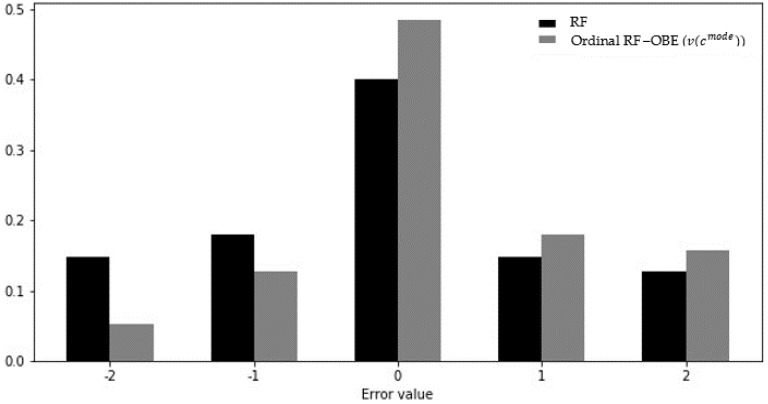
https://cdn.ncbi.nlm.nih.gov/pmc/blobs/6e78/7517475/737ac0a10340/entropy-22-00871-g007.jpg
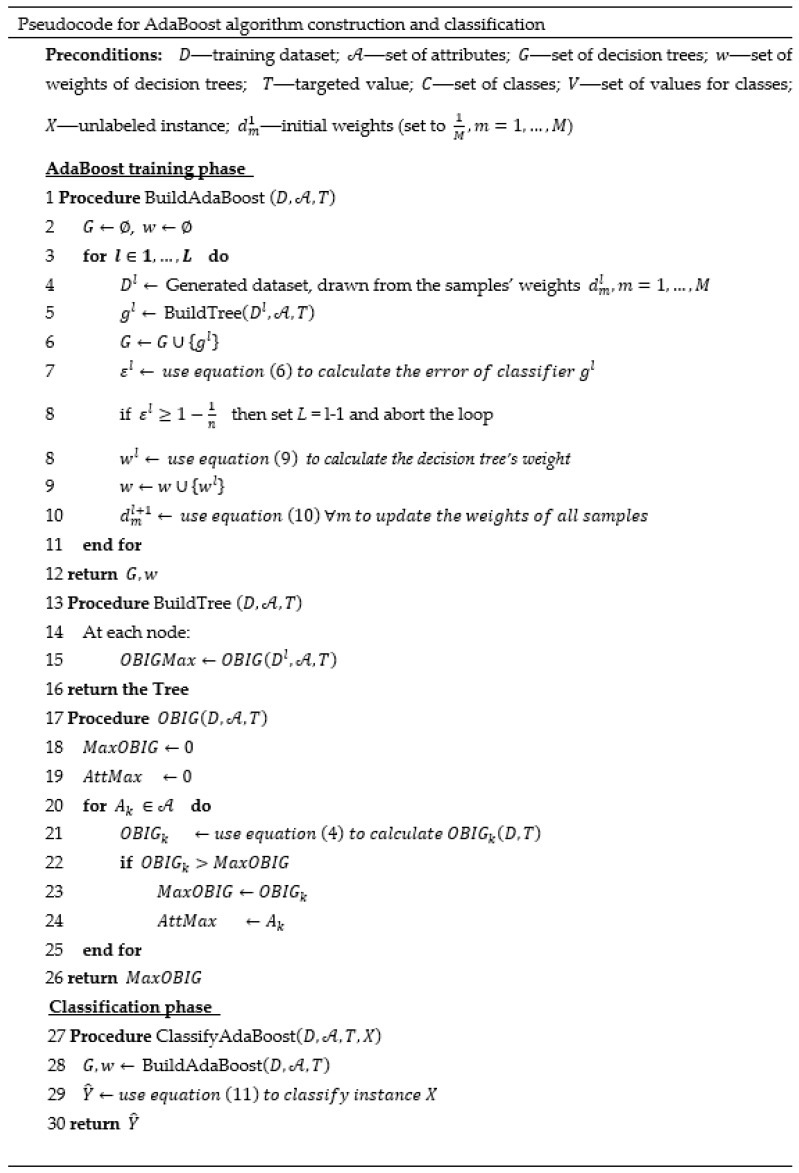
https://cdn.ncbi.nlm.nih.gov/pmc/blobs/6e78/7517475/8e3dd97c4416/entropy-22-00871-g001.jpg
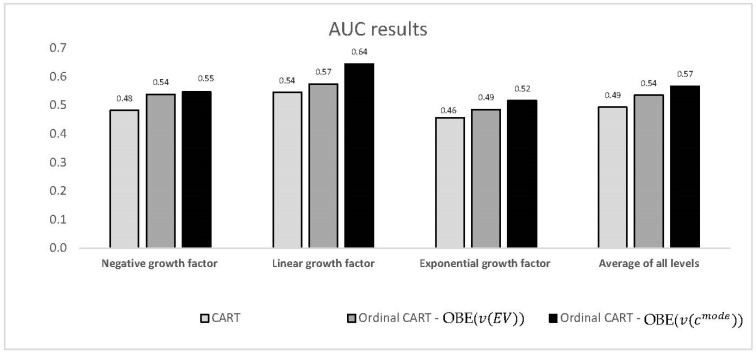
https://cdn.ncbi.nlm.nih.gov/pmc/blobs/6e78/7517475/9697a36ae9fc/entropy-22-00871-g002.jpg
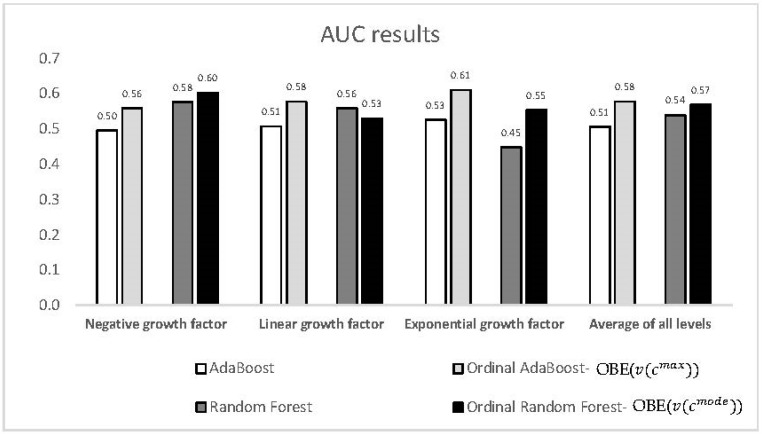
https://cdn.ncbi.nlm.nih.gov/pmc/blobs/6e78/7517475/a2ef85e29071/entropy-22-00871-g003.jpg
https://cdn.ncbi.nlm.nih.gov/pmc/blobs/6e78/7517475/8f4205cd2aa9/entropy-22-00871-g004.jpg
https://cdn.ncbi.nlm.nih.gov/pmc/blobs/6e78/7517475/c5a7ad446028/entropy-22-00871-g005.jpg
https://cdn.ncbi.nlm.nih.gov/pmc/blobs/6e78/7517475/6321b7a04987/entropy-22-00871-g006.jpg
https://cdn.ncbi.nlm.nih.gov/pmc/blobs/6e78/7517475/737ac0a10340/entropy-22-00871-g007.jpg
https://cdn.ncbi.nlm.nih.gov/pmc/blobs/6e78/7517475/8e3dd97c4416/entropy-22-00871-g001.jpg
https://cdn.ncbi.nlm.nih.gov/pmc/blobs/6e78/7517475/9697a36ae9fc/entropy-22-00871-g002.jpg
https://cdn.ncbi.nlm.nih.gov/pmc/blobs/6e78/7517475/a2ef85e29071/entropy-22-00871-g003.jpg
https://cdn.ncbi.nlm.nih.gov/pmc/blobs/6e78/7517475/8f4205cd2aa9/entropy-22-00871-g004.jpg
https://cdn.ncbi.nlm.nih.gov/pmc/blobs/6e78/7517475/c5a7ad446028/entropy-22-00871-g005.jpg
https://cdn.ncbi.nlm.nih.gov/pmc/blobs/6e78/7517475/6321b7a04987/entropy-22-00871-g006.jpg
https://cdn.ncbi.nlm.nih.gov/pmc/blobs/6e78/7517475/737ac0a10340/entropy-22-00871-g007.jpg

相似文献

1
Ordinal Decision-Tree-Based Ensemble Approaches: The Case of Controlling the Daily Local Growth Rate of the COVID-19 Epidemic.基于有序决策树的集成方法:以控制COVID-19疫情的每日局部增长率为例。
Entropy (Basel). 2020 Aug 7;22(8):871. doi: 10.3390/e22080871.
2
A Hybrid Ensemble Algorithm Combining AdaBoost and Genetic Algorithm for Cancer Classification with Gene Expression Data.一种结合AdaBoost和遗传算法的混合集成算法用于基于基因表达数据的癌症分类
IEEE/ACM Trans Comput Biol Bioinform. 2021 May-Jun;18(3):863-870. doi: 10.1109/TCBB.2019.2952102. Epub 2021 Jun 3.
3
Comparison of ordinal and nominal classification trees to predict ordinal expert-based occupational exposure estimates in a case-control study.在一项病例对照研究中,比较有序分类树和名义分类树以预测基于专家的有序职业暴露估计值。
Ann Occup Hyg. 2015 Apr;59(3):324-35. doi: 10.1093/annhyg/meu098. Epub 2014 Nov 27.
4
Classification of genomic islands using decision trees and their ensemble algorithms.基于决策树及其集成算法的基因组岛分类。
BMC Genomics. 2010 Nov 2;11 Suppl 2(Suppl 2):S1. doi: 10.1186/1471-2164-11-S2-S1.
5
Analysis of Parkinson's Disease Using an Imbalanced-Speech Dataset by Employing Decision Tree Ensemble Methods.使用决策树集成方法对不均衡语音数据集进行帕金森病分析。
Diagnostics (Basel). 2022 Nov 30;12(12):3000. doi: 10.3390/diagnostics12123000.
6
Decision Tree Integration Using Dynamic Regions of Competence.使用动态能力区域的决策树集成
Entropy (Basel). 2020 Oct 5;22(10):1129. doi: 10.3390/e22101129.
7
Oblique and rotation double random forest.倾斜和旋转双重随机森林。
Neural Netw. 2022 Sep;153:496-517. doi: 10.1016/j.neunet.2022.06.012. Epub 2022 Jun 18.
8
Homogeneous Adaboost Ensemble Machine Learning Algorithms with Reduced Entropy on Balanced Data.基于平衡数据上具有降低熵的同质自适应提升集成机器学习算法
Entropy (Basel). 2023 Jan 29;25(2):245. doi: 10.3390/e25020245.
9
Application of decision tree-based ensemble learning in the classification of breast cancer.基于决策树的集成学习在乳腺癌分类中的应用。
Comput Biol Med. 2021 Jan;128:104089. doi: 10.1016/j.compbiomed.2020.104089. Epub 2020 Oct 31.
10
Empirical study of seven data mining algorithms on different characteristics of datasets for biomedical classification applications.生物医学分类应用中不同数据集特征的七种数据挖掘算法的实证研究。
Biomed Eng Online. 2017 Nov 2;16(1):125. doi: 10.1186/s12938-017-0416-x.

引用本文的文献

1
A flexible employee recruitment and compensation model: A bi-level optimization approach.一种灵活的员工招聘与薪酬模型:一种双层优化方法。
Comput Ind Eng. 2022 Mar;165:107916. doi: 10.1016/j.cie.2021.107916. Epub 2021 Dec 31.
2
Empirical Study on Classifiers for Earlier Prediction of COVID-19 Infection Cure and Death Rate in the Indian States.关于印度各邦新冠病毒感染治愈率和死亡率早期预测分类器的实证研究
Healthcare (Basel). 2022 Jan 2;10(1):85. doi: 10.3390/healthcare10010085.
3
Mesoscopic Modeling and Rapid Simulation of Incremental Changes in Epidemic Scenarios on GPUs: Fast What-If Analyses of Localized and Dynamic Effects.

本文引用的文献

1
An Objective-Based Entropy Approach for Interpretable Decision Tree Models in Support of Human Resource Management: The Case of Absenteeism at Work.一种基于目标的熵方法用于支持人力资源管理的可解释决策树模型:以工作缺勤为例
Entropy (Basel). 2020 Jul 27;22(8):821. doi: 10.3390/e22080821.
2
Decision Tree Ensemble Method for Analyzing Traffic Accidents of Novice Drivers in Urban Areas.用于分析城市地区新手驾驶员交通事故的决策树集成方法。
Entropy (Basel). 2019 Apr 3;21(4):360. doi: 10.3390/e21040360.
3
Effects of temperature and humidity on the spread of COVID-19: A systematic review.
基于图形处理器的疫情场景增量变化的介观建模与快速模拟:局部和动态效应的快速假设分析
J Indian Inst Sci. 2021;101(3):357-370. doi: 10.1007/s41745-021-00253-1. Epub 2021 Aug 3.
4
Performance evaluation of selected decision tree algorithms for COVID-19 diagnosis using routine clinical data.使用常规临床数据对选定的决策树算法进行COVID-19诊断的性能评估。
Med J Islam Repub Iran. 2021 Mar 1;35:29. doi: 10.47176/mjiri.35.29. eCollection 2021.
5
NSGA-II as feature selection technique and AdaBoost classifier for COVID-19 prediction using patient's symptoms.使用患者症状,将非支配排序遗传算法II作为特征选择技术以及将自适应增强算法分类器用于新冠肺炎预测。
Nonlinear Dyn. 2021;106(2):1453-1475. doi: 10.1007/s11071-021-06504-1. Epub 2021 May 18.
温度和湿度对 COVID-19 传播的影响:系统评价。
PLoS One. 2020 Sep 18;15(9):e0238339. doi: 10.1371/journal.pone.0238339. eCollection 2020.
4
Modified SEIR and AI prediction of the epidemics trend of COVID-19 in China under public health interventions.公共卫生干预下中国新冠疫情趋势的改进型SEIR模型及人工智能预测
J Thorac Dis. 2020 Mar;12(3):165-174. doi: 10.21037/jtd.2020.02.64.
5
Phase-adjusted estimation of the number of Coronavirus Disease 2019 cases in Wuhan, China.中国武汉2019冠状病毒病病例数的相位调整估计。
Cell Discov. 2020 Feb 24;6:10. doi: 10.1038/s41421-020-0148-0. eCollection 2020.
6
A mathematical model for simulating the phase-based transmissibility of a novel coronavirus.一种用于模拟新型冠状病毒基于相位的传染性的数学模型。
Infect Dis Poverty. 2020 Feb 28;9(1):24. doi: 10.1186/s40249-020-00640-3.
7
Estimating epidemic exponential growth rate and basic reproduction number.估算疫情指数增长率和基本再生数。
Infect Dis Model. 2020 Jan 8;5:129-141. doi: 10.1016/j.idm.2019.12.009. eCollection 2020.
8
Adequacy of SEIR models when epidemics have spatial structure: Ebola in Sierra Leone.当传染病具有空间结构时 SEIR 模型的充分性:塞拉利昂的埃博拉疫情。
Philos Trans R Soc Lond B Biol Sci. 2019 Jun 24;374(1775):20180282. doi: 10.1098/rstb.2018.0282.
9
Spatial spread of the West Africa Ebola epidemic.西非埃博拉疫情的空间传播。
R Soc Open Sci. 2016 Aug 3;3(8):160294. doi: 10.1098/rsos.160294. eCollection 2016 Aug.
10
How to Estimate Epidemic Risk from Incomplete Contact Diaries Data?如何从不完整的接触记录数据中估算疫情风险?
PLoS Comput Biol. 2016 Jun 24;12(6):e1005002. doi: 10.1371/journal.pcbi.1005002. eCollection 2016 Jun.