Department of Pharmacology, Phramongkutklao College of Medicine, Bangkok 10400, Thailand.
Kulliyyah of Pharmacy, International Islamic University Malaysia, Kuantan Campus, Bandar Indera Mahkota, Kuantan 25200, Pahang Darul Makmur, Malaysia.
Toxins (Basel). 2020 Dec 3;12(12):766. doi: 10.3390/toxins12120766.
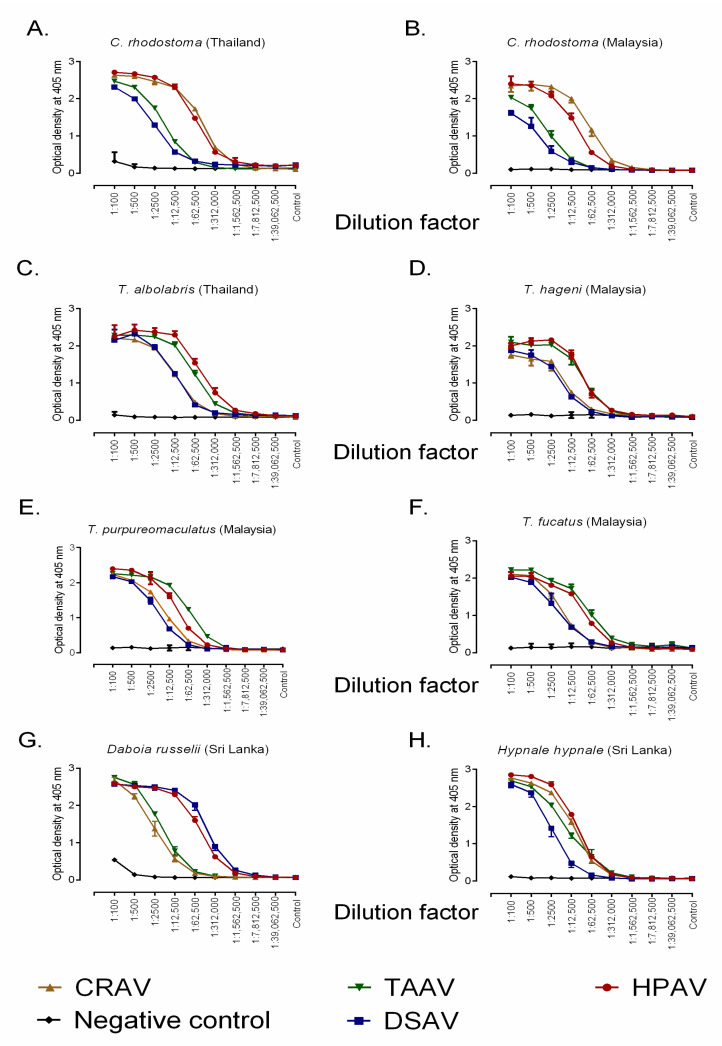
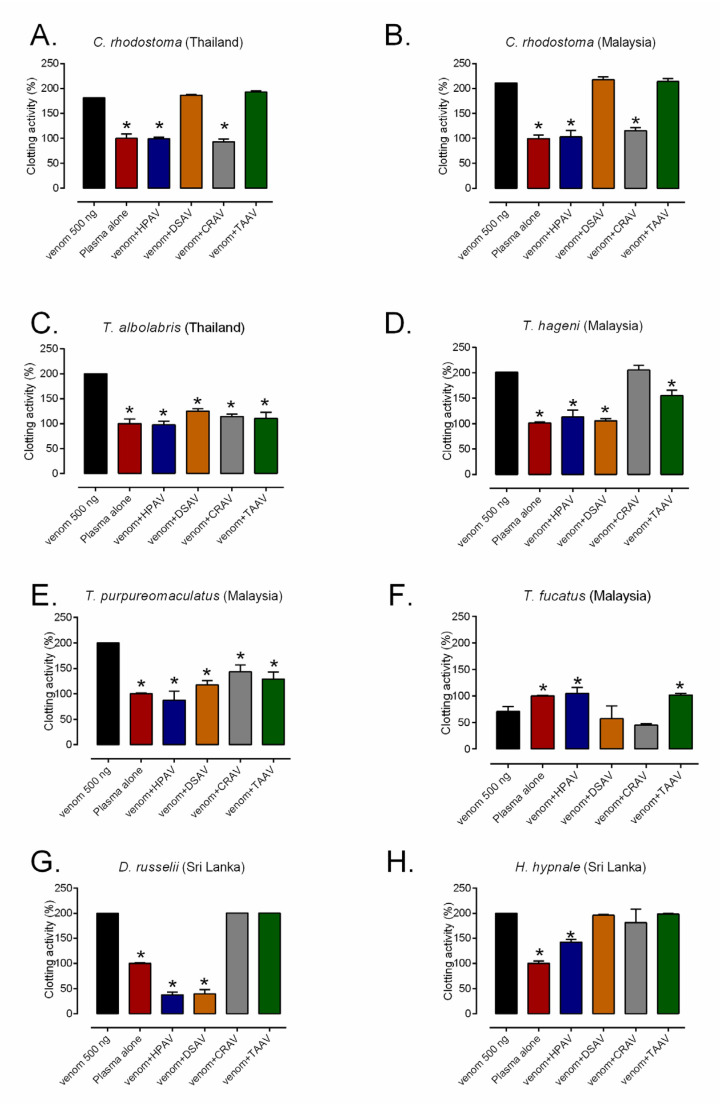
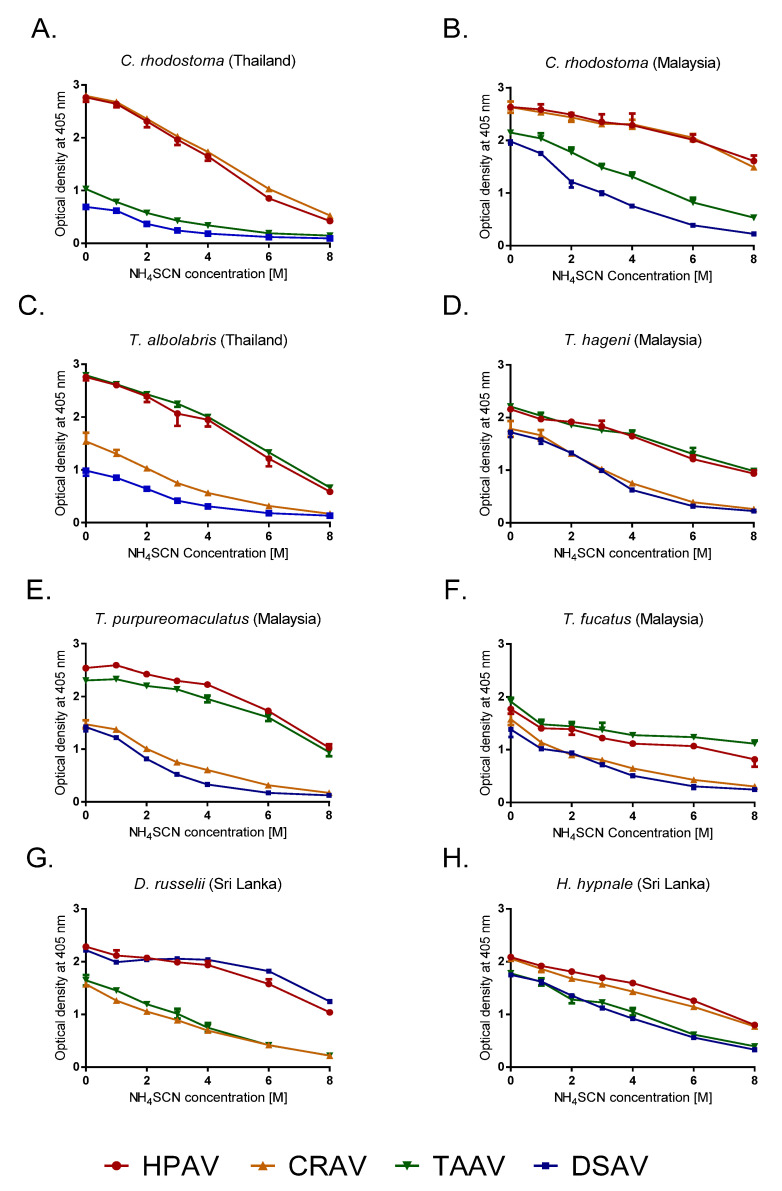
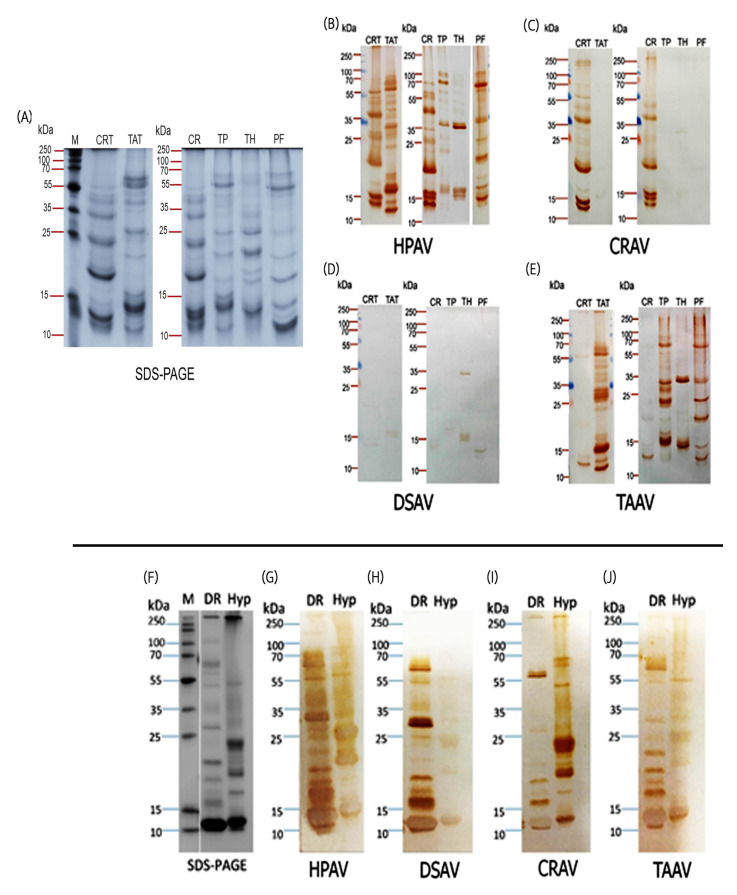
The intravenous administration of polyclonal antibodies known as antivenom is the only effective treatment for snakebite envenomed victims, but because of inter-specific variation in the toxic components of snake venoms, these therapies have variable efficacies against different snake species and/or different populations of the same species. In this study, we sought to characterize the in vitro venom binding capability and in vitro cross-neutralizing activity of antivenom, specifically the Hemato Polyvalent antivenom (HPAV; The Queen Saovabha Memorial Institute (QSMI) of the Thai Red Cross Society, Thailand) and three monovalent antivenoms (QSMI) specific to , and venoms, against a variety of South Asian and Southeast Asian viper venoms (, , , , , and ). Using ELISA and immunoblotting approaches, we find that the majority of protein components in the viper venoms were recognized and bound by the HPAV polyvalent antivenom, while the monospecific antivenom made against extensively recognized toxins present in the venom of related species, , and . In vitro coagulation assays using bovine plasma revealed similar findings, with HPAV antivenom significantly inhibiting the coagulopathic activities of all tested viper venoms and antivenom inhibiting the venoms from Malaysian arboreal pit vipers. We also show that the monovalent antivenom exhibits highly comparable levels of immunological binding and in vitro venom neutralization to venom from both Thailand and Malaysia, despite previous reports of considerable intraspecific venom variation. Our findings suggest that Thai antivenoms from QSMI may by useful therapeutics for managing snake envenomings caused by a number of Southeast Asian viper species and populations for which no specific antivenom currently exists and thus should be explored further to assess their clinical utility in treating snakebite victims.
静脉注射多克隆抗体(抗蛇毒血清)是治疗蛇咬伤中毒的唯一有效方法,但由于蛇毒中有毒成分的种间差异,这些疗法对不同种类的蛇和/或同一物种的不同种群的疗效各不相同。在这项研究中,我们试图描述抗蛇毒血清的体外毒液结合能力和体外交叉中和活性,特别是抗蛇毒多价血清(Hemato Polyvalent antivenom,HPAV;泰国红十字会女王 Saovabha 纪念研究所(QSMI),泰国)和三种单价抗蛇毒血清(QSMI)针对、和毒液,针对各种南亚和东南亚蝮蛇毒液(、、、、、和)。使用 ELISA 和免疫印迹方法,我们发现大多数蛋白成分在蝮蛇毒液中被 HPAV 多价抗蛇毒血清识别和结合,而针对相关物种毒液中存在的毒素特异性产生的单价抗蛇毒血清广泛识别。使用牛血浆进行的体外凝血测定也得出了类似的发现,HPAV 抗蛇毒血清显著抑制所有测试的蝮蛇毒液的凝血病变活性,而 抗蛇毒血清抑制来自马来西亚树栖坑蝮蛇的毒液。我们还表明,单价 抗蛇毒血清对来自泰国和马来西亚的毒液表现出高度可比的免疫结合和体外毒液中和水平,尽管之前有报道称种内毒液存在相当大的变异。我们的研究结果表明,来自 QSMI 的泰国抗蛇毒血清可能对治疗由于缺乏特异性抗蛇毒血清而导致的一些东南亚蝮蛇物种和种群的蛇咬伤中毒有用,因此应该进一步探索以评估其在治疗蛇咬伤患者中的临床应用价值。