Department of Urology, Beijing Friendship Hospital, Capital Medical University , Beijing, China.
Department of Pathology, Capital Medical University , Beijing, China.
Bioengineered. 2020 Dec;11(1):1350-1367. doi: 10.1080/21655979.2020.1843834.
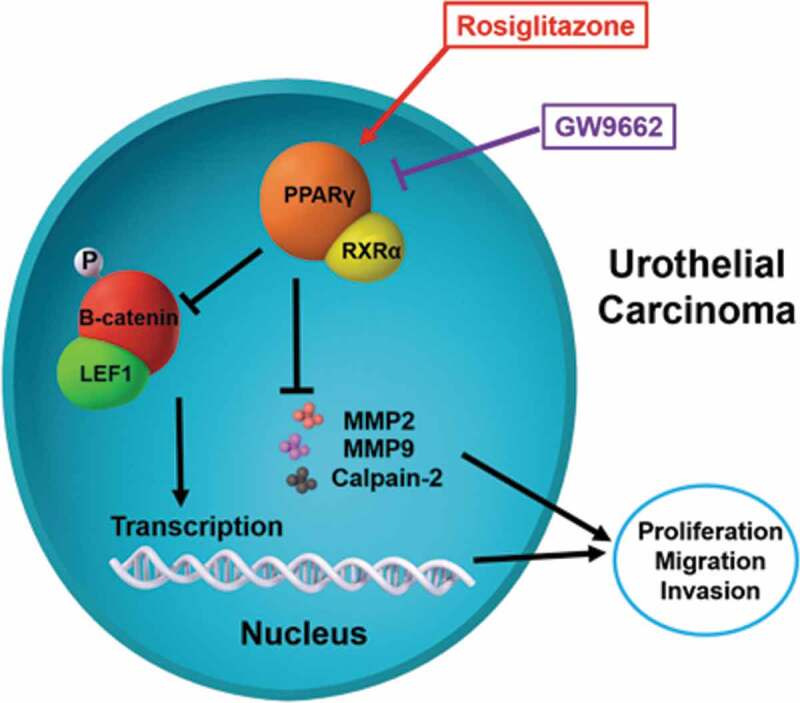
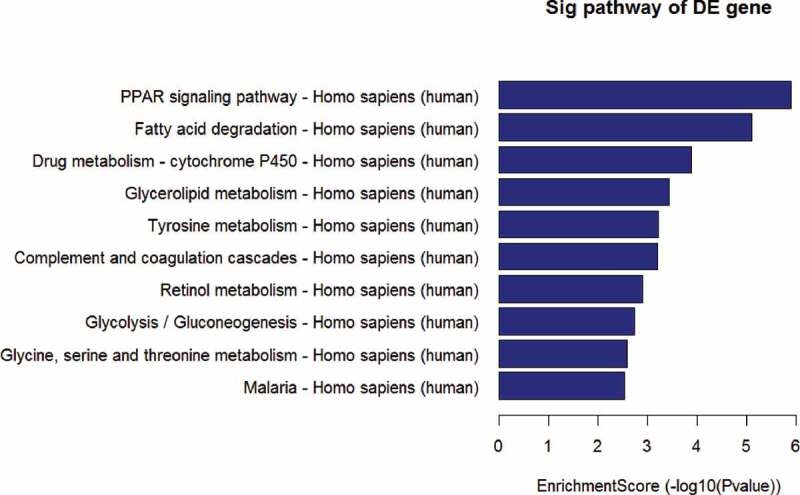
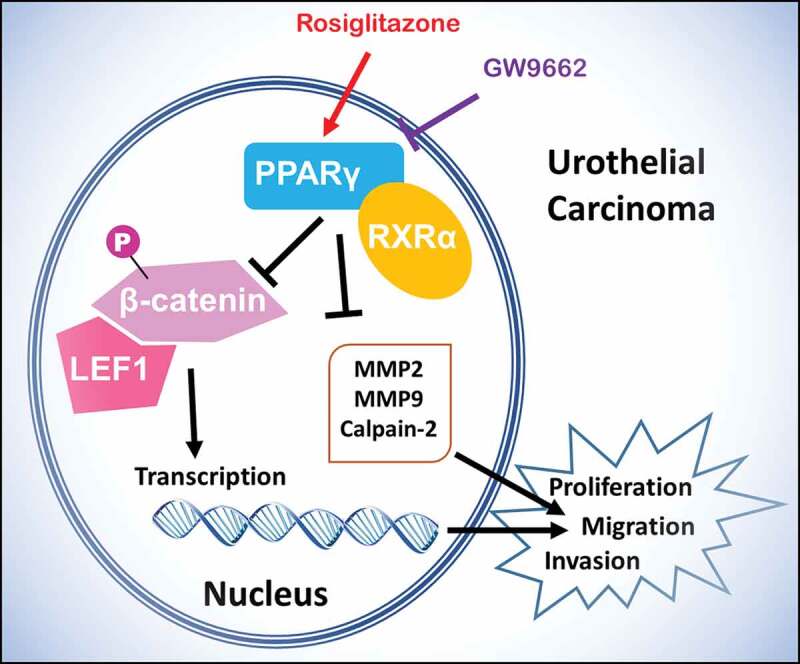
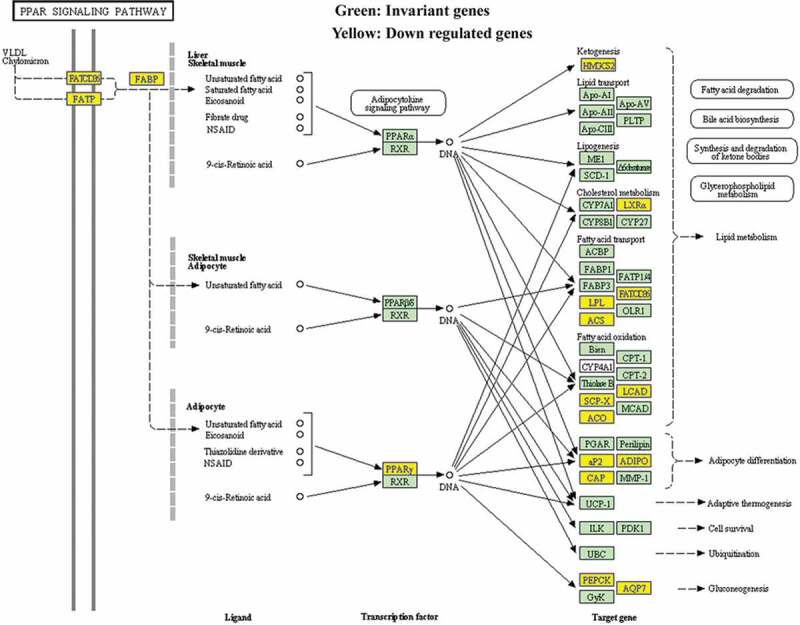
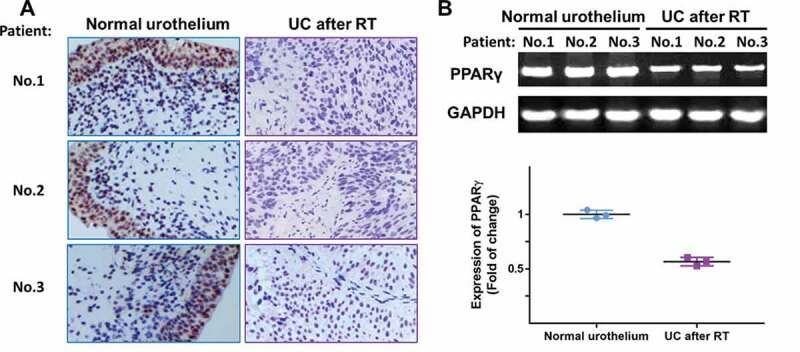
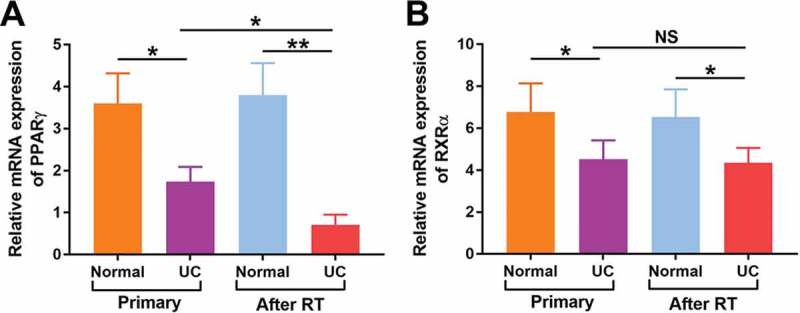
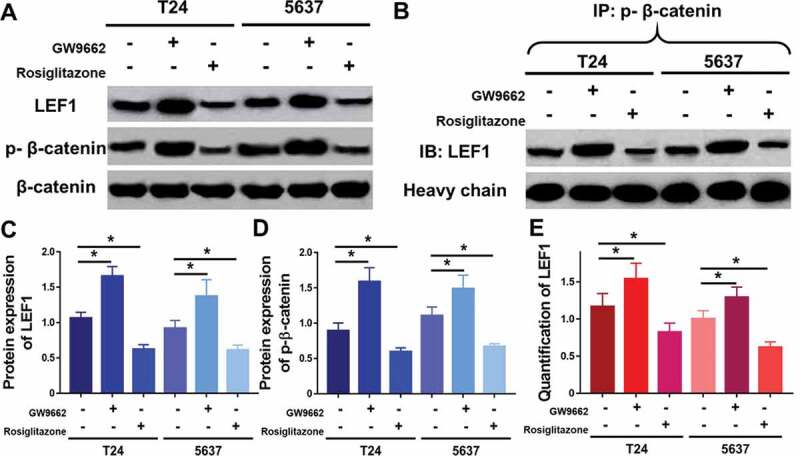
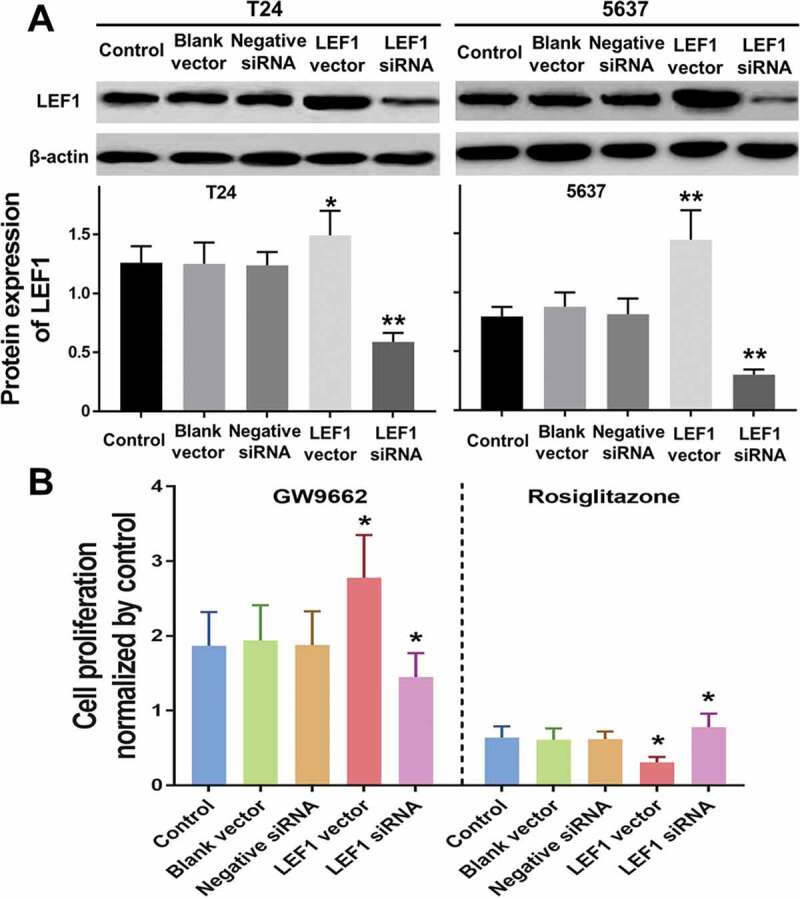
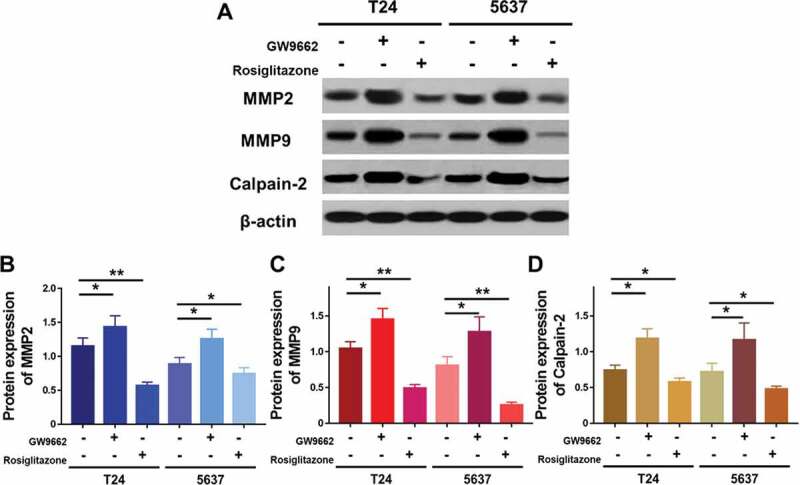
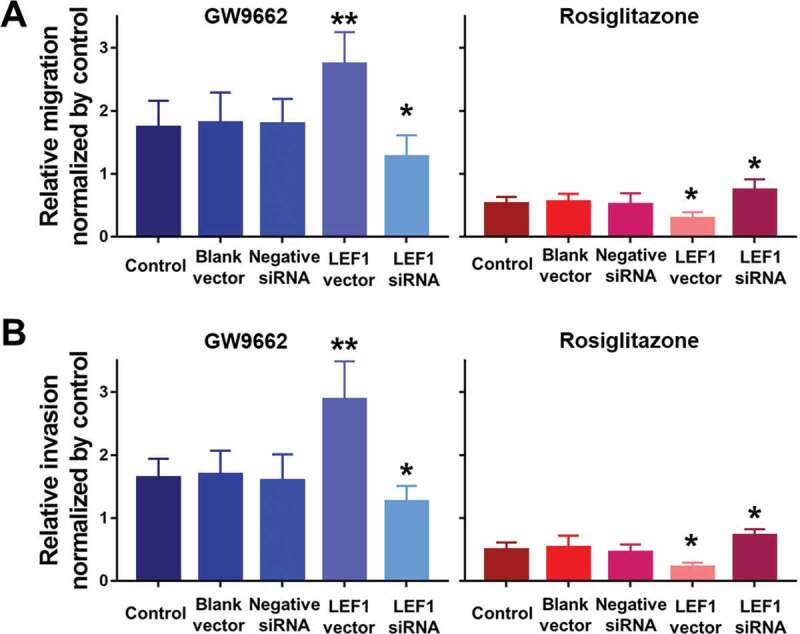
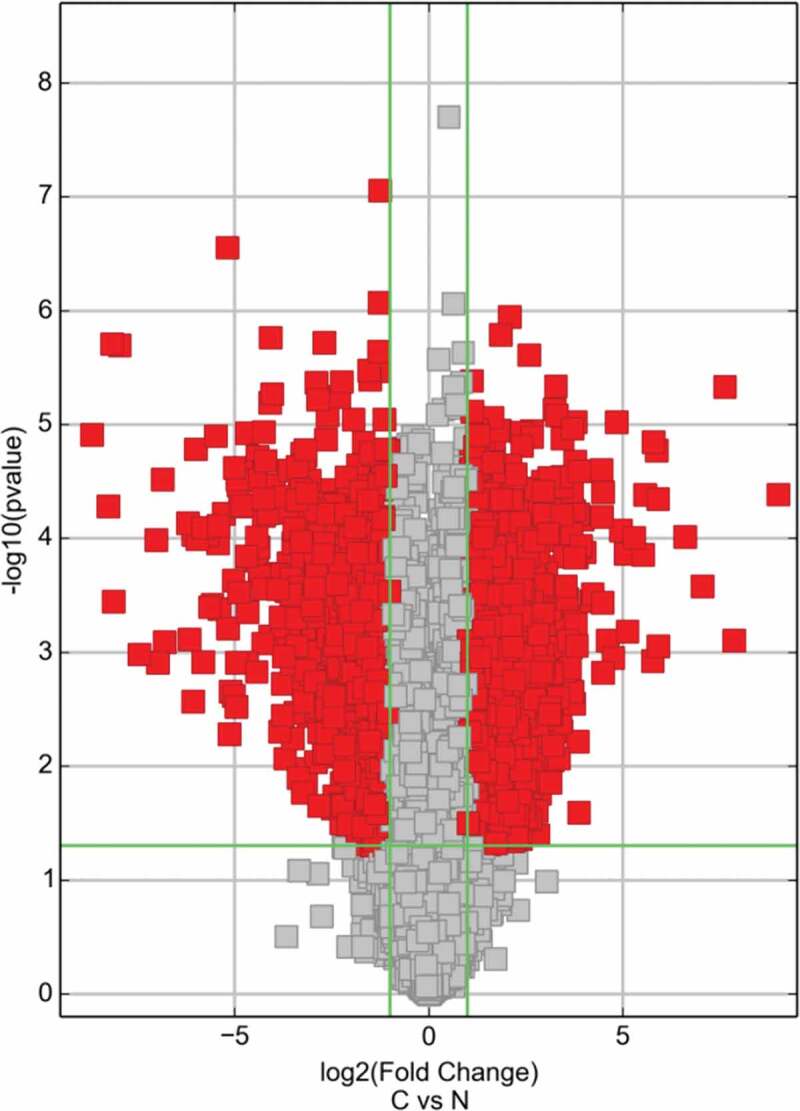
This study is to investigate the role of peroxisome proliferator-activated receptor γ (PPARγ) in the progression of urothelial carcinoma (UC) after renal transplants (RT). A total of 114 UC patients were gathered, including 60 cases of primary UC and 54 cases UC after RT. RT-PCR was used to detect the mRNA expression of the 54 patients with UC after RT, and immunohistochemistry and western blot were used to examine the protein expression. The proliferative ability of two UC cell lines, and 5637, were measured by WST-1 assay. Transwell system was used to analyze the migration and invasion of UC cells. PPARγ agonist Rosiglitazone and the antagonist GW9662 were used to alter the PPARγ expression. siRNA targeting LEF1 and expression vector containing full-length cDNA of LEF1 regulated the expression of LEF1. Pathway analysis indicated that PPARγ expression was significantly down regulated. Compared with normal urothelium and primary UC, the expression of PPARγ in UC was significantly decreased in RT group. PPARγ expression was correlated with tumor size, clinical stage, pathological and recurrence. PPARγ inactivates LEF1/β-catenin signaling in UC cells. PPARγ decreased the protein expression of MMP2, and calpain-2. PPARγ suppresses the proliferation, and invasion of UC cells depending on the expression of LEF1. PPARγ inhibited tumor proliferation and metastasis by inhibiting LEF1/β-catenin signaling, and the expression of PPARγ in UC after RT decreased significantly. Our findings also suggested that PPARγ may be a potential biomarker for the diagnosis of UC after RT.
本研究旨在探讨过氧化物酶体增殖物激活受体γ(PPARγ)在肾移植(RT)后尿路上皮癌(UC)进展中的作用。共收集了 114 例 UC 患者,其中原发性 UC 患者 60 例,RT 后 UC 患者 54 例。采用 RT-PCR 检测 54 例 RT 后 UC 患者的 mRNA 表达,采用免疫组化和 Western blot 检测蛋白表达。采用 WST-1 法检测两种 UC 细胞系 5637 的增殖能力。Transwell 系统用于分析 UC 细胞的迁移和侵袭。使用 PPARγ激动剂罗格列酮和拮抗剂 GW9662改变 PPARγ表达。用靶向 LEF1 的 siRNA 和含有 LEF1 全长 cDNA 的表达载体调节 LEF1 的表达。通路分析表明 PPARγ 表达明显下调。与正常尿路上皮和原发性 UC 相比,RT 组 UC 中 PPARγ的表达明显降低。PPARγ 的表达与肿瘤大小、临床分期、病理和复发有关。PPARγ 在 UC 细胞中失活 LEF1/β-catenin 信号。PPARγ 降低了 MMP2 和钙蛋白酶-2 的蛋白表达。PPARγ 依赖于 LEF1 的表达抑制 UC 细胞的增殖和侵袭。PPARγ 通过抑制 LEF1/β-catenin 信号抑制肿瘤增殖和转移,RT 后 UC 中 PPARγ 的表达明显降低。我们的研究结果还表明,PPARγ 可能是 RT 后 UC 的潜在诊断标志物。