Gize Addisu, Workineh Addisu, Hailu Taddesse
Department of Microbiology, St. Paul's Hospital Millennium Medical College, Addis Ababa, Ethiopia.
Health Promotion and Disease Prevention Directorate, Amhara National Regional State Health Bureau, Bahir Dar, Ethiopia.
Trop Dis Travel Med Vaccines. 2020 Nov 27;6(1):23. doi: 10.1186/s40794-020-00125-z.
Visceral leishmaniasis (VL) is a disease caused by an obligate intracellular protozoan parasite that affects animals and humans. An estimated 3.2 million people are at risk of VL, and 3700-7400 cases occur annually in Ethiopia. The highest numbers of VL cases have been previously reported from the North Western parts of the country, especially in West Armachiho District. The aim of this study was to determine the trend prevalence of VL at the study area.
Health center based retrospective data were collected to determine the trend prevalence of VL among patients who had blood examination from January 2010 to August 2015. The blood samples were collected by finger pricking and the infections were confirmed by using rK antibody test.
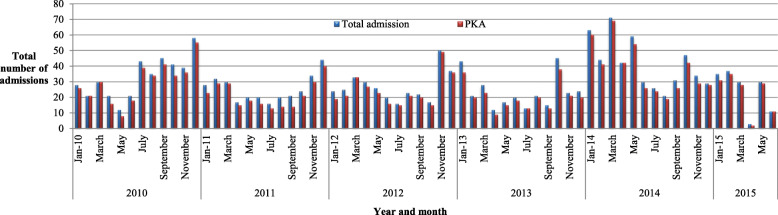
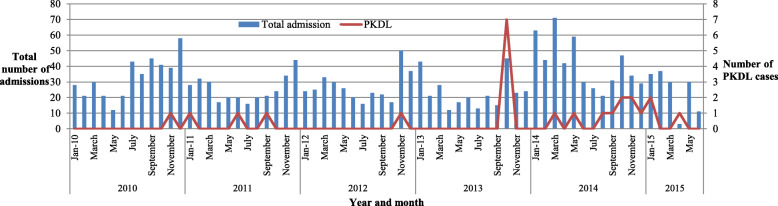
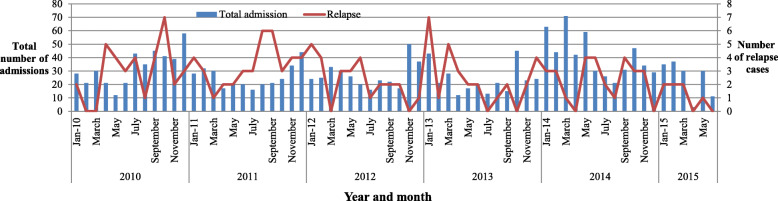
Of the 9299 VL suspected cases, 1948 (21%) were positive for rK antibody test. Of these, 1757 (90.2%) were primary kala-azar cases, 167 (8.6%) were relapse and the remaining 24 (1.2%) were post kala-azar dermal leishmaniasis cases.
The prevalence of VL is still high in the study area. Therefore, early case detection, diagnosis, treatment, and timely analysis are essential.
内脏利什曼病(VL)是一种由专性细胞内原生动物寄生虫引起的疾病,可感染动物和人类。估计有320万人面临患VL的风险,埃塞俄比亚每年有3700 - 7400例病例。此前该国西北部,特别是西阿尔马奇霍区报告的VL病例数最多。本研究的目的是确定研究区域内VL的流行趋势。
收集基于卫生中心的回顾性数据,以确定2010年1月至2015年8月期间接受血液检查的患者中VL的流行趋势。通过手指采血收集血样,并使用rK抗体试验确认感染情况。
在9299例疑似VL病例中,1948例(21%)rK抗体试验呈阳性。其中,1757例(90.2%)为原发性黑热病病例,167例(8.6%)为复发病例,其余24例(1.2%)为黑热病后皮肤利什曼病病例。
研究区域内VL的患病率仍然很高。因此,早期病例检测、诊断、治疗和及时分析至关重要。