Siddiqui Mahwash, Vora Amy, Ali Sadia, Abramowitz Jessica, Mirfakhraee Sasan
Department of Internal Medicine, Division of Endocrinology and Metabolism, University of Texas Southwestern Medical Center, Dallas, Texas.
J Endocr Soc. 2020 Nov 5;5(1):bvaa171. doi: 10.1210/jendso/bvaa171. eCollection 2021 Jan 1.
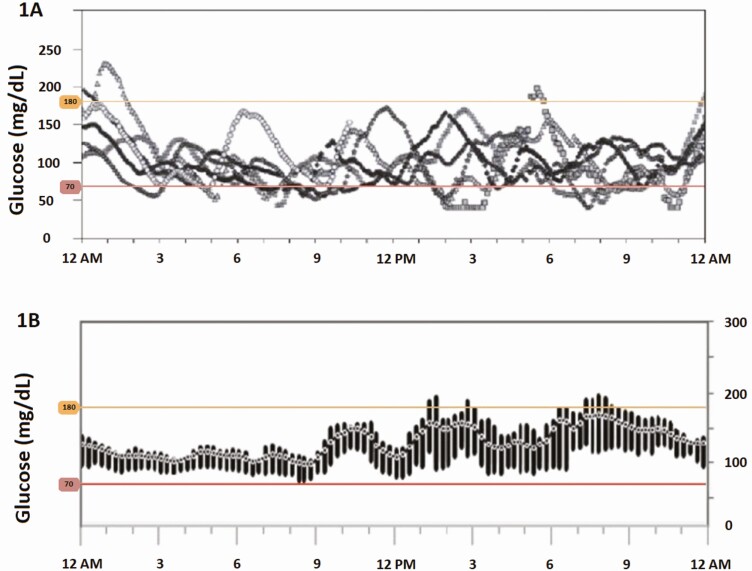
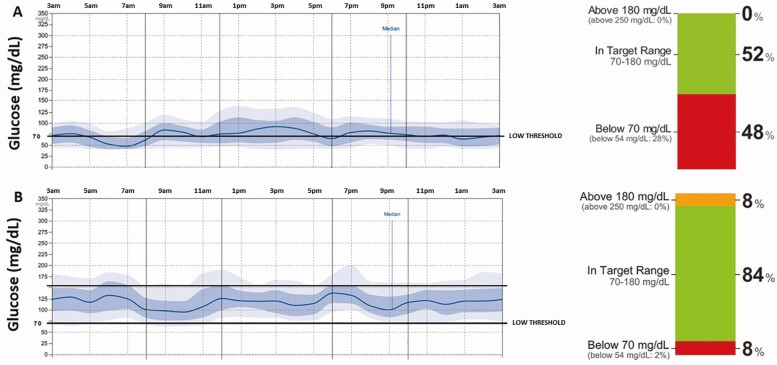
Tumor-induced hypoglycemia is a serious disorder most commonly caused by insulinoma or non-islet cell tumor hypoglycemia (NICTH). The hypoglycemia can be severe and refractory to conventional therapy, leading to significant morbidity and mortality. The objective of this work is to describe a series of challenging cases in which refractory, tumor-induced hypoglycemia was shown to respond to the use of pasireotide, a second-generation somatostatin receptor ligand. We describe the clinical and biochemical features of 3 patients with tumor-induced hypoglycemia due to an occult insulinoma, malignant insulinoma, and non-islet cell tumor hypoglycemia. In these 3 individuals, the hypoglycemia remained refractory to guideline-recommended medical therapy, such as diazoxide, nonpasireotide somatostatin analogues, and glucocorticoids. Pasireotide was substituted to attenuate the refractory hypoglycemia for each patient. The addition of pasireotide led to prompt improvement in the frequency and severity of hypoglycemic episodes for each tumor-induced hypoglycemia patient. We demonstrate the successful treatment of 3 individuals with refractory, tumor-induced hypoglycemia with pasireotide. We offer the first reported use of pasireotide for the successful treatment of nonmalignant insulinoma and non-islet cell tumor hypoglycemia.
肿瘤诱导的低血糖症是一种严重的病症,最常见的病因是胰岛素瘤或非胰岛细胞瘤低血糖症(NICTH)。这种低血糖症可能很严重,对传统治疗方法难治,会导致显著的发病率和死亡率。这项工作的目的是描述一系列具有挑战性的病例,其中难治性肿瘤诱导的低血糖症被证明对第二代生长抑素受体配体帕西瑞肽的使用有反应。我们描述了3例因隐匿性胰岛素瘤、恶性胰岛素瘤和非胰岛细胞瘤低血糖症导致肿瘤诱导低血糖症患者的临床和生化特征。在这3例患者中,低血糖症对指南推荐的药物治疗,如二氮嗪、非帕西瑞肽生长抑素类似物和糖皮质激素,仍然难治。为每位患者改用帕西瑞肽以减轻难治性低血糖症。添加帕西瑞肽后,每位肿瘤诱导低血糖症患者的低血糖发作频率和严重程度迅速改善。我们证明了帕西瑞肽成功治疗3例难治性肿瘤诱导低血糖症患者。我们首次报道使用帕西瑞肽成功治疗非恶性胰岛素瘤和非胰岛细胞瘤低血糖症。