Department of pharmacy, Qilu Hospital of Shandong University, Jinan, China.
Department of Pharmacy, Shandong Rongjun Hospital, Jinan, China.
J Clin Lab Anal. 2021 Mar;35(3):e23669. doi: 10.1002/jcla.23669. Epub 2020 Dec 9.
Paraquat and diquat are widely used in agricultural production in many countries, which are very toxic to human beings. Paraquat can be detected in some diquat solution sold in the market. The blood concentration of paraquat or diquat is an important indicator for clinical diagnosis of paraquat or diquat poisoning. So, it is very meaningful to develop a method for simultaneous determination of paraquat and diquat in human plasma.
To develop and validate a HPLC-DAD method for simultaneous determination of paraquat and diquat in human plasma and to apply it in the acute poisoning patients by these two herbicides.
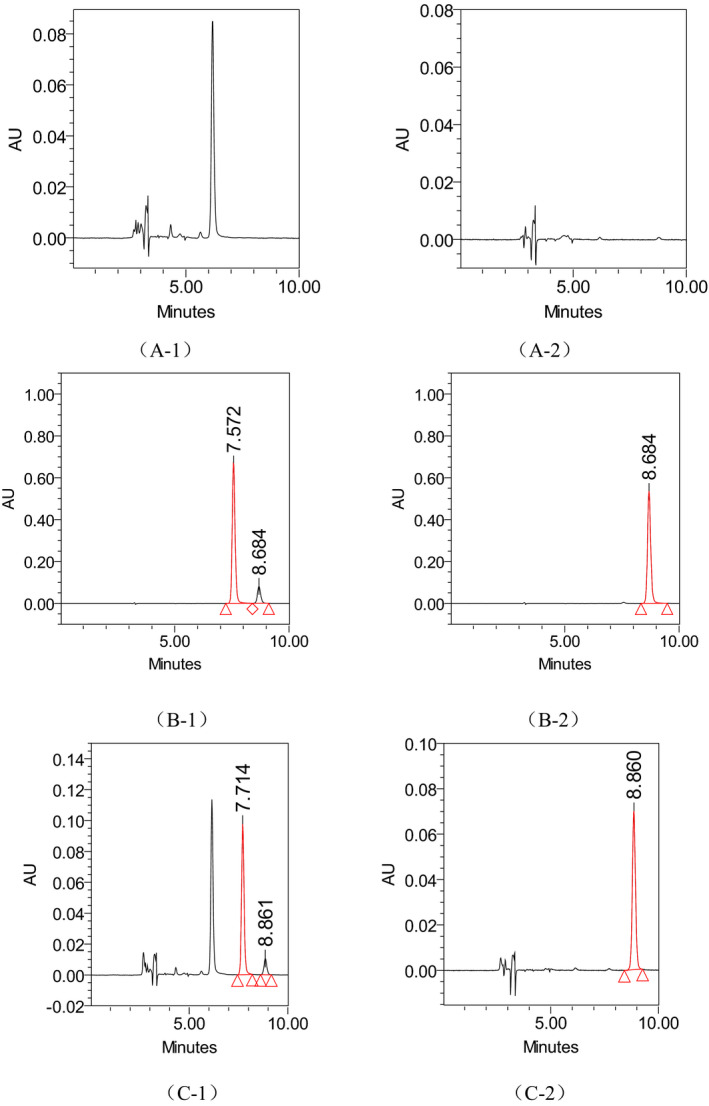
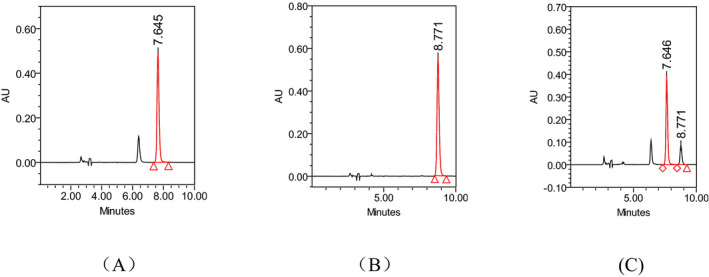
Paraquat and diquat were simultaneously determined by HPLC-DAD. The plasma was treated using Waters OASIS Column and then separated on a Thermo Hypersil GOLD (250 × 4.6 mm, 5 μm) Column with the mobile phase consisted of 75 mmol/L sodium heptane sulfonate (containing 0.1 mol/L phosphoric acid, pH 3.0) and acetonitrile (87:13, v:v) at a flow rate of 1.0 mL/min. The full-wavelength scanning was 200-400 nm, and the detection wavelength of paraquat and diquat was 257nm and 310nm, respectively. 120 and 30 plasma samples from patients with paraquat and diquat poisoning were collected and analyzed by the established method.
The standard curve for paraquat and diquat ranged from 0.05 to 20 μg/mL, and the precision of LLOQ for paraquat was 16.49%, which was required to be less than 20%. The precision of other concentrations was less than 14.14%. The recovery of paraquat and diquat was 95.38%-103.97% and 94.79%-98.40%, respectively. The results showed that paraquat and diquat were stable under various storage conditions. 120 plasma samples of paraquat poisoning patients and 30 plasma samples of diquat poisoning patients were determined by the established method. The blood concentration of paraquat ranged from 0.10 to 20.62 μg/mL, with an average of 3.61 μg/mL, while for diquat, the concentration ranged from 0 to 26.59 μg/mL, with an average of 2.00 μg/mL. Among the diquat suspected poisoning samples, 5 samples were detected not only diquat but also paraquat, and 2 samples were detected only paraquat, no diquat.
The HPLC-DAD method established in this study was high throughput, high sensitivity, simple operation, and wide linear ranges. It can be used for the screening analysis and quantitative detection of paraquat and diquat in acute poisoning patients, which can provide basis for the treatment and prognosis of these two herbicides poisoning patients.
百草枯和敌草快在许多国家的农业生产中广泛使用,对人类非常有毒。市场上销售的一些敌草快溶液中可以检测到百草枯。百草枯或敌草快的血药浓度是临床诊断百草枯或敌草快中毒的重要指标。因此,开发一种同时测定人血浆中百草枯和敌草快的方法非常有意义。
建立并验证一种同时测定人血浆中百草枯和敌草快的高效液相色谱-二极管阵列检测(HPLC-DAD)法,并应用于这两种除草剂急性中毒患者。
采用 HPLC-DAD 法同时测定百草枯和敌草快。Waters OASIS 柱处理血浆,然后在 Thermo Hypersil GOLD(250×4.6mm,5μm)柱上分离,流动相由 75mmol/L 庚烷磺酸钠(含 0.1mol/L 磷酸,pH3.0)和乙腈(87:13,v:v)组成,流速为 1.0mL/min。全波长扫描范围为 200-400nm,百草枯和敌草快的检测波长分别为 257nm 和 310nm。建立的方法分析了 120 例百草枯中毒和 30 例敌草快中毒患者的血浆样本。
百草枯和敌草快的标准曲线范围为 0.05-20μg/mL,百草枯的定量下限(LLOQ)的精密度为 16.49%,要求小于 20%。其他浓度的精密度均小于 14.14%。百草枯和敌草快的回收率分别为 95.38%-103.97%和 94.79%-98.40%。结果表明,百草枯和敌草快在各种储存条件下均稳定。建立的方法测定了 120 例百草枯中毒患者和 30 例敌草快中毒患者的血浆样本。百草枯血药浓度范围为 0.10-20.62μg/mL,平均为 3.61μg/mL,而敌草快的浓度范围为 0-26.59μg/mL,平均为 2.00μg/mL。在疑似敌草快中毒的样本中,有 5 份样本不仅检测到敌草快,还检测到百草枯,有 2 份样本仅检测到百草枯,未检测到敌草快。
本研究建立的 HPLC-DAD 法具有高通量、高灵敏度、操作简单、线性范围广等优点。可用于急性中毒患者中百草枯和敌草快的筛选分析和定量检测,为这两种除草剂中毒患者的治疗和预后提供依据。