Moser Tina, Waldispuehl-Geigl Julie, Belic Jelena, Weber Sabrina, Zhou Qing, Hasenleithner Samantha O, Graf Ricarda, Terzic Jasmin Alia, Posch Florian, Sill Heinz, Lax Sigurd, Kashofer Karl, Hoefler Gerald, Schoellnast Helmut, Heitzer Ellen, Geigl Jochen B, Bauernhofer Thomas, Speicher Michael R
Institute of Human Genetics, Diagnostic and Research Center for Molecular BioMedicine, Medical University of Graz, Graz, Austria.
Cancer Research UK Cambridge Institute, University of Cambridge, CB2 0RE, Cambridge, UK.
NPJ Precis Oncol. 2020 Nov 13;4(1):30. doi: 10.1038/s41698-020-00134-3.
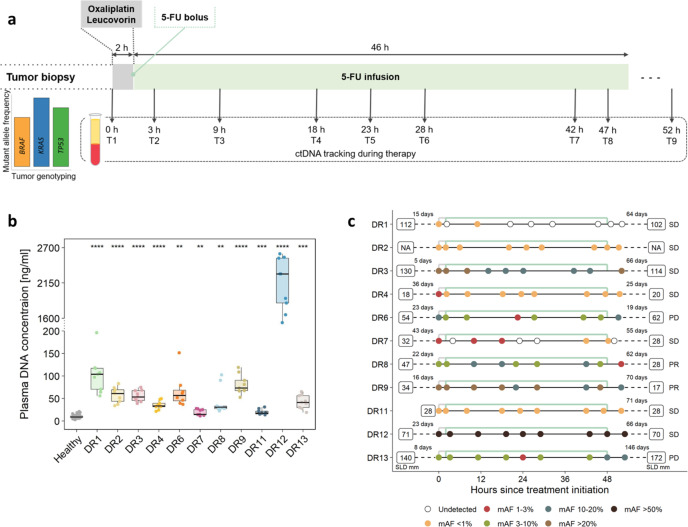
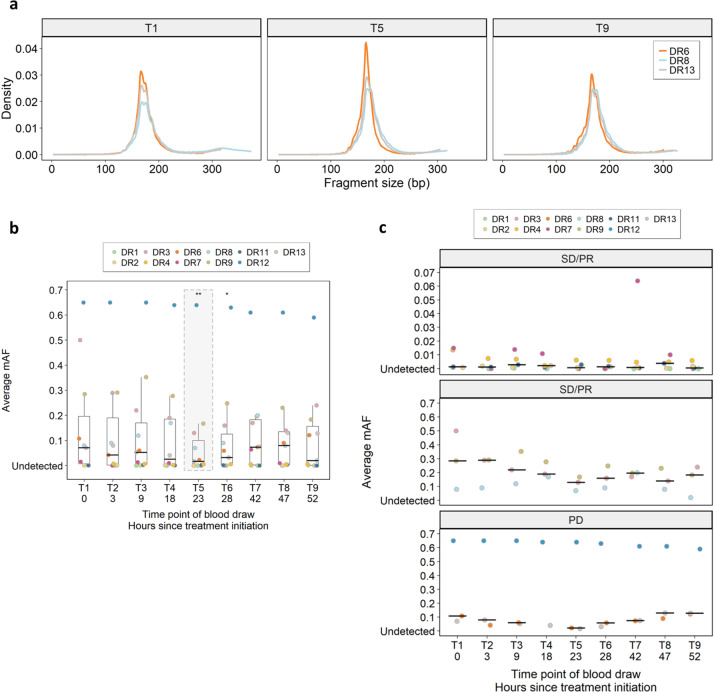
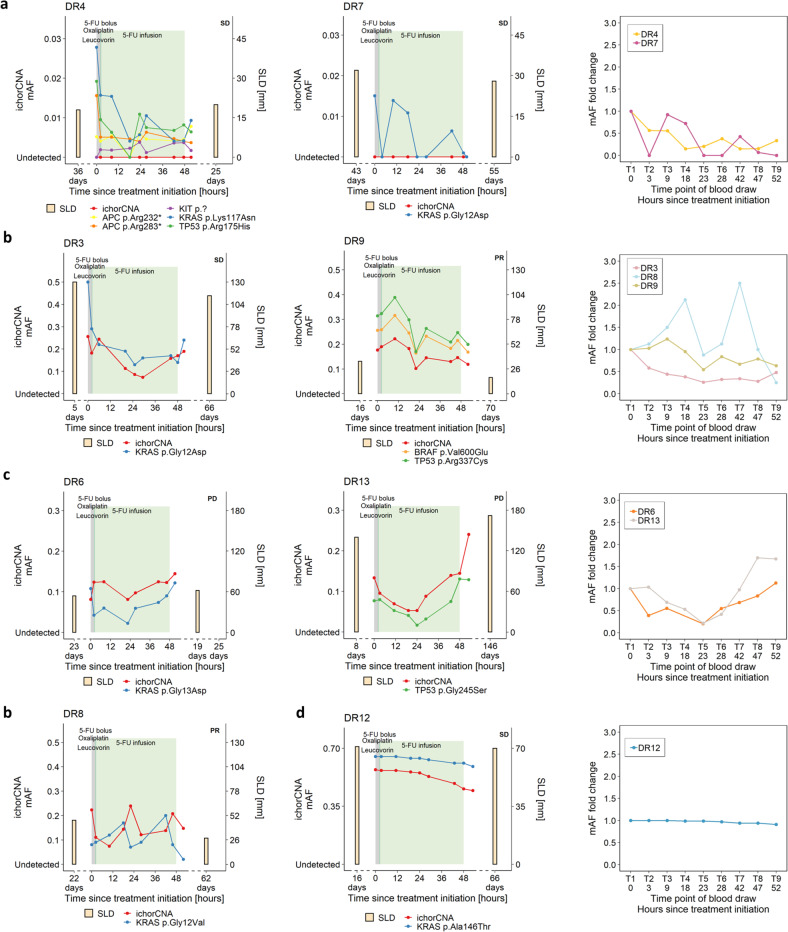
We addressed a significant unknown feature of circulating tumor DNA (ctDNA), i.e., how ctDNA levels change during chemotherapy, by serially monitoring ctDNA in patients with colorectal cancer during the 48-h application of FOLFOX. Surprisingly, we did not observe a spike in ctDNA as a sign of a responsive tumor, but instead ctDNA levels initially decreased and remained low in patients with stable disease or partial response. Our observations reveal further insights into cell destruction during chemotherapy with important implications for the management of patients.
我们通过在48小时应用FOLFOX方案期间对结直肠癌患者的循环肿瘤DNA(ctDNA)进行连续监测,解决了ctDNA一个重要的未知特征,即ctDNA水平在化疗期间如何变化。令人惊讶的是,我们没有观察到ctDNA激增作为肿瘤有反应的迹象,相反,在疾病稳定或部分缓解的患者中,ctDNA水平最初下降并保持在低水平。我们的观察结果揭示了对化疗期间细胞破坏的进一步见解,对患者管理具有重要意义。