Schmiedel Benjamin J, Chandra Vivek, Rocha Job, Gonzalez-Colin Cristian, Bhattacharyya Sourya, Madrigal Ariel, Ottensmeier Christian H, Ay Ferhat, Vijayanand Pandurangan
La Jolla Institute for Immunology, La Jolla, CA, USA.
Equally contributed to this work.
bioRxiv. 2020 Dec 2:2020.12.01.407429. doi: 10.1101/2020.12.01.407429.
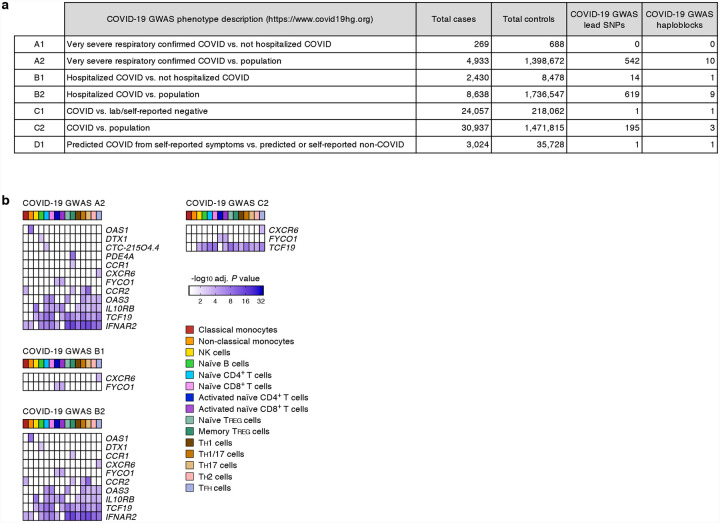
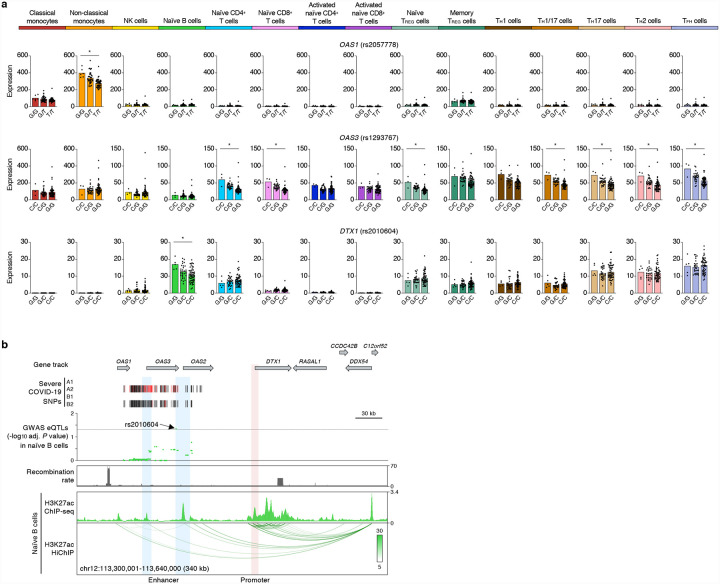
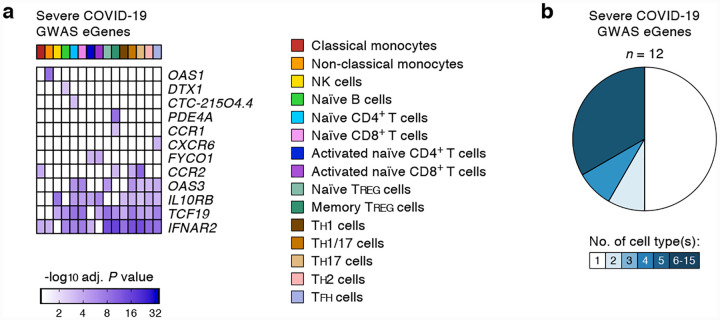
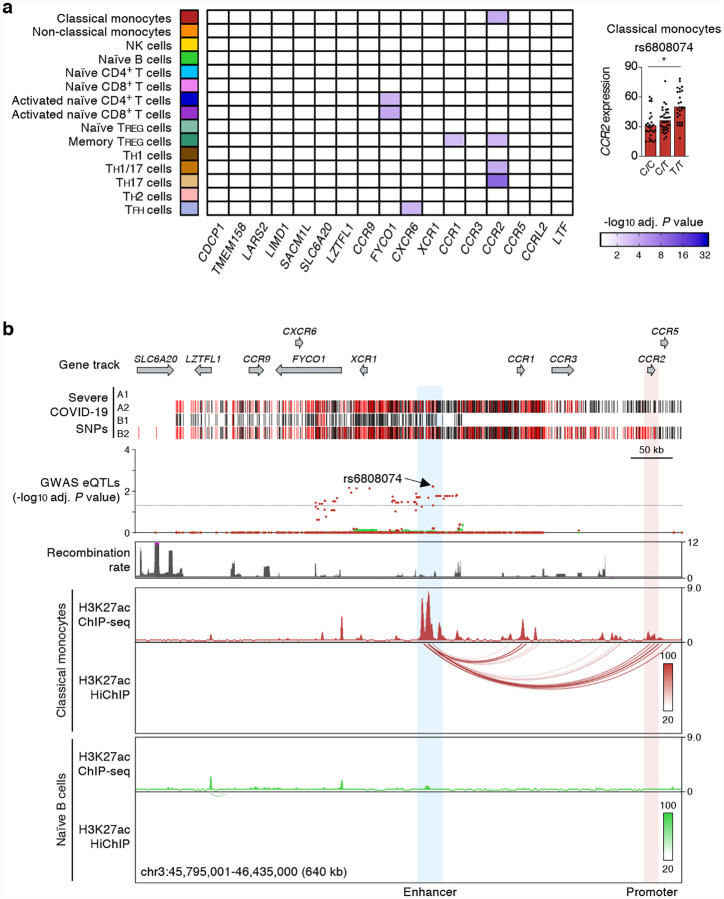
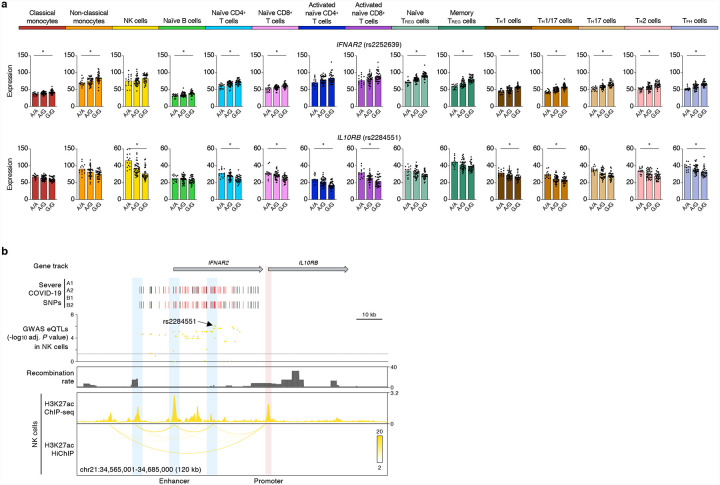
Common genetic polymorphisms associated with severity of COVID-19 illness can be utilized for discovering molecular pathways and cell types driving disease pathogenesis. Here, we assessed the effects of 679 COVID-19-risk variants on gene expression in a wide-range of immune cell types. Severe COVID-19-risk variants were significantly associated with the expression of 11 protein-coding genes, and overlapped with either target gene promoter or -regulatory regions that interact with target promoters in the cell types where their effects are most prominent. For example, we identified that the association between variants in the 3p21.31 risk locus and the expression of in classical monocytes is likely mediated through an active cis-regulatory region that interacted with promoter specifically in monocytes. The expression of several other genes showed prominent genotype-dependent effects in non-classical monocytes, NK cells, B cells, or specific T cell subtypes, highlighting the potential of COVID-19 genetic risk variants to impact the function of diverse immune cell types and influence severe disease manifestations.
与新冠病毒疾病严重程度相关的常见基因多态性可用于发现驱动疾病发病机制的分子途径和细胞类型。在此,我们评估了679个新冠病毒风险变异对多种免疫细胞类型中基因表达的影响。严重新冠病毒风险变异与11个蛋白质编码基因的表达显著相关,并与目标基因启动子或在其效应最显著的细胞类型中与目标启动子相互作用的调控区域重叠。例如,我们发现3p21.31风险位点的变异与经典单核细胞中某基因的表达之间的关联可能是通过一个活跃的顺式调控区域介导的,该区域在单核细胞中与该基因启动子特异性相互作用。其他几个基因的表达在非经典单核细胞、自然杀伤细胞、B细胞或特定T细胞亚群中表现出显著的基因型依赖性效应,突出了新冠病毒遗传风险变异影响多种免疫细胞类型功能并影响严重疾病表现的潜力。