Institute of Thoracic Oncology, West China Hospital, Sichuan University, Chengdu, China.
Department of Thoracic Surgery, West China Hospital, Sichuan University, Chengdu, China.
PLoS One. 2020 Dec 10;15(12):e0243789. doi: 10.1371/journal.pone.0243789. eCollection 2020.
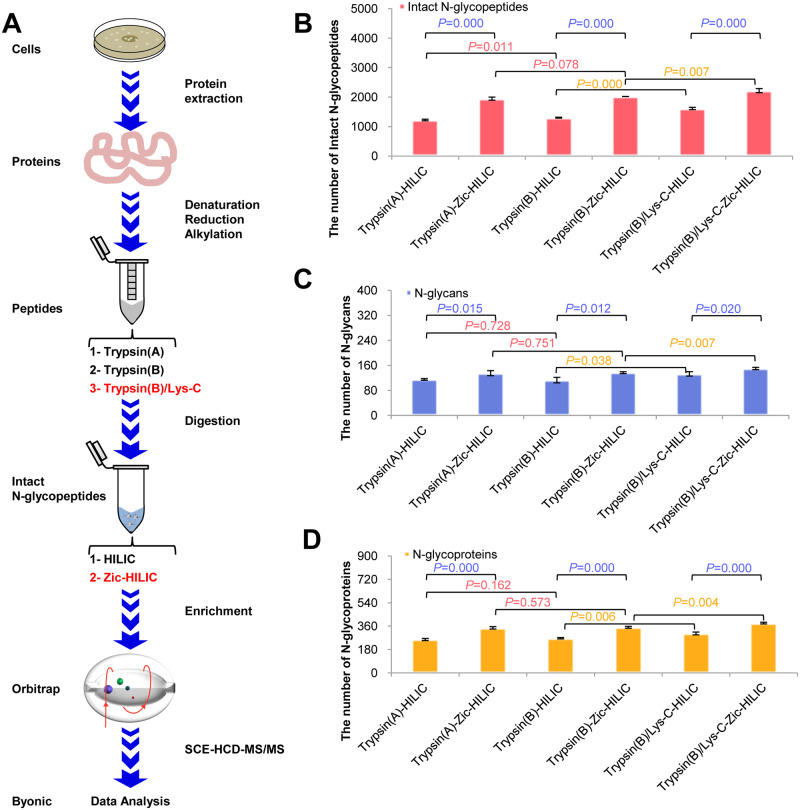
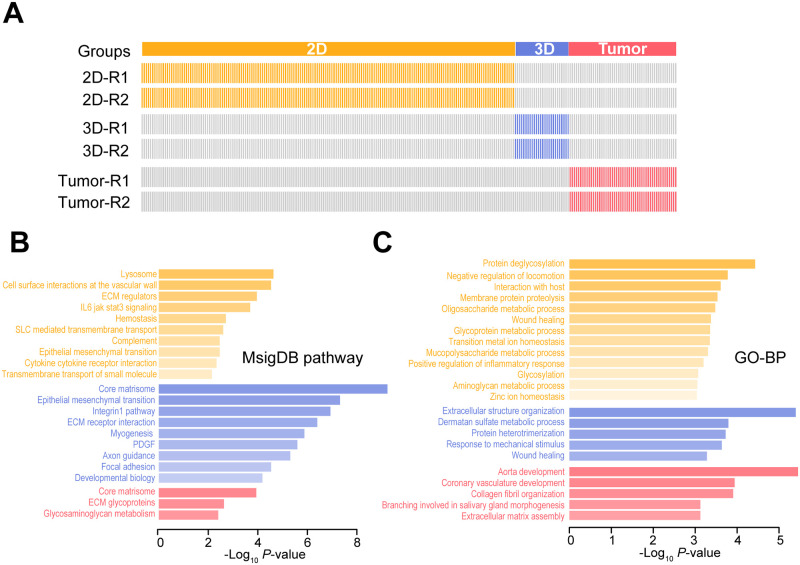
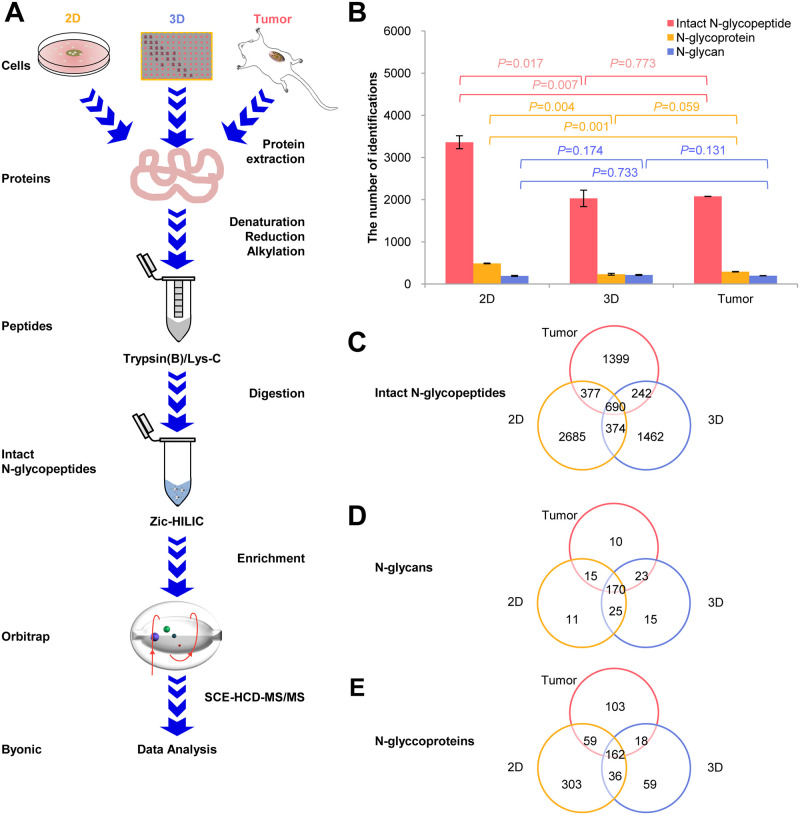
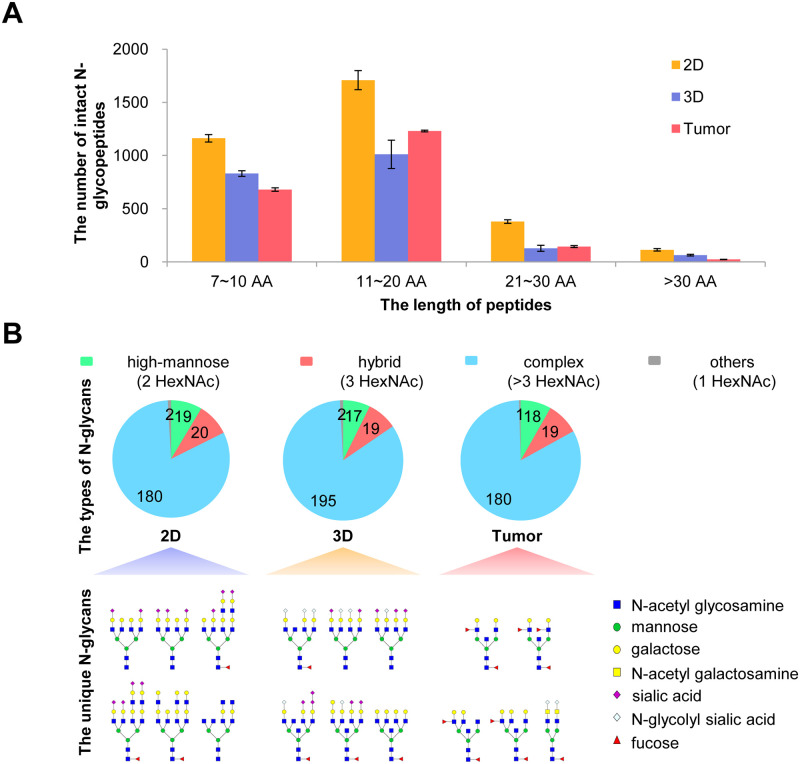
Native intact N-glycopeptide analysis can provide access to the comprehensive characteristics of N-glycan occupancy, including N-glycosites, N-glycan compositions, and N-glycoproteins for complex samples. The sample pre-processing method used for the analysis of intact N-glycopeptides usually depends on the enrichment of low abundance N-glycopeptides from a tryptic peptide mixture using hydrophilic substances before LC-MS/MS detection. However, the number of identified intact N-glycopeptides remains inadequate to achieve an in-depth profile of the N-glycosylation landscape. Here, we optimized the sample preparation workflow prior to LC-MS/MS analysis by systematically comparing different analytical methods, including the use of different sources of trypsin, combinations of different proteases, and different enrichment materials. Finally, we found that the combination of Trypsin (B)/Lys-C digestion and zwitterionic HILIC (Zic-HILIC) enrichment significantly improved the mass spectrometric characterization of intact N-glycopeptides, increasing the number of identified intact N-glycopeptides and offering better analytical reproducibility. Furthermore, the optimized workflow was applied to the analysis of intact N-glycopeptides in two-dimensional (2D) and three-dimensional (3D)-cultured breast cancer cells in vitro and xenografted tumors in mice. These results indicated that the same breast cancer cells, when cultured in different microenvironments, can show different N-glycosylation patterns. This study also provides an interesting comparison of the N-glycoproteome of breast cancer cells cultured in different growth conditions, indicating the important role of N-glycosylated proteins in cancer cell growth and the choice of the cell culture model for studies in tumor biology and drug evaluation.
天然完整 N-糖肽分析可以提供对 N-糖基化占据的综合特征的访问,包括 N-糖基化位点、N-聚糖组成和复杂样品中的 N-糖蛋白。用于完整 N-糖肽分析的样品预处理方法通常依赖于使用亲水物质从胰蛋白酶肽混合物中富集低丰度 N-糖肽,然后进行 LC-MS/MS 检测。然而,鉴定的完整 N-糖肽数量仍然不足以实现 N-糖基化景观的深入分析。在这里,我们通过系统比较不同的分析方法,包括使用不同来源的胰蛋白酶、不同蛋白酶的组合和不同的富集材料,优化了 LC-MS/MS 分析之前的样品制备工作流程。最终,我们发现胰蛋白酶(B)/Lys-C 消化和两性离子 HILIC(Zic-HILIC)富集的组合显著改善了完整 N-糖肽的质谱表征,增加了鉴定的完整 N-糖肽数量,并提供了更好的分析重现性。此外,优化的工作流程应用于二维(2D)和三维(3D)培养的乳腺癌细胞以及小鼠异种移植肿瘤中完整 N-糖肽的分析。这些结果表明,在不同微环境中培养的相同乳腺癌细胞可以表现出不同的 N-糖基化模式。这项研究还提供了在不同生长条件下培养的乳腺癌细胞的 N-糖蛋白组的有趣比较,表明 N-糖基化蛋白在癌细胞生长和肿瘤生物学研究中细胞培养模型选择和药物评价中的重要作用。