Division of Transplantation, Department of Surgery, Leiden University Medical Centre, ZA Leiden, The Netherlands.
Department of Gastroenterology and Hepatology, Leiden University Medical Centre, ZA Leiden, The Netherlands.
Hepatology. 2021 Jul;74(1):351-363. doi: 10.1002/hep.31677. Epub 2021 May 9.
The United Network for Organ Sharing's Model for End-Stage Liver Disease (UNOS-MELD) score is the basis of liver allocation in the Eurotransplant region. It was constructed 20 years ago in a small US cohort and has remained unchanged ever since. The best boundaries and coefficients were never calculated for any region outside the United States. Therefore, this study refits the MELD (reMELD) for the Eurotransplant region.
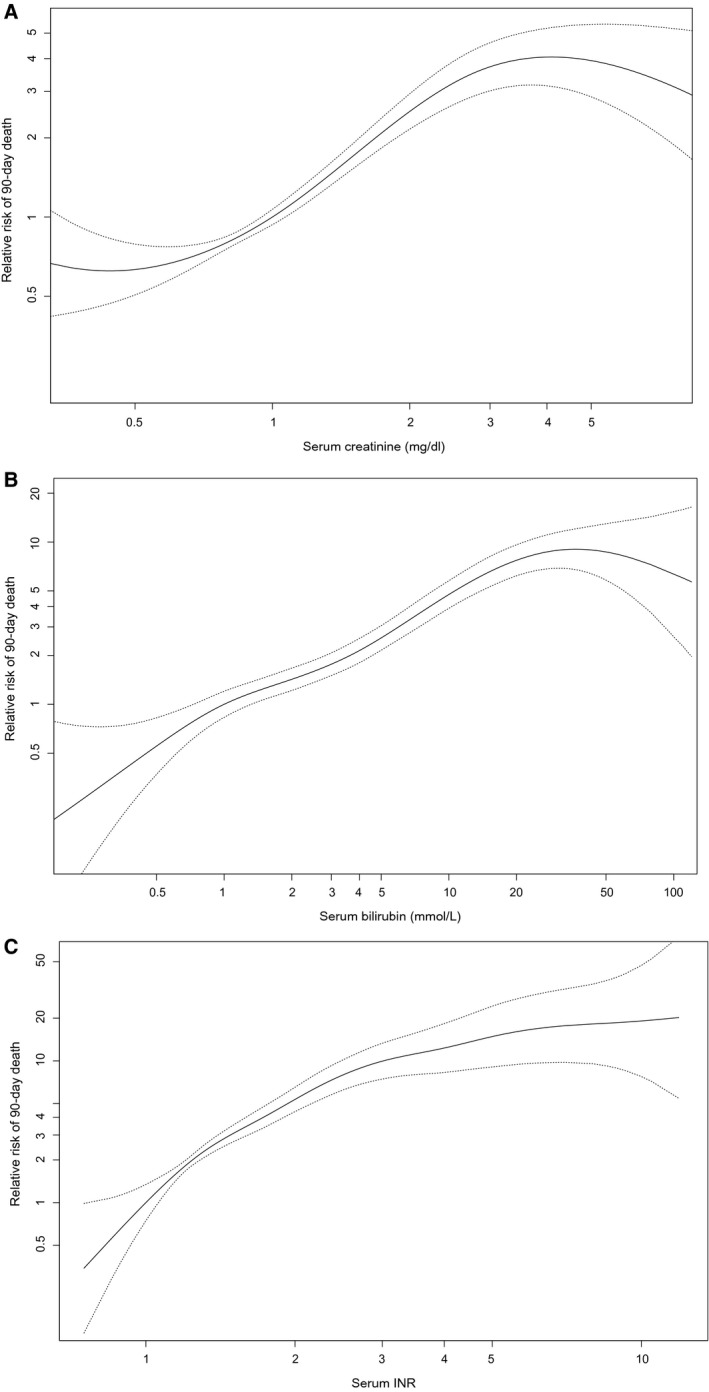
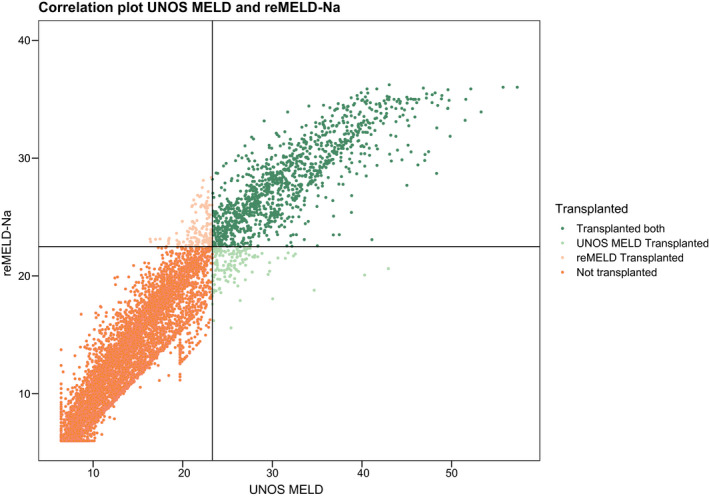
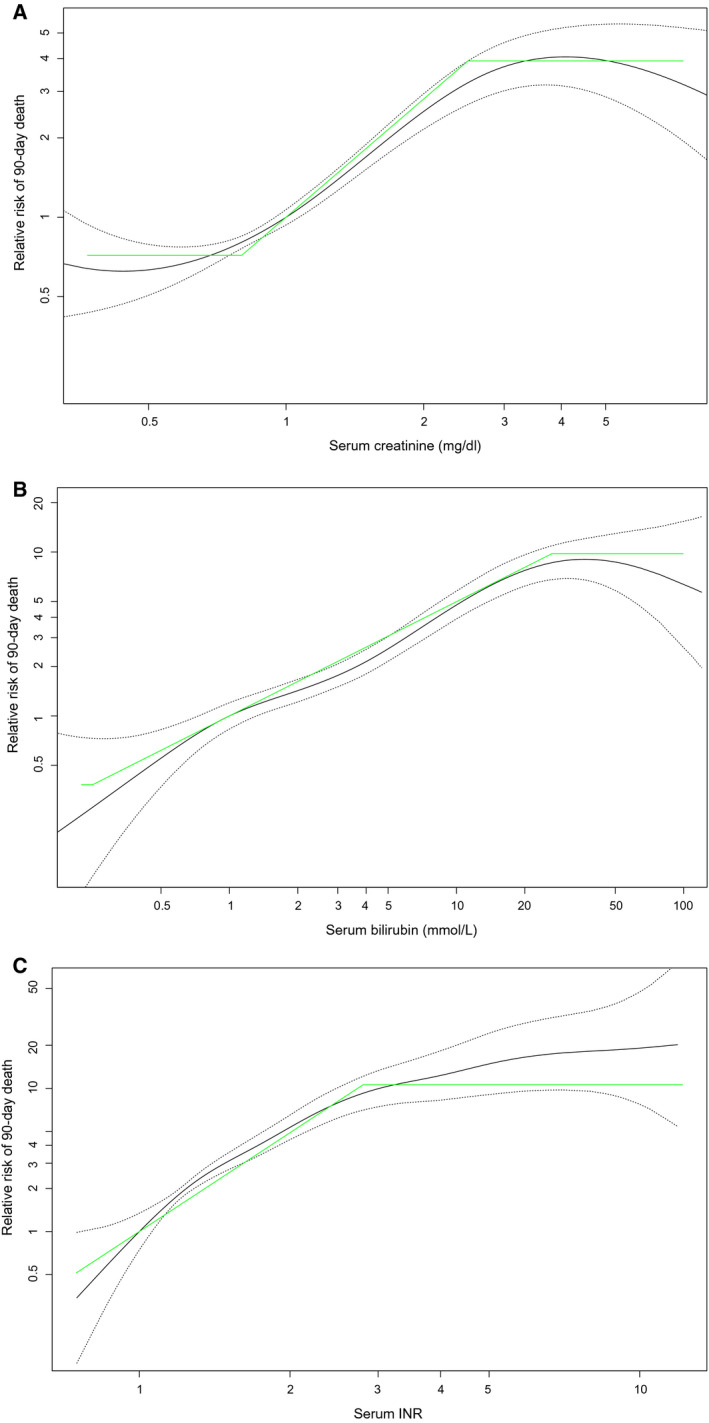
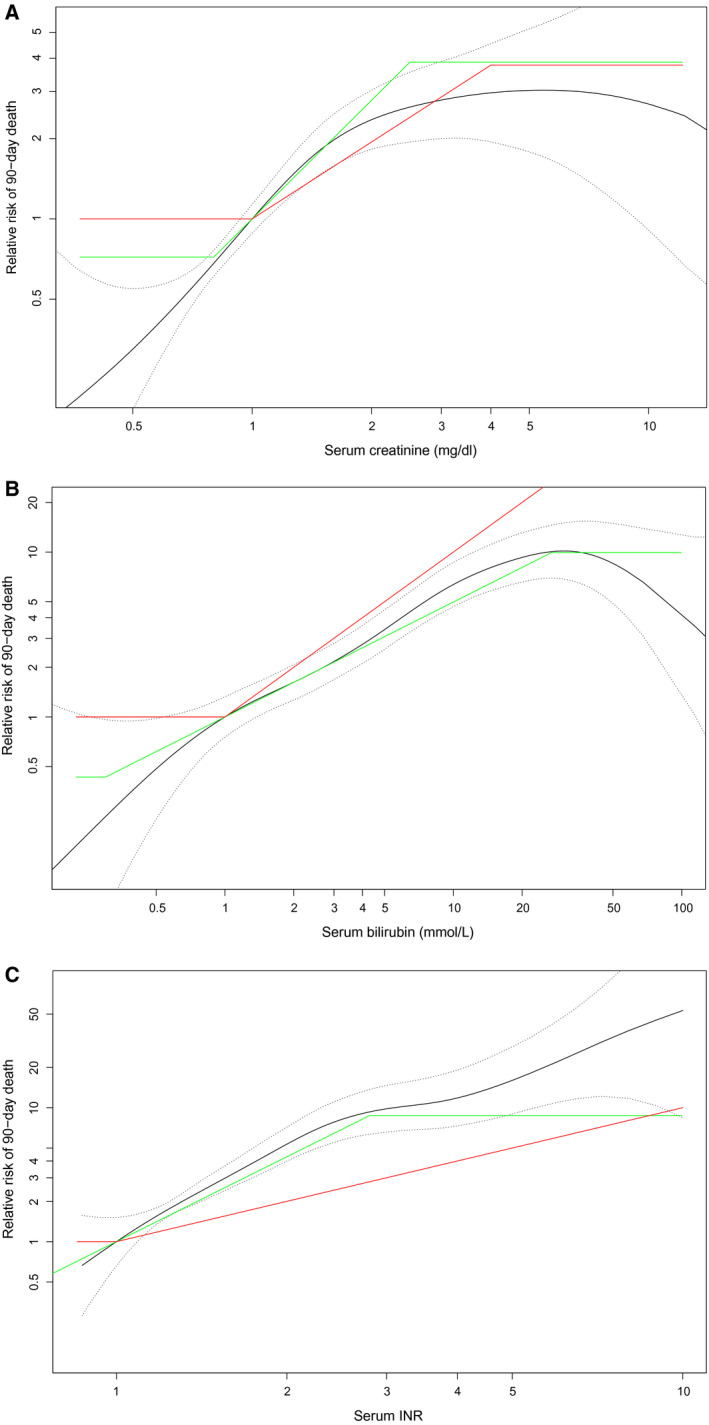
All adult patients listed for a first liver transplantation between January 1, 2007, and December 31, 2018, were included. Data were randomly split in a training set (70%) and a validation set (30%). In the training data, generalized additive models with splines were plotted for each MELD parameter. The lower and upper bound combinations with the maximum log-likelihood were chosen for the final models. The refit models were tested in the validation data with C-indices and Brier scores. Through likelihood ratio tests the refit models were compared to UNOS-MELD. The correlation between scores and survival of prioritized patients was calculated. A total of 6,684 patients were included. Based on training data, refit parameters were capped at creatinine 0.7-2.5, bilirubin 0.3-27, international normalized ratio 0.1-2.6, and sodium 120-139. ReMELD and reMELD-Na showed C-indices of 0.866 and 0.869, respectively. ReMELD-Na prioritized patients with 1.6 times higher 90-day mortality probabilities compared to UNOS-MELD.
Refitting MELD resulted in new lower and upper bounds for each parameter. The predictive power of reMELD-Na was significantly higher than UNOS-MELD. ReMELD prioritized patients with higher 90-day mortality rates. Thus, reMELD(-Na) should replace UNOS-MELD for liver graft allocation in the Eurotransplant region.
美国器官共享联合网络的终末期肝病模型(UNOS-MELD)评分是欧洲肝移植区域肝脏分配的基础。该评分于 20 年前在美国的一个小队列中构建,此后一直没有改变。在美国以外的任何地区,最佳边界和系数从未被计算过。因此,本研究对欧洲肝移植区域的 MELD(reMELD)进行了重新拟合。
纳入 2007 年 1 月 1 日至 2018 年 12 月 31 日期间接受首次肝移植的所有成年患者。数据随机分为训练集(70%)和验证集(30%)。在训练数据中,对每个 MELD 参数绘制了带有样条的广义加性模型。选择最大对数似然的下限和上限组合作为最终模型。在验证数据中使用 C 指数和 Brier 评分对重新拟合的模型进行测试。通过似然比检验将重新拟合的模型与 UNOS-MELD 进行比较。计算优先患者的评分与生存之间的相关性。共纳入 6684 例患者。基于训练数据,重新拟合的参数被限制在肌酐 0.7-2.5、胆红素 0.3-27、国际标准化比值 0.1-2.6 和钠 120-139。ReMELD 和 reMELD-Na 的 C 指数分别为 0.866 和 0.869。与 UNOS-MELD 相比,ReMELD-Na 优先考虑的患者 90 天死亡率高 1.6 倍。
重新拟合 MELD 导致每个参数的新下限和上限。reMELD-Na 的预测能力明显高于 UNOS-MELD。ReMELD 优先考虑 90 天死亡率较高的患者。因此,reMELD(-Na)应取代 UNOS-MELD 用于欧洲肝移植区域的肝移植分配。