Pasrija Ritu, Naime Mohammad
Department of Biochemistry, Maharshi Dayanand University, Rohtak, Haryana, India.
Central Research Institute of Unani Medicine, Central Council for Research in Unani Medicine, Ministry of AYUSH, Government of India, Lucknow, Uttar Pradesh, India.
Int Immunopharmacol. 2021 Jan;90:107225. doi: 10.1016/j.intimp.2020.107225. Epub 2020 Nov 27.
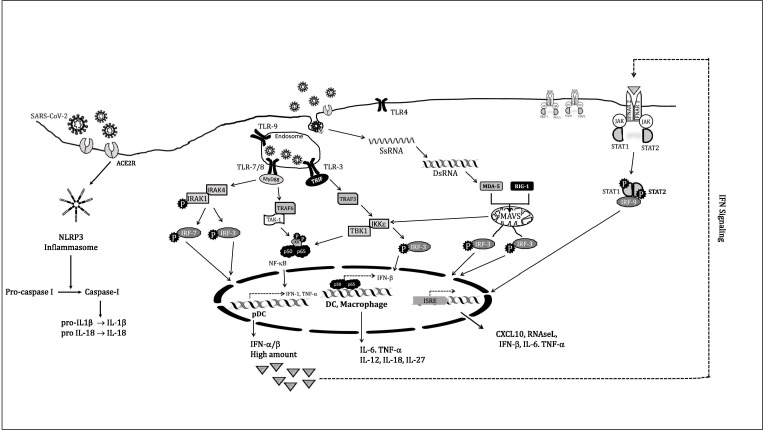
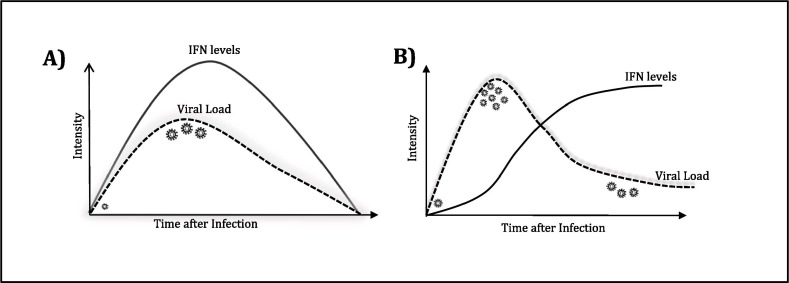
COVID-19 caused by the SARS-CoV-2 virus, accompanies an unprecedented spike in cytokines levels termed cytokines release syndrome (CRS), in critically ill patients. Clinicians claim that the surge demonstrates a deregulated immune defence in host, as infected cell expression analysis depicts a delay in type-I (interferon-I) and type-III IFNs expression, along with a limited Interferon-Stimulated Gene (ISG) response, which later resume and culminates in elicitation of several cytokines including- IL-6, IL-8, IL-12, TNFα, IL-17, MCP-1, IP-10 and IL-10 etc. Although cytokines are messenger molecules of the immune system, but their increased concentration results in inflammation, infiltration of macrophages, neutrophils and lung injury in patients. This inflammatory response results in the precarious pathogenesis of COVID-19; thus, a complete estimation of the immune response against SARS-CoV-2 is vital in designing a harmless and effective vaccine. In pathogenesis analysis, it emerges that a timely forceful type-I IFN production (18-24hrs post infection) promotes innate and acquired immune responses, while a delay in IFNs production (3-4 days post infection) actually renders both innate and acquired responses ineffective in fighting infection. Further, underlying conditions including hypertension, obesity, cardio-vascular disease etc may increase the chances of putting people in risk groups, which end up having critical form of infection. This review summarizes the events starting from viral entry, its struggle with the immune system and failure of host immunological parameters to obliterate the infections, which finally culminate into massive release of CRS and inflammation in gravely ill patients.
由严重急性呼吸综合征冠状病毒2(SARS-CoV-2)引起的2019冠状病毒病(COVID-19),在重症患者中伴随着细胞因子水平前所未有的激增,即细胞因子释放综合征(CRS)。临床医生称,这种激增表明宿主的免疫防御失调,因为受感染细胞表达分析显示I型(干扰素-I)和III型干扰素表达延迟,以及干扰素刺激基因(ISG)反应有限,随后这些反应恢复并最终引发多种细胞因子,包括白细胞介素-6、白细胞介素-8、白细胞介素-12、肿瘤坏死因子α、白细胞介素-17、单核细胞趋化蛋白-1、干扰素γ诱导蛋白10和白细胞介素-10等。尽管细胞因子是免疫系统的信使分子,但其浓度升高会导致患者出现炎症、巨噬细胞浸润、中性粒细胞浸润和肺损伤。这种炎症反应导致了COVID-19的危险发病机制;因此,全面评估针对SARS-CoV-2的免疫反应对于设计安全有效的疫苗至关重要。在发病机制分析中发现,及时有力地产生I型干扰素(感染后18-24小时)可促进先天和后天免疫反应,而干扰素产生延迟(感染后3-4天)实际上会使先天和后天反应在对抗感染时无效。此外,包括高血压、肥胖、心血管疾病等在内的基础疾病可能会增加人们进入危险群体的几率,最终导致严重感染。本综述总结了从病毒进入开始的一系列事件,它与免疫系统的斗争以及宿主免疫参数未能消除感染,最终导致重症患者大量释放CRS和炎症。