Pérez-González Adriana, Prejanò Mario, Russo Nino, Marino Tiziana, Galano Annia
CONACYT-Universidad Autónoma Metropolitana-Iztapalapa, San Rafael Atlixco 186, Col. Vicentina, Iztapalapa, México City 09340, Mexico.
Department of Chemistry and Chemical Technologies, Università della Calabria (UNICAL), Calabria, 87036 Arcavacata di Rende, Italy.
Antioxidants (Basel). 2020 Dec 8;9(12):1247. doi: 10.3390/antiox9121247.
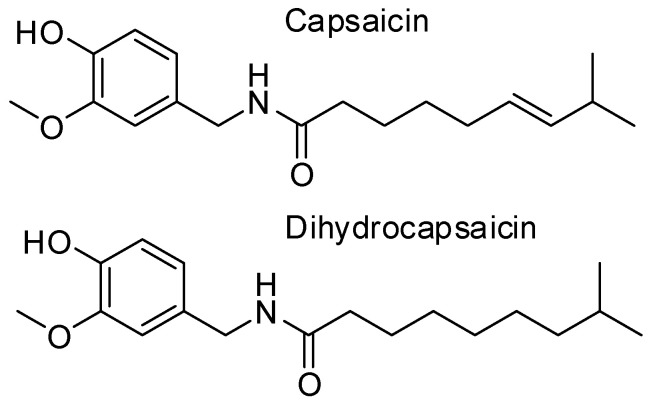
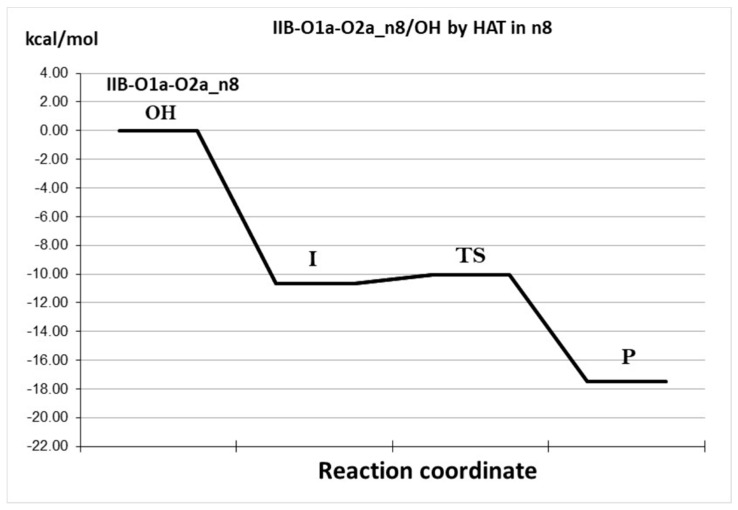
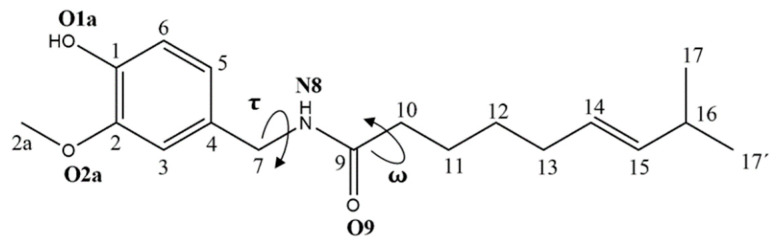
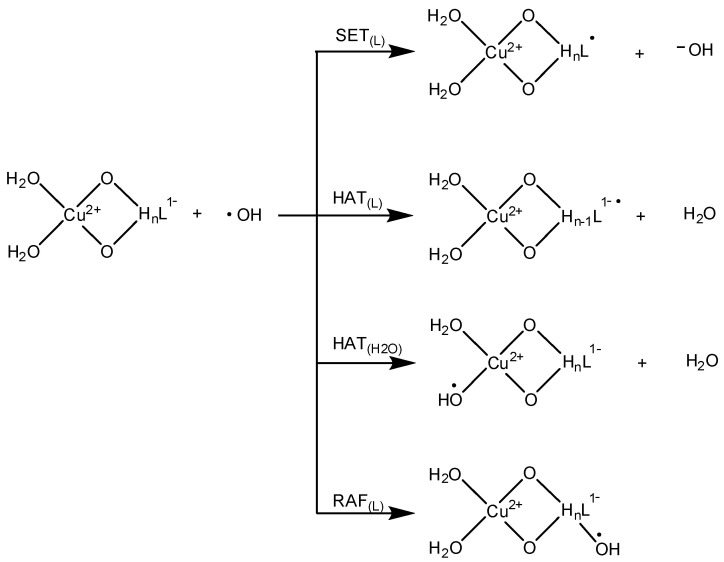
Oxidative conditions are frequently enhanced by the presence of redox metal ions. In this study, the role of capsaicin (8-methyl-N-vanillyl-6-nonenamide, CAP) in copper-induced oxidative stress was investigated using density functional theory simulations. It was found that CAP has the capability to chelate Cu(II), leading to complexes that are harder to reduce than free Cu(II). CAP fully turns off the Cu(II) reduction by Asc, and slows down the reduction in this cation by O. Therefore, CAP is proposed as an OH-inactivating ligand by impeding the reduction in metal ions (OIL-1), hindering the production of OH via Fenton-like reactions, at physiological pH. CAP is also predicted to be an excellent antioxidant as a scavenger of OH, yielded through Fenton-like reactions (OIL-2). The reactions between CAP-Cu(II) chelates and OH were estimated to be diffusion-limited. Thus, these chelates are capable of deactivating this dangerous radical immediately after being formed by Fenton-like reactions.
氧化还原金属离子的存在常常会增强氧化条件。在本研究中,使用密度泛函理论模拟研究了辣椒素(8-甲基-N-香草基-6-壬酰胺,CAP)在铜诱导的氧化应激中的作用。研究发现,CAP具有螯合Cu(II)的能力,形成的络合物比游离的Cu(II)更难还原。CAP完全抑制了Asc对Cu(II)的还原,并减缓了O对该阳离子的还原。因此,提出CAP在生理pH值下通过阻碍金属离子的还原(OIL-1),类似于芬顿反应那样阻碍OH的产生,从而作为一种OH失活配体。CAP还被预测为一种优秀的抗氧化剂,可作为通过类似芬顿反应产生的OH的清除剂(OIL-2)。据估计,CAP-Cu(II)螯合物与OH之间的反应是扩散受限的。因此,这些螯合物能够在通过类似芬顿反应形成后立即使这种危险的自由基失活。