Department of Orthopaedics, Shanghai Jiao Tong University Affiliated Sixth People's Hospital, 600 Yishan Road, Shanghai, 200233, China.
J Orthop Surg Res. 2020 Dec 10;15(1):600. doi: 10.1186/s13018-020-02145-z.
The osteoclast bone resorption is critical in aseptic loosening after joint replacement. The balance between activator of nuclear factor kappa B ligand (RANKL) and osteoprotegerin (OPG) is considered to play a central role in osteoclast maturation. Fibroblasts from the periprosthetic membrane express RANKL and promote osteoclast formation. Studies have demonstrated that naringin inhibited osteoclastogenesis and wear particle-induced osteolysis. In this study, the naringin-induced OPG/RANKL effects and its underlying mechanism were studied in fibroblasts from periprosthetic membrane.
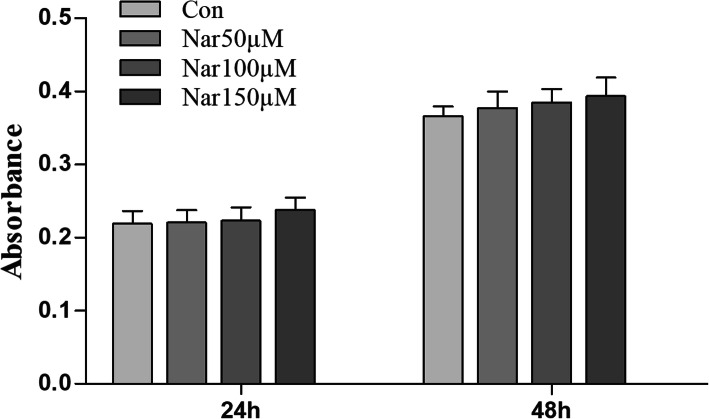
Fibroblasts were isolated from the periprosthetic membrane during hip arthroplasty for revision due to aseptic loosening. Fibroblasts were cultured and treated with or without naringin and DKK-1 (the classical inhibitor of Wnt/β-catenin signaling pathway). OPG and RANKL mRNA and protein levels, gene expression of β-catenin, and cyclin D1, which participate in the Wnt signaling pathway, were examined by real-time polymerase chain reaction and enzyme-linked immunosorbent assay.
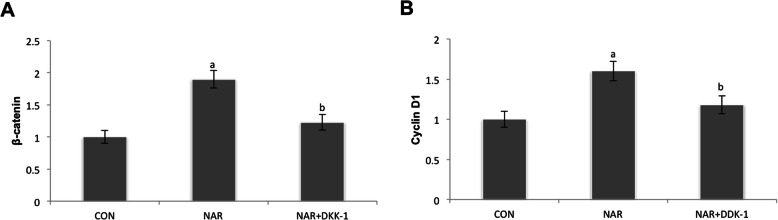
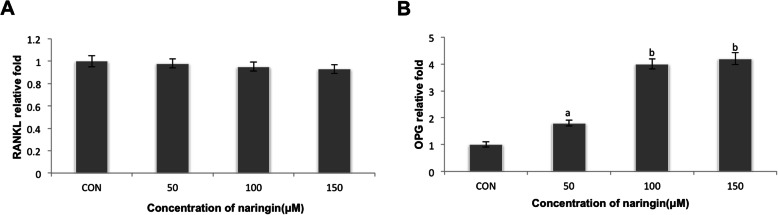
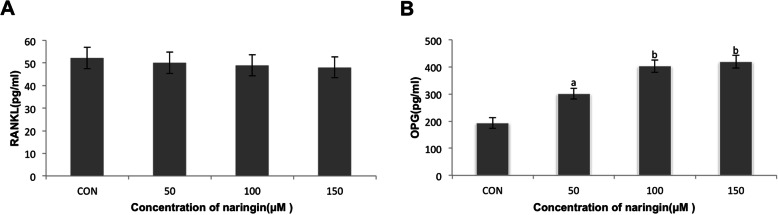
The mRNA and protein levels of OPG were enhanced by naringin in a dose-dependent manner compared to that of the non-treated control. In contrast, naringin did not affect the expression of RANKL. Importantly, DKK-1 attenuated OPG expression in fibroblasts under naringin treatment. Moreover, naringin stimulated the gene expression of β-catenin and cyclin D1 in fibroblasts, and the effect could be inhibited by DKK-1.
The results indicated that naringin enhanced OPG expression through Wnt/β-catenin signaling pathway in fibroblasts from periprosthetic membrane, which may be useful to inhibit periprosthetic osteolysis during aseptic loosening after total joint arthroplasty.
破骨细胞的骨吸收在关节置换后无菌性松动中起着关键作用。核因子κB 配体(RANKL)和护骨素(OPG)的平衡被认为在破骨细胞成熟中起着核心作用。假体周围膜中的成纤维细胞表达 RANKL 并促进破骨细胞形成。研究表明,柚皮苷抑制破骨细胞生成和磨损颗粒诱导的骨溶解。在这项研究中,研究了柚皮苷在假体周围膜成纤维细胞中诱导的 OPG/RANKL 作用及其潜在机制。
从因无菌性松动而进行髋关节翻修的关节置换患者的假体周围膜中分离出成纤维细胞。培养成纤维细胞并进行柚皮苷和 DKK-1(Wnt/β-catenin 信号通路的经典抑制剂)处理。通过实时聚合酶链反应和酶联免疫吸附试验检测 OPG 和 RANKL mRNA 和蛋白水平、β-catenin 和 cyclin D1 的基因表达,β-catenin 和 cyclin D1 参与 Wnt 信号通路。
与未处理的对照组相比,柚皮苷呈剂量依赖性地增强 OPG 的 mRNA 和蛋白水平。相比之下,柚皮苷对 RANKL 的表达没有影响。重要的是,DKK-1 可减弱柚皮苷处理下成纤维细胞中 OPG 的表达。此外,柚皮苷刺激成纤维细胞中 β-catenin 和 cyclin D1 的基因表达,而 DKK-1 可抑制该作用。
结果表明,柚皮苷通过 Wnt/β-catenin 信号通路增强假体周围膜中成纤维细胞中 OPG 的表达,这可能有助于抑制全关节置换后无菌性松动时假体周围的骨溶解。