Bragg Morgan, Freeman Elizabeth W, Lim Haw Chuan, Songsasen Nucharin, Muletz-Wolz Carly R
Department of Environmental Science and Policy, George Mason University, Fairfax, VA, United States.
Center for Species Survival, Smithsonian Conservation Biology Institute, National Zoological Park, Front Royal, VA, United States.
Front Microbiol. 2020 Nov 10;11:590212. doi: 10.3389/fmicb.2020.590212. eCollection 2020.
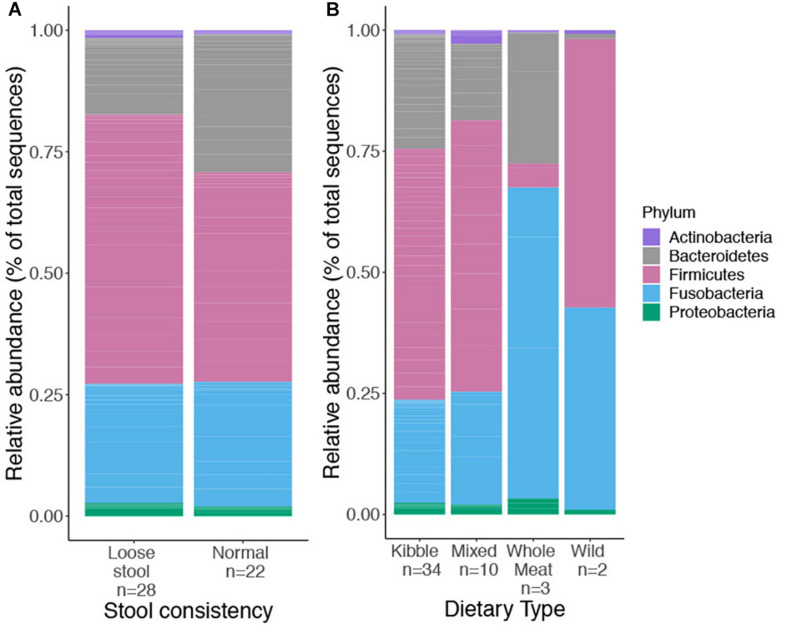
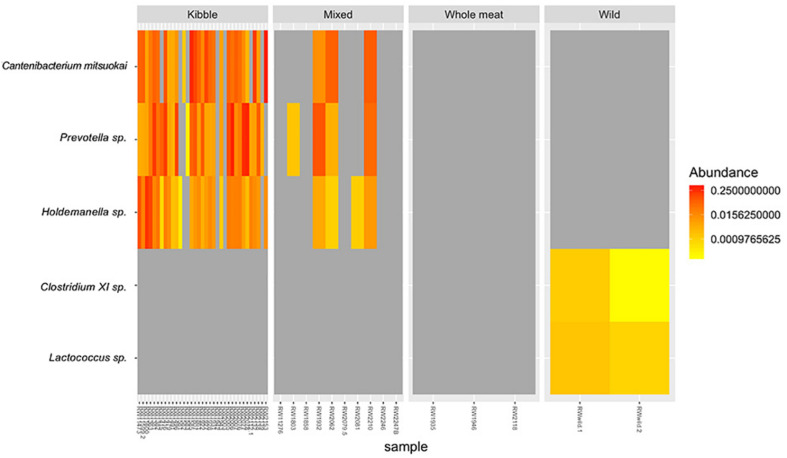
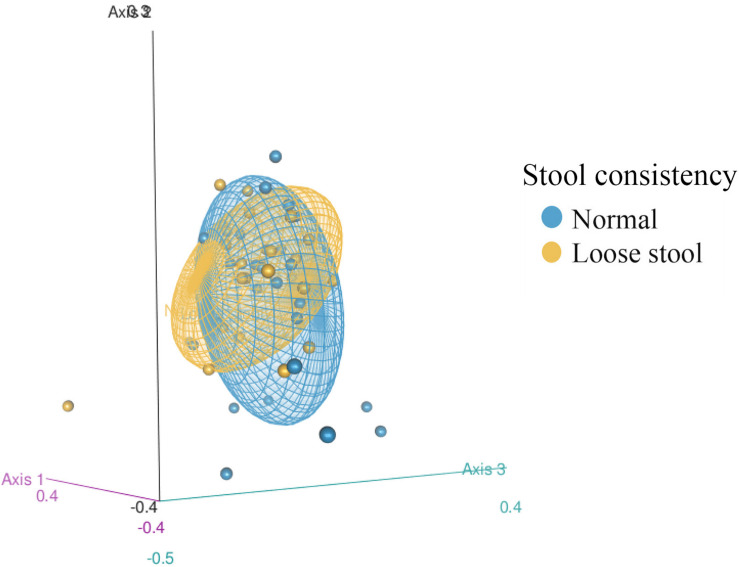
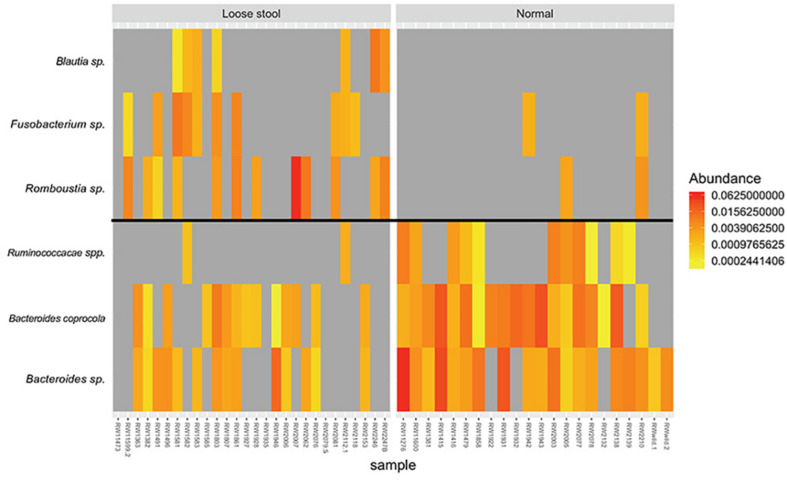
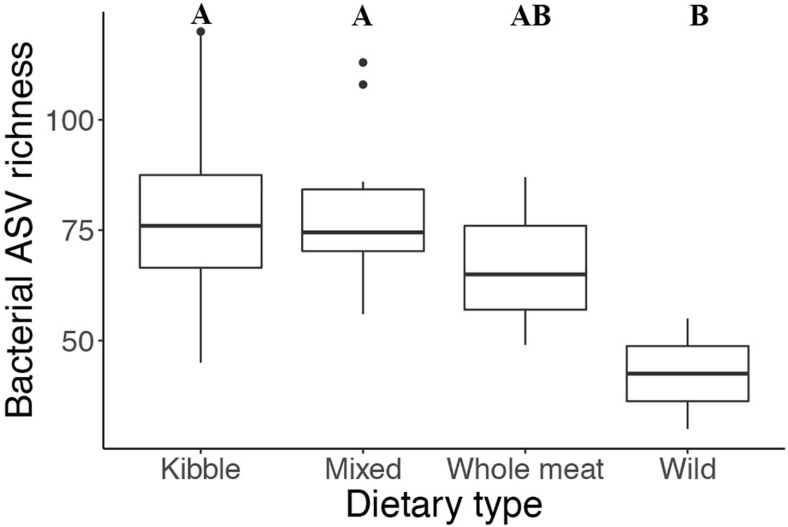
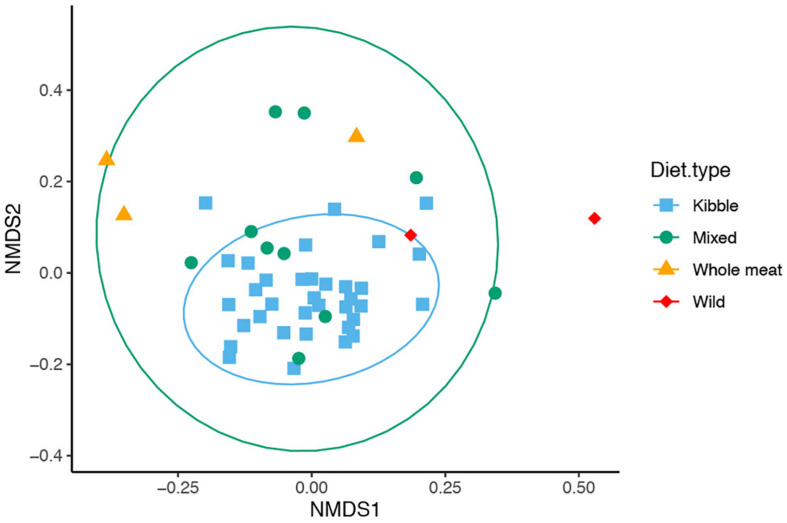
Captive management of many wildlife species can be challenging, with individuals displaying health disorders that are not generally described in the wild population. Retrospective studies have identified gastrointestinal (GI) diseases, in particular inflammatory bowel disease (IBD), as the second leading cause of captive adult red wolf ( mortality. Recent molecular studies show that imbalanced gut microbial composition is tightly linked to IBD in the domestic dog. The goal of the present study was to address two main questions: (1) how do red wolf gut microbiomes differ between animals with loose stool consistency, indicative of GI issues, and those with normal stool consistency and (2) how does dietary type relate to stool consistency and red wolf gut microbiomes? Fresh fecal samples were collected from 48 captive wolves housed in eight facilities in the United States and from two wild wolves living in Alligator River National Wildlife Refuge, NC, United States. For each individual, the stool consistency was categorized as loose or normal using a standardized protocol and their diet was categorized as either wild, whole meat, a mix of whole meat and kibble or kibble. We characterized gut microbiome structure using 16S rRNA gene amplicon sequencing. We found that red wolves with a loose stool consistency differed in composition than wolves with normal stool consistency, suggesting a link between GI health and microbiome composition. Diet was not related to stool consistency but did significantly impact gut microbiome composition; gut microbiome composition of wolves fed a kibble diet were significantly different than the gut microbiome composition of wolves fed a mixed, whole meat and wild diet. Findings from this study increase the understanding of the interplay between diet and GI health in the red wolf, a critical piece of information needed to maintain a healthy red wolf population .
对许多野生动物物种进行圈养管理具有挑战性,圈养个体常表现出野生种群中一般未出现的健康问题。回顾性研究已确定胃肠道(GI)疾病,尤其是炎症性肠病(IBD),是圈养成年红狼死亡的第二大主要原因。最近的分子研究表明,家犬肠道微生物组成失衡与IBD密切相关。本研究的目的是解决两个主要问题:(1)粪便质地松散(表明存在胃肠道问题)的红狼与粪便质地正常的红狼的肠道微生物群有何不同;(2)饮食类型与粪便质地及红狼肠道微生物群有何关系?从美国八个设施中圈养的48只狼以及美国北卡罗来纳州鳄鱼河国家野生动物保护区的两只野狼身上采集了新鲜粪便样本。对于每只个体,使用标准化方案将粪便质地分为松散或正常,并将其饮食分为野生、全肉、全肉与粗磨食物混合或粗磨食物。我们使用16S rRNA基因扩增子测序来表征肠道微生物群结构。我们发现,粪便质地松散的红狼与粪便质地正常的红狼在组成上存在差异,这表明胃肠道健康与微生物群组成之间存在联系。饮食与粪便质地无关,但确实对肠道微生物群组成有显著影响;喂食粗磨食物的狼的肠道微生物群组成与喂食混合、全肉和野生食物的狼的肠道微生物群组成有显著差异。本研究的结果增进了我们对红狼饮食与胃肠道健康之间相互作用的理解,这是维持健康红狼种群所需的关键信息。