Begum Nurun Nahar Fatema
Pediatric Cardiology, Labaid Cardiac Hospital, Dhaka, Bangladesh.
BMJ Paediatr Open. 2020 Nov 26;4(1):e000860. doi: 10.1136/bmjpo-2020-000860. eCollection 2020.
To establish novel facial characteristics unique to congenital rubella syndrome (CRS) as prediagnostic criteria to supplement disease diagnosis in patients with or without a history of maternal rubella infection.
An analysis of 115 CRS case series (2018-2020) based on the presence of any of the triad features.
Outpatient department of a tertiary care referral cardiac hospital in Dhaka, Bangladesh.
In total, 115 participants (53.1% men) were enrolled. Participants underwent echocardiography if they presented with suspected cardiac symptoms along with deafness, cataract or microcephaly.
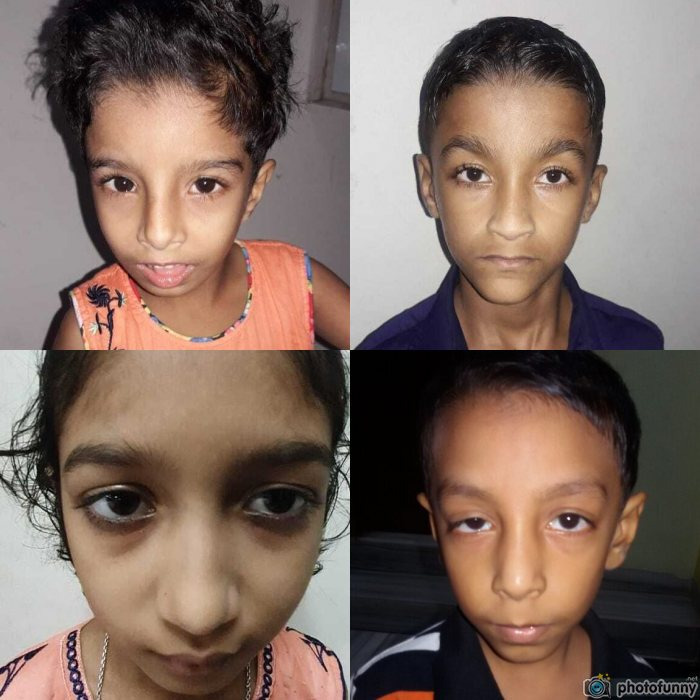
Age, sex and socioeconomic status of the participants; history of maternal vaccination and infection; facial characteristics unique to CRS (triangular face, prominent nose, wide forehead and a whorl on either side of the anterior hairline) named 'rubella facies' and frequency of systemic involvements in CRS.
The median patient age was 2 years. The income of 50.4% of the participating families was <US$1500. Further, 32 mothers (27.8%) were infected with rubella during the first trimester of pregnancy, 15 (13.0%) during the second trimester and 3 (2.6%) during the third trimester. The remainder (65.2%) recalled no history of infection during pregnancy. Rubella facies presented as a triangular-shaped face in 95 (82.6%) cases, a broad forehead in 88 (76.5%) and a prominent nose in 75 (65.2%). A rubella whorl was present on the right or left side of the anterior hairline in 80% and 18.2% of cases, respectively. IgG and IgM antibodies were present in 91.3% and 8.6% of children, respectively. Cataract, deafness, microcephaly, and congenital heart disease were detected in 53.0%, 75.6%, 68.6% and 98.2% of cases, respectively.
Rubella facies, a set of unique facial characteristics, can support early CRS diagnosis and treatment and may supplement the existing CRS triad.
确立先天性风疹综合征(CRS)特有的新面部特征作为诊断前标准,以补充对有或无母亲风疹感染史患者的疾病诊断。
基于三联征特征中任何一项的存在情况,对115例CRS病例系列(2018 - 2020年)进行分析。
孟加拉国达卡一家三级护理转诊心脏病医院的门诊部。
共纳入115名参与者(53.1%为男性)。如果参与者出现疑似心脏症状以及耳聋、白内障或小头畸形,则接受超声心动图检查。
参与者的年龄、性别和社会经济状况;母亲的疫苗接种和感染史;CRS特有的面部特征(三角脸、鼻梁突出、额头宽阔以及前发际两侧各有一个发旋),即“风疹面容”以及CRS中全身受累的频率。
患者中位年龄为2岁。50.4%的参与家庭收入低于1500美元。此外,32名母亲(27.8%)在妊娠早期感染风疹,15名(13.0%)在妊娠中期感染,3名(2.6%)在妊娠晚期感染。其余(65.2%)回忆孕期无感染史。风疹面容表现为三角脸的有95例(82.6%),额头宽阔的有88例(76.5%),鼻梁突出的有75例(65.2%)。前发际右侧或左侧有风疹发旋的病例分别占80%和18.2%。儿童中IgG和IgM抗体阳性率分别为91.3%和8.6%。白内障、耳聋、小头畸形和先天性心脏病的检出率分别为53.0%、75.6%、68.6%和98.2%。
风疹面容这一组独特的面部特征可支持CRS的早期诊断和治疗,并可能补充现有的CRS三联征。