• 文献检索
  • 文档翻译
  • 深度研究
  • 学术资讯
  • Suppr Zotero 插件Zotero 插件
  • 邀请有礼
  • 套餐&价格
  • 历史记录
应用&插件
Suppr Zotero 插件Zotero 插件浏览器插件Mac 客户端Windows 客户端微信小程序
定价
高级版会员购买积分包购买API积分包
服务
文献检索文档翻译深度研究API 文档MCP 服务
关于我们
关于 Suppr公司介绍联系我们用户协议隐私条款
关注我们

Suppr 超能文献

核心技术专利:CN118964589B侵权必究
粤ICP备2023148730 号-1Suppr @ 2026

文献检索

告别复杂PubMed语法,用中文像聊天一样搜索,搜遍4000万医学文献。AI智能推荐,让科研检索更轻松。

立即免费搜索

文件翻译

保留排版,准确专业,支持PDF/Word/PPT等文件格式,支持 12+语言互译。

免费翻译文档

深度研究

AI帮你快速写综述,25分钟生成高质量综述,智能提取关键信息,辅助科研写作。

立即免费体验

从鼠群的微生物群中检测和消除一种新型非产毒菌株。

Detection and elimination of a novel non-toxigenic strain from the microbiota of a mouse colony.

机构信息

Department of Microbiology, Perelman School of Medicine, University of Pennsylvania , Philadelphia, PA, USA.

Department of Microbiology and Immunology, Montana State University , Bozeman, MT, USA.

出版信息

Gut Microbes. 2020 Nov 9;12(1):1-15. doi: 10.1080/19490976.2020.1851999.

DOI:10.1080/19490976.2020.1851999
PMID:33305657
原文链接:https://pmc.ncbi.nlm.nih.gov/articles/PMC7734020/
Abstract

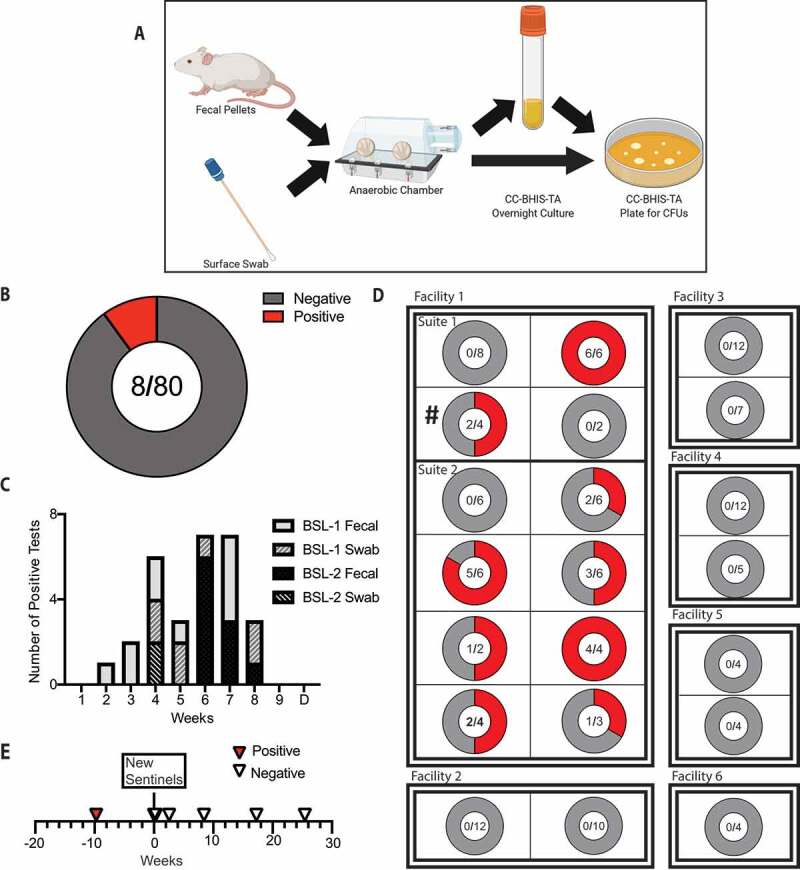
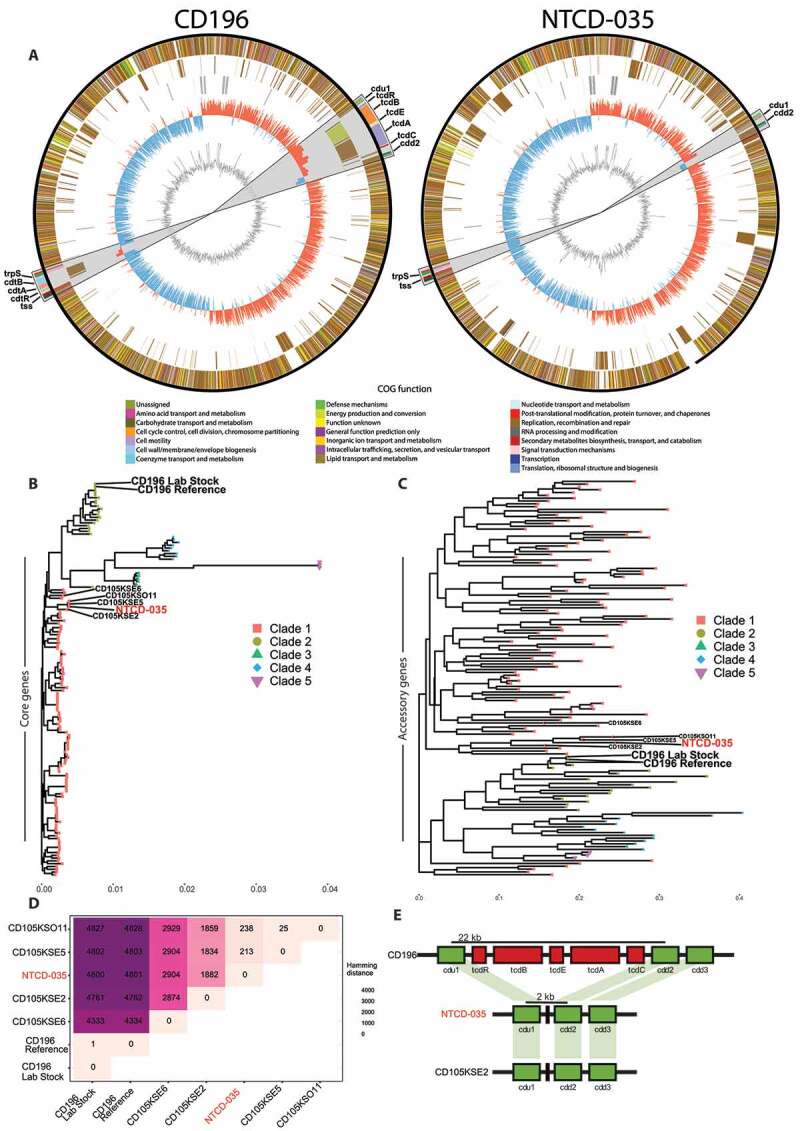
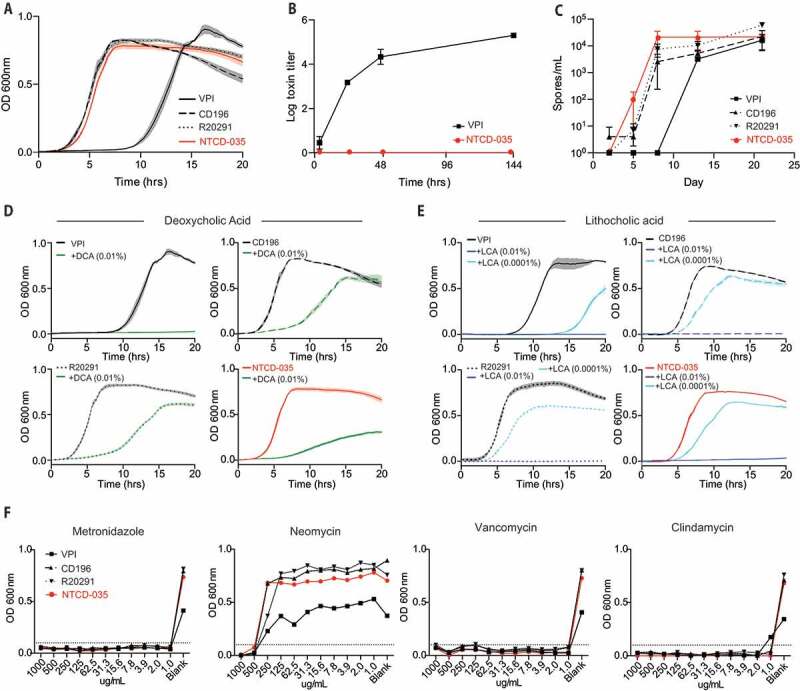
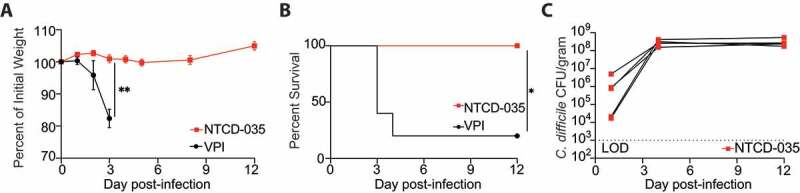
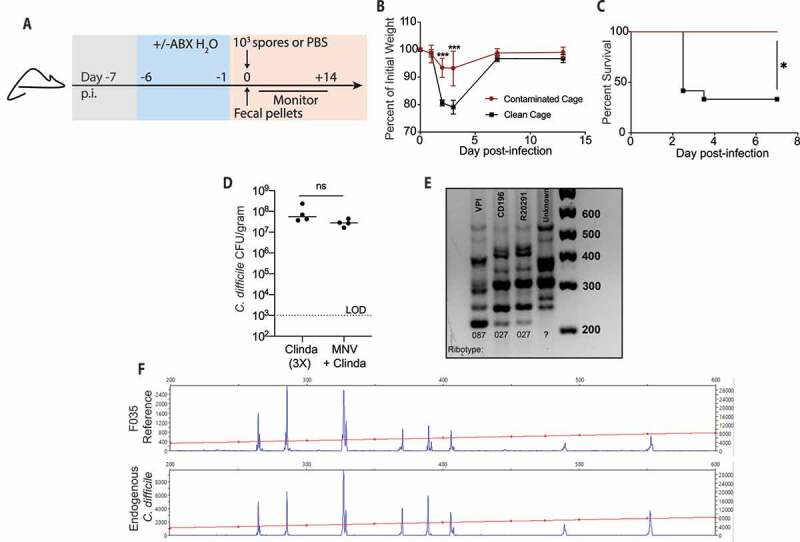
is an enteric bacterial pathogen that can a cause nosocomial infection leading to debilitating colitis. The development of a murine model of infection has led to fundamental discoveries in disease pathogenesis and the host immune response to infection. Recently, endogenously present in the microbiota of mice has been reported and was found to complicate interpretation of mouse studies. Here, we report a novel strain, named NTCD-035, isolated from the microbiota of our mouse colony. The presence of NTCD-035 in mice prior to challenge with a highly pathogenic strain (VPI10463) led to significantly reduced disease severity. Phylogenetic characterization derived from whole genome sequencing and PCR ribotyping identified the isolate as a novel clade 1, ribotype 035 strain that lacks the pathogenicity locus required to produce toxins. Deficiency in toxin production along with sporulation capacity and secondary bile acid sensitivity was confirmed using assays. Inoculation of germ-free mice with NTCD-035 did not cause morbidity despite the strain readily colonizing the large intestine. Implementation of a culture-based screening procedure enabled the identification of mice harboring in their microbiota, the establishment of a -free mouse colony, and a monitoring system to prevent future contamination. Taken together, these data provide a framework for screening mice for endogenously harbored and support clinical findings that demonstrate the therapeutic potential of non-toxigenic strains in preventing associated disease. : - Pathogenicity locus, - Colony forming units, - toxin-A, - toxin-B, binary toxin A, binary toxin B, binary toxin R, non-toxigenic .

摘要

是一种肠道细菌病原体,可导致医院获得性感染,引起衰弱性结肠炎。感染的小鼠模型的发展导致了对疾病发病机制和宿主对感染的免疫反应的基本发现。最近,报道了内源性存在于小鼠微生物群中的,并且发现它使小鼠研究的解释复杂化。在这里,我们报告了一种从我们的小鼠群的微生物群中分离出的新型菌株,命名为 NTCD-035。在挑战具有高致病性菌株(VPI10463)之前,NTCD-035 存在于小鼠中会导致疾病严重程度显着降低。基于全基因组测序和 PCR 核糖体分型的系统发育特征将分离株鉴定为新型 1 群,035 型菌株,缺乏产生毒素所需的毒力基因座。通过毒素产生、孢子形成能力和次级胆汁酸敏感性测定证实了缺失毒素产生能力。尽管该菌株可轻易定植大肠,但用 NTCD-035 接种无菌小鼠不会引起发病。实施基于培养的筛选程序可识别出在其微生物群中携带的小鼠,建立无的小鼠群,并建立监测系统以防止将来的污染。总的来说,这些数据为筛选内源携带的小鼠提供了一个框架,并支持临床发现,即非产毒菌株在预防相关疾病方面具有治疗潜力。:- 毒力基因座,- 菌落形成单位,- 毒素-A,- 毒素-B,- 双功能毒素 A,- 双功能毒素 B,- 双功能毒素 R,- 非产毒。
https://cdn.ncbi.nlm.nih.gov/pmc/blobs/0be4/7734020/f0a3460018ba/KGMI_A_1851999_F0005_OC.jpg
https://cdn.ncbi.nlm.nih.gov/pmc/blobs/0be4/7734020/50d011c57cd2/KGMI_A_1851999_F0001_OC.jpg
https://cdn.ncbi.nlm.nih.gov/pmc/blobs/0be4/7734020/bb9d2761b9d2/KGMI_A_1851999_F0002_OC.jpg
https://cdn.ncbi.nlm.nih.gov/pmc/blobs/0be4/7734020/9b2439fe331d/KGMI_A_1851999_F0003_OC.jpg
https://cdn.ncbi.nlm.nih.gov/pmc/blobs/0be4/7734020/7eb89c9a8b9d/KGMI_A_1851999_F0004_OC.jpg
https://cdn.ncbi.nlm.nih.gov/pmc/blobs/0be4/7734020/f0a3460018ba/KGMI_A_1851999_F0005_OC.jpg
https://cdn.ncbi.nlm.nih.gov/pmc/blobs/0be4/7734020/50d011c57cd2/KGMI_A_1851999_F0001_OC.jpg
https://cdn.ncbi.nlm.nih.gov/pmc/blobs/0be4/7734020/bb9d2761b9d2/KGMI_A_1851999_F0002_OC.jpg
https://cdn.ncbi.nlm.nih.gov/pmc/blobs/0be4/7734020/9b2439fe331d/KGMI_A_1851999_F0003_OC.jpg
https://cdn.ncbi.nlm.nih.gov/pmc/blobs/0be4/7734020/7eb89c9a8b9d/KGMI_A_1851999_F0004_OC.jpg
https://cdn.ncbi.nlm.nih.gov/pmc/blobs/0be4/7734020/f0a3460018ba/KGMI_A_1851999_F0005_OC.jpg

相似文献

1
Detection and elimination of a novel non-toxigenic strain from the microbiota of a mouse colony.从鼠群的微生物群中检测和消除一种新型非产毒菌株。
Gut Microbes. 2020 Nov 9;12(1):1-15. doi: 10.1080/19490976.2020.1851999.
2
Study of the frequency of Clostridium difficile tcdA, tcdB, cdtA and cdtB genes in feces of Calves in south west of Iran.伊朗西南部犊牛粪便中艰难梭菌tcdA、tcdB、cdtA和cdtB基因频率的研究。
Ann Clin Microbiol Antimicrob. 2014 Jun 5;13:21. doi: 10.1186/1476-0711-13-21.
3
Genomic and phenotypic studies among isolates show a high prevalence of clade 2 and great diversity in clinical isolates from Mexican adults and children with healthcare-associated diarrhea.对 株进行的基因组和表型研究表明,来自墨西哥与医疗保健相关腹泻的成人和儿童临床分离株中,2 型分支的流行率很高,且具有很大的多样性。
Microbiol Spectr. 2024 Jul 2;12(7):e0394723. doi: 10.1128/spectrum.03947-23. Epub 2024 Jun 12.
4
Prevalence and characterization of a binary toxin (actin-specific ADP-ribosyltransferase) from Clostridium difficile.艰难梭菌二元毒素(肌动蛋白特异性 ADP 核糖基转移酶)的流行情况及特性
J Clin Microbiol. 2004 May;42(5):1933-9. doi: 10.1128/JCM.42.5.1933-1939.2004.
5
Association between Clostridioides difficile ribotypes, restriction endonuclease analysis types, and toxin gene expression.艰难梭菌核糖型、限制性内切酶分析类型与毒素基因表达之间的关联。
Anaerobe. 2018 Dec;54:140-143. doi: 10.1016/j.anaerobe.2018.09.002. Epub 2018 Sep 7.
6
Molecular analysis and genotyping of pathogenicity locus in Clostridioides difficile strains isolated from patients in Tehran hospitals during the years 2007-2010.2007-2010 年德黑兰医院分离的艰难梭菌菌株中致病性基因座的分子分析和基因分型。
Infect Genet Evol. 2019 Jul;71:205-210. doi: 10.1016/j.meegid.2019.03.010. Epub 2019 Mar 19.
7
Comparative genomics of toxinotypes identifies module-based toxin gene evolution.毒素型比较基因组学确定了基于模块的毒素基因进化。
Microb Genom. 2020 Oct;6(10). doi: 10.1099/mgen.0.000449.
8
Characterization of Clostridioides difficile DSM 101085 with A-B-CDT+ Phenotype from a Late Recurrent Colonization.从晚期复发性定植中具有 A-B-CDT+表型的艰难梭菌 DSM 101085 的特性。
Genome Biol Evol. 2020 May 1;12(5):566-577. doi: 10.1093/gbe/evaa072.
9
New multiplex PCR method for the detection of Clostridium difficile toxin A (tcdA) and toxin B (tcdB) and the binary toxin (cdtA/cdtB) genes applied to a Danish strain collection.用于检测艰难梭菌毒素A(tcdA)、毒素B(tcdB)及二元毒素(cdtA/cdtB)基因的新型多重PCR方法应用于丹麦菌株库。
Clin Microbiol Infect. 2008 Nov;14(11):1057-64. doi: 10.1111/j.1469-0691.2008.02092.x.
10
Genomic and Phenotypic Characterization of the Nontoxigenic Clostridioides difficile Strain CCUG37785 and Demonstration of Its Therapeutic Potential for the Prevention of C. difficile Infection.非产毒艰难梭菌 CCUG37785 株的基因组和表型特征及其预防艰难梭菌感染的治疗潜力的研究
Microbiol Spectr. 2022 Apr 27;10(2):e0178821. doi: 10.1128/spectrum.01788-21. Epub 2022 Mar 22.

引用本文的文献

1
toxin A and toxin B inhibit toxin-specific adaptive immune responses through glucosyltransferase-dependent activity.毒素A和毒素B通过依赖葡萄糖基转移酶的活性抑制毒素特异性适应性免疫反应。
bioRxiv. 2025 Aug 2:2025.07.30.667646. doi: 10.1101/2025.07.30.667646.
2
Prevention and cure of murine infection by a Lachnospiraceae strain.通过一株lachnospiraceae 菌株预防和治疗小鼠感染。
Gut Microbes. 2024 Jan-Dec;16(1):2392872. doi: 10.1080/19490976.2024.2392872. Epub 2024 Aug 27.
3
Characterizing metabolic drivers of infection with activity-based hydrazine probes.

本文引用的文献

1
Multi-omic Analysis of the Interaction between Clostridioides difficile Infection and Pediatric Inflammatory Bowel Disease.多组学分析艰难梭菌感染与儿童炎症性肠病的相互作用。
Cell Host Microbe. 2020 Sep 9;28(3):422-433.e7. doi: 10.1016/j.chom.2020.07.020. Epub 2020 Aug 20.
2
Trends in U.S. Burden of Infection and Outcomes.美国感染负担和结局的趋势。
N Engl J Med. 2020 Apr 2;382(14):1320-1330. doi: 10.1056/NEJMoa1910215.
3
IL-33 drives group 2 innate lymphoid cell-mediated protection during Clostridium difficile infection.
使用基于活性的肼探针表征感染的代谢驱动因素。
Front Pharmacol. 2023 Jan 26;14:1074619. doi: 10.3389/fphar.2023.1074619. eCollection 2023.
4
Make It Less : Understanding Genetic Evolution and Global Spread of .使它变少:理解遗传进化和 的全球传播。
Genes (Basel). 2022 Nov 24;13(12):2200. doi: 10.3390/genes13122200.
5
Association of Gut Microbiota With Intestinal Ischemia/Reperfusion Injury.肠道微生物群与肠道缺血/再灌注损伤的关系。
Front Cell Infect Microbiol. 2022 Jul 12;12:962782. doi: 10.3389/fcimb.2022.962782. eCollection 2022.
6
Genomic and Phenotypic Characterization of the Nontoxigenic Clostridioides difficile Strain CCUG37785 and Demonstration of Its Therapeutic Potential for the Prevention of C. difficile Infection.非产毒艰难梭菌 CCUG37785 株的基因组和表型特征及其预防艰难梭菌感染的治疗潜力的研究
Microbiol Spectr. 2022 Apr 27;10(2):e0178821. doi: 10.1128/spectrum.01788-21. Epub 2022 Mar 22.
IL-33 驱动 2 型固有淋巴细胞介导的艰难梭菌感染保护作用。
Nat Commun. 2019 Jun 20;10(1):2712. doi: 10.1038/s41467-019-10733-9.
4
Sunbeam: an extensible pipeline for analyzing metagenomic sequencing experiments.Sunbeam:用于分析宏基因组测序实验的可扩展流水线。
Microbiome. 2019 Mar 22;7(1):46. doi: 10.1186/s40168-019-0658-x.
5
The founder hypothesis: A basis for microbiota resistance, diversity in taxa carriage, and colonization resistance against pathogens.奠基者假说:微生物群抗性、分类群携带多样性及对病原体定植抗性的基础。
PLoS Pathog. 2019 Feb 21;15(2):e1007563. doi: 10.1371/journal.ppat.1007563. eCollection 2019 Feb.
6
Novel Clade C-I Clostridium difficile strains escape diagnostic tests, differ in pathogenicity potential and carry toxins on extrachromosomal elements.新型 C 群 I 型艰难梭菌逃避诊断检测,在毒力潜能方面存在差异,并在染色体外元件上携带毒素。
Sci Rep. 2018 Sep 17;8(1):13951. doi: 10.1038/s41598-018-32390-6.
7
Non-toxigenic (Formerly Clostridium) for Prevention of Infection: From Bench to Bedside Back to Bench and Back to Bedside.非产毒型(原梭菌属)预防感染:从实验室到临床再回到实验室并再回到临床
Front Microbiol. 2018 Jul 26;9:1700. doi: 10.3389/fmicb.2018.01700. eCollection 2018.
8
Targeting Surface Components to Develop Immunotherapeutic Strategies Against Infection.靶向表面成分以开发抗感染免疫治疗策略。
Front Microbiol. 2018 May 23;9:1009. doi: 10.3389/fmicb.2018.01009. eCollection 2018.
9
Biology: Sporulation, Germination, and Corresponding Therapies for Infection.生物学:孢子形成、发芽和相应的感染治疗。
Front Cell Infect Microbiol. 2018 Feb 8;8:29. doi: 10.3389/fcimb.2018.00029. eCollection 2018.
10
The role of toxins in Clostridium difficile infection.毒素在艰难梭菌感染中的作用。
FEMS Microbiol Rev. 2017 Nov 1;41(6):723-750. doi: 10.1093/femsre/fux048.