Division of Hepatobiliary and Pancreatic Surgery, Department of Surgery, First Affiliated Hospital, Zhejiang University School of Medicine, Hangzhou, China.
Technol Cancer Res Treat. 2020 Jan-Dec;19:1533033820979703. doi: 10.1177/1533033820979703.
Novel immunotherapy is one of the options for advanced biliary tract cancer (BTC) patients who are traditionally intolerant to chemotherapy. However, clinical evidence for single immunotherapy with pembrolizumab or nivolumab is limited. The present study assessed the safety and efficiency of the anti-PD-1 antibody, camrelizumab, as monotherapy in patients with unresectable or recurrent BTC.
A retrospective evaluation was conducted among 4 patients with BTC, including 2 with intrahepatic cholangiocellular carcinoma (ICC), one with extrahepatic bile duct cancer, and one with gallbladder cancer. The patients with unresectable or recurrent BTC were refractory or intolerant to gemcitabine plus cisplatin treatment regimens and received at least one intravenous dose (3 mg/kg) of camrelizumab monotherapy every 3 weeks. Gene sequencing analysis was also performed for biomarker screening. Patient reaction was evaluated according to modified response evaluation criteria in solid tumor (RECIST) version 1.1, progression-free survival (PFS), and toxicity.
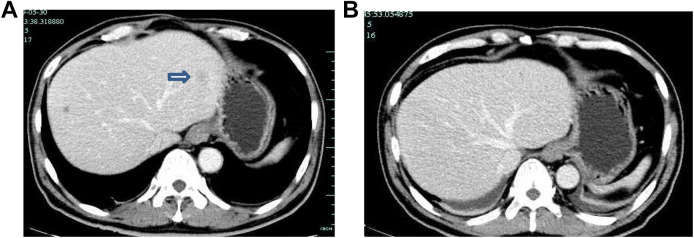
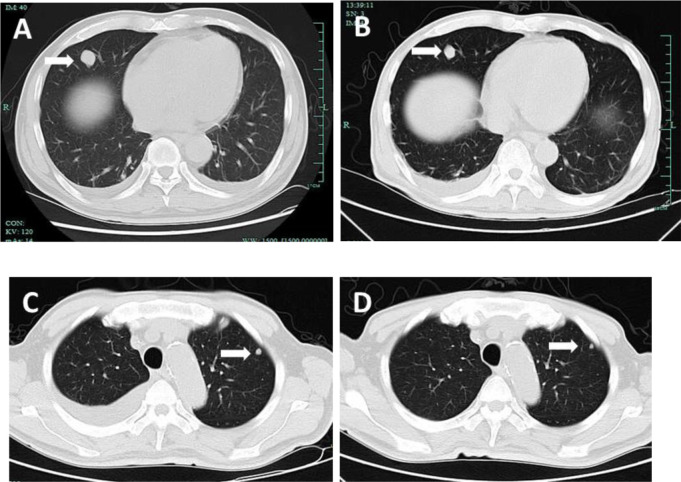
In this cohort, 1 patient with recurrent ICC had a positive response to treatment, with a substantial tumor size reduction in liver and lung metastases verified using a radiological test after receiving 3 cycles of camrelizumab. The PFS was 4.9 months. The remaining 3 patients showed no response to treatment and experienced disease progression. RNA sequence analysis didn't found high expression on genes that related to PD-L1, microsatellite instability, tumor mutation burden, and DNA mismatch repair in these patients. Grade 3 treatment-related adverse event was observed in 1 patient.
Anti-PD-1 antibody camrelizumab had a manageable safety profile in patients with advanced BTC. This initial assessment of camrelizumab monotherapy provides effective evidence for patients with refractory BTC in biomarker-unselected patients.
新型免疫疗法是传统上不耐受化疗的晚期胆道癌(BTC)患者的选择之一。然而,单药使用派姆单抗或纳武单抗的临床证据有限。本研究评估了抗 PD-1 抗体卡瑞利珠单抗单药治疗不可切除或复发性 BTC 患者的安全性和有效性。
对 4 例 BTC 患者进行回顾性评估,包括 2 例肝内胆管细胞癌(ICC)、1 例肝外胆管癌和 1 例胆囊癌。不可切除或复发性 BTC 患者对吉西他滨加顺铂治疗方案耐药或不耐受,接受至少 1 个周期(3mg/kg)的卡瑞利珠单抗单药治疗,每 3 周一次。还进行了基因测序分析以进行生物标志物筛选。根据改良的实体瘤反应评估标准(RECIST)1.1 版评估患者反应,无进展生存期(PFS)和毒性。
在该队列中,1 例复发性 ICC 患者对治疗有反应,在接受 3 个周期卡瑞利珠单抗治疗后,肝脏和肺转移灶的肿瘤大小明显缩小,经影像学检查证实。PFS 为 4.9 个月。其余 3 名患者对治疗无反应,出现疾病进展。RNA 序列分析未发现这些患者的 PD-L1、微卫星不稳定、肿瘤突变负荷和 DNA 错配修复相关基因高表达。1 例患者出现 3 级治疗相关不良事件。
抗 PD-1 抗体卡瑞利珠单抗在晚期 BTC 患者中具有可管理的安全性特征。卡瑞利珠单抗单药治疗的初步评估为生物标志物未选择的难治性 BTC 患者提供了有效的证据。