Department of Orthopedic Oncology, The First Affiliated Hospital of Guangzhou University of Chinese Medicine, Guangzhou University of Chinese Medicine, Guangzhou, People's Republic of China.
Laboratory of Orthopaedics & Traumatology, Lingnan Medical Research Center, Guangzhou University of Chinese Medicine, Guangzhou, China.
BMC Musculoskelet Disord. 2020 Dec 12;21(1):841. doi: 10.1186/s12891-020-03860-8.
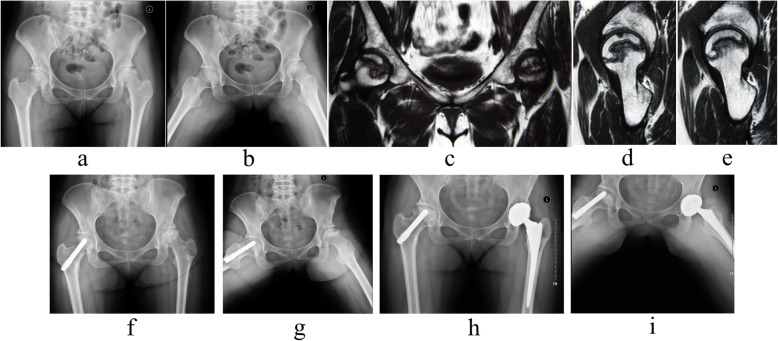
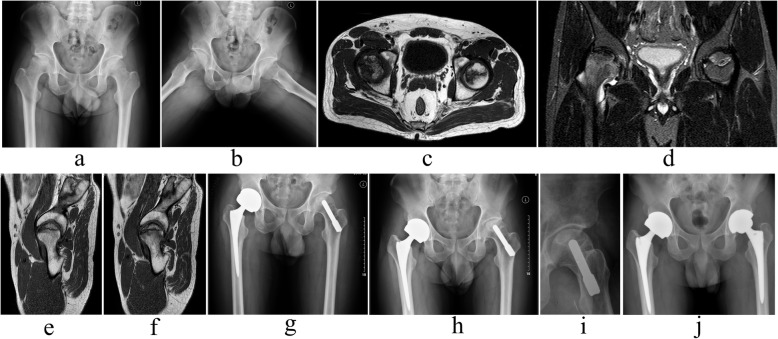
Our study aimed to investigate the clinical outcomes and survival rates following porous tantalum rod surgery (PTRS) and conversion total hip arthroplasty (THA) subsequent to failed PTRS.
A total of 38 subjects (40 hips) with osteonecrosis of the femoral head (ONFH) were included in this retrospective study between January 2008 and December 2011. All subjects were evaluated before surgery by using the Association Research Circulation Osseous (ARCO) classification system, the Japan Investigation Committee (JIC) classification and the Harris hip score (HHS). The endpoint of this study was set as final follow-up (including the survival time of PTRS and conversion THA). The rates of radiological progression were also evaluated. Patients who received conversion THA were further followed and compared to a control group of 58 patients with ONFH who underwent primary THA.
The mean follow-up time was 120.7 ± 9.2 (range, 104-143) months, and the overall survival rate was 75% at 96 months (ARCO stage II: 81.5%; stage III: 38.5%; JIC type C1: 83.3%; C2: 30%). The HHS before surgery was 59 (55-61), in contrast to 94 (91-96) at 96 months follow-up (P < 0.01). HHS in stage III show a significant poorer result compared to stage II at 24 months. HHS in Type C2 group show no significant difference compared to HHS before surgery at 24 and 60 months follow up (P = 0.91, P = 0.30). Twelve hips requiring secondary THA were followed for 66.9 ± 31.7 months, and control hips that underwent primary THA was followed for 75.4 ± 14.9 months. The HHS in the conversion group was 89 (86-93) and that in the primary THA group was 92 (79-95, P = 0.09) at the 5-year follow-up.
In the mid-term follow-up, porous tantalum implants showed an encouraging survival rate in symptomatic patients in early stages (ARCO stage II) or with limited necrotic lesions (JIC type C1). In addition, our results did not demonstrated any difference between primary THA and conversion THA.
本研究旨在探讨多孔钽棒手术(PTRS)失败后行多孔钽棒翻修全髋关节置换术(THA)的临床结果和生存率。
回顾性分析 2008 年 1 月至 2011 年 12 月间因股骨头坏死(ONFH)接受治疗的 38 例(40 髋)患者的临床资料。所有患者术前均采用 Association Research Circulation Osseous(ARCO)分类系统、日本骨科协会(JIC)分类和 Harris 髋关节评分(HHS)进行评估。本研究的终点为最终随访(包括 PTRS 和翻修 THA 的生存时间)。还评估了影像学进展的发生率。接受翻修 THA 的患者进一步随访,并与 58 例接受初次 THA 的 ONFH 患者的对照组进行比较。
平均随访时间为 120.7±9.2(范围:104-143)个月,96 个月时总体生存率为 75%(ARCO Ⅱ期:81.5%;Ⅲ期:38.5%;JIC 类型 C1:83.3%;C2:30%)。术前 HHS 为 59(55-61),而 96 个月随访时为 94(91-96)(P<0.01)。Ⅲ期 HHS 与Ⅱ期相比,在 24 个月时明显较差。C2 组 HHS 在 24 个月和 60 个月随访时与术前无显著差异(P=0.91,P=0.30)。12 髋需要二期 THA 随访 66.9±31.7 个月,初次 THA 随访 75.4±14.9 个月。翻修组 HHS 为 89(86-93),初次 THA 组为 92(79-95,P=0.09),5 年随访时。
在中期随访中,多孔钽植入物在早期(ARCO Ⅱ期)或坏死范围有限(JIC 类型 C1)的有症状患者中显示出令人鼓舞的生存率。此外,我们的结果表明初次 THA 和翻修 THA 之间没有差异。