Department of Biology, James Madison University, 951 Carrier Drive, Harrisonburg, VA, 22801, USA.
Mol Brain. 2020 Dec 14;13(1):168. doi: 10.1186/s13041-020-00707-0.
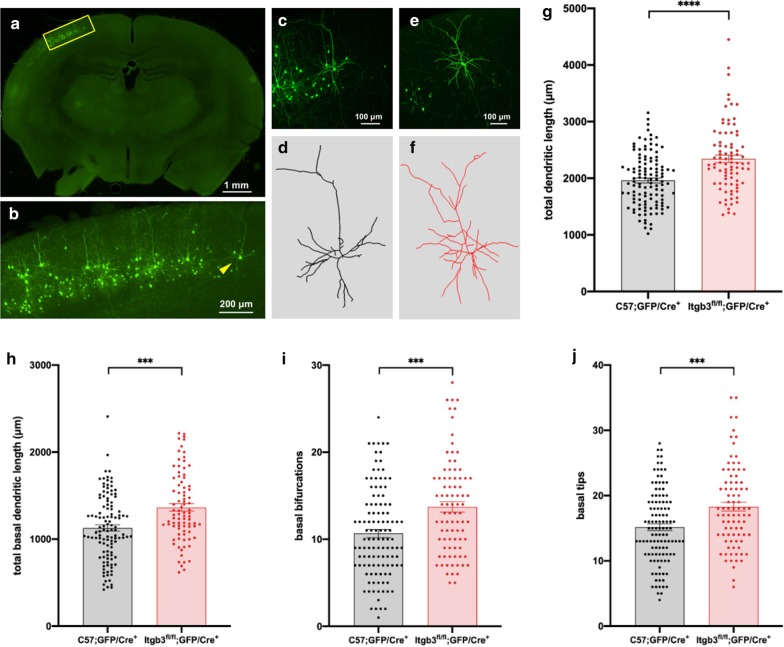
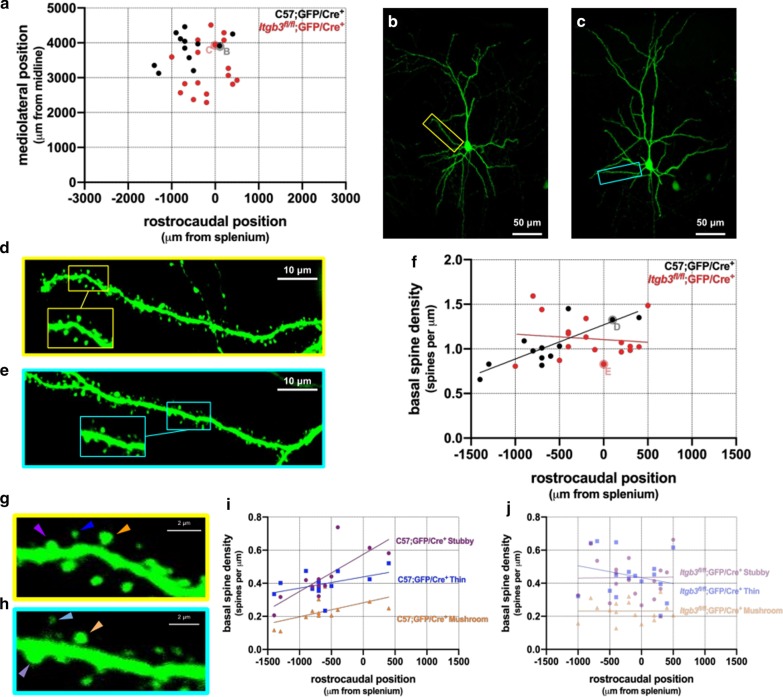
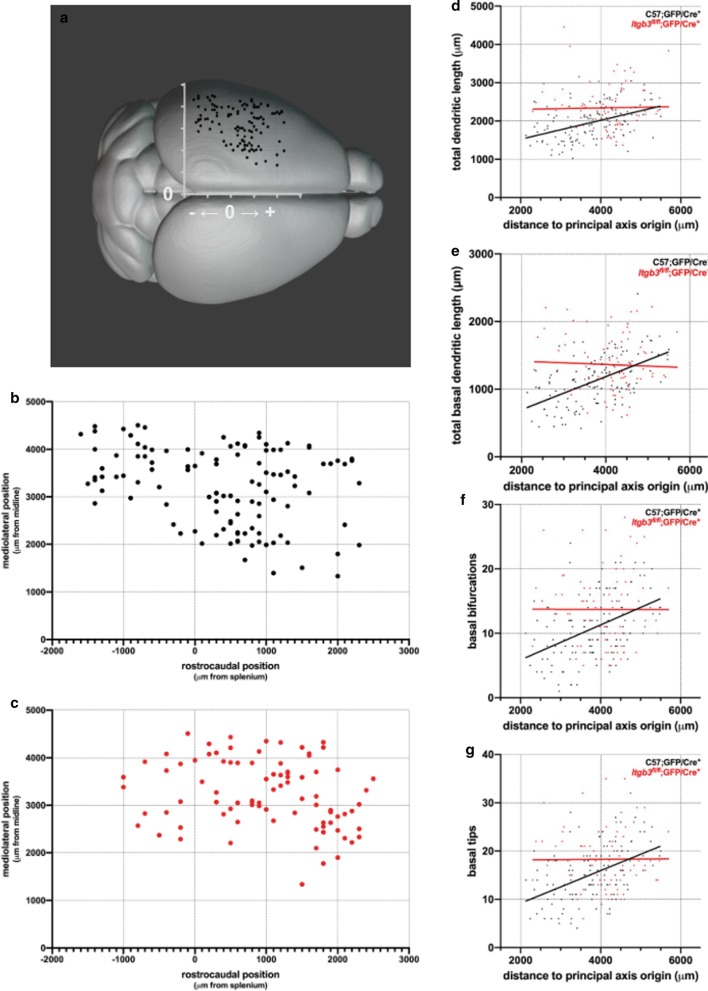
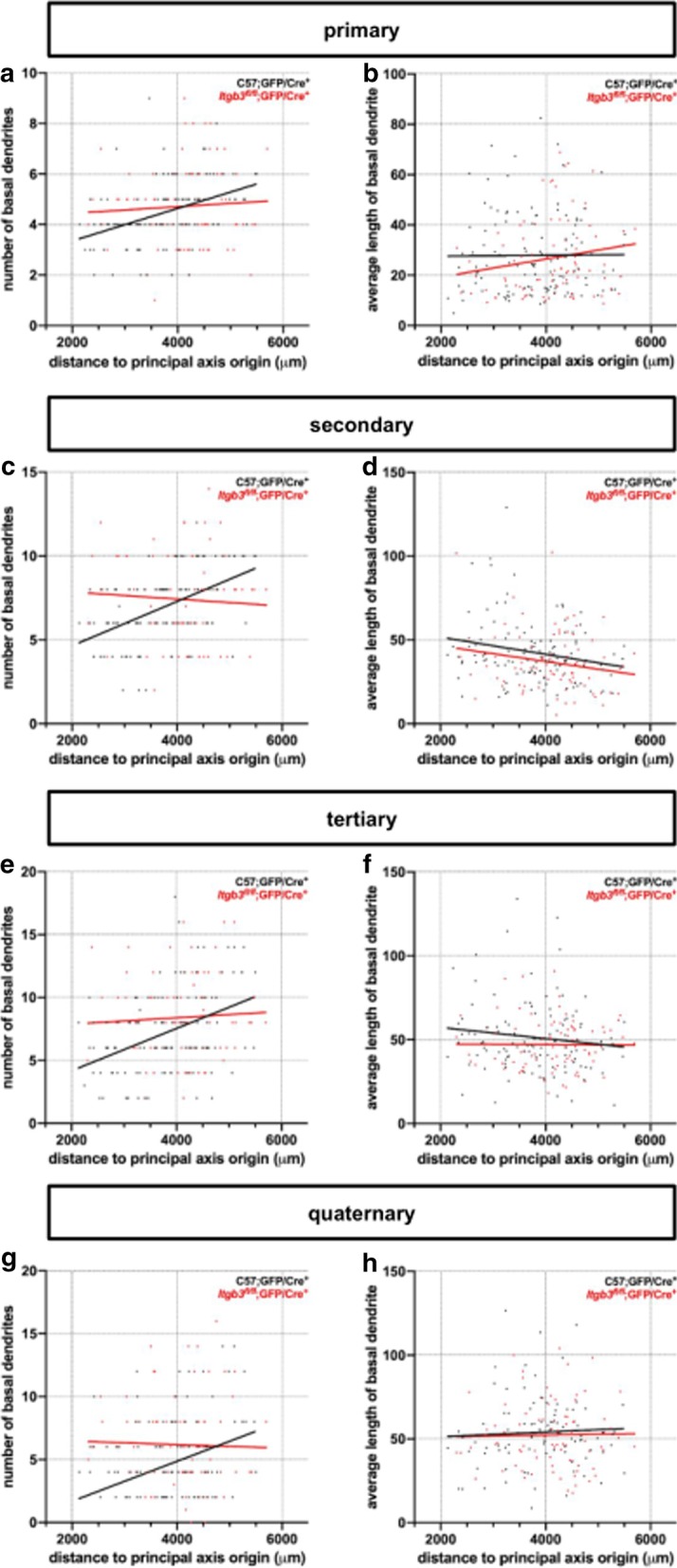
Dysfunctional dendritic arborization is a key feature of many developmental neurological disorders. Across various human brain regions, basal dendritic complexity is known to increase along a caudal-to-rostral gradient. We recently discovered that basal dendritic complexity of layer II/III cortical pyramidal neurons in the mouse increases along a caudomedial-to-rostrolateral gradient spanning multiple regions, but at the time, no molecules were known to regulate that exquisite pattern. Integrin subunits have been implicated in dendritic development, and the subunit with the strongest associations with autism spectrum disorder and intellectual disability is integrin β3 (Itgb3). In mice, global knockout of Itgb3 leads to autistic-like neuroanatomy and behavior. Here, we tested the hypothesis that Itgb3 is required for increasing dendritic complexity along the recently discovered tangential gradient among layer II/III cortical pyramidal neurons. We targeted a subset of layer II/III cortical pyramidal neurons for Itgb3 loss-of-function via Cre-loxP-mediated excision of Itgb3. We tracked the rostrocaudal and mediolateral position of the targeted neurons and reconstructed their dendritic arbors. In contrast to controls, the basal dendritic complexity of Itgb3 mutant neurons was not related to their cortical position. Basal dendritic complexity of mutant and control neurons differed because of overall changes in branch number across multiple branch orders (primary, secondary, etc.), rather than any changes in the average length at those branch orders. Furthermore, dendritic spine density was related to cortical position in control but not mutant neurons. Thus, the autism susceptibility gene Itgb3 is required for establishing a tangential pattern of basal dendritic complexity among layer II/III cortical pyramidal neurons, suggesting an early role for this molecule in the developing brain.
功能失调的树突分支是许多发育性神经紊乱的一个关键特征。在不同的人类大脑区域,基底树突的复杂性已知沿尾到头的梯度增加。我们最近发现,在跨越多个区域的鼠脑中,II/III 层皮质锥体神经元的基底树突复杂性沿尾侧到嘴侧的梯度增加,但当时还没有已知的分子来调节这种精细的模式。整合素亚基已被牵涉到树突发育中,与自闭症谱系障碍和智力障碍关联最强的亚基是整合素β3(Itgb3)。在小鼠中,Itgb3 的全局敲除导致类似自闭症的神经解剖和行为。在这里,我们测试了 Itgb3 是否需要增加最近发现的 II/III 层皮质锥体神经元之间的切线梯度的树突复杂性的假设。我们通过 Cre-loxP 介导的 Itgb3 缺失,靶向一组 II/III 层皮质锥体神经元进行 Itgb3 功能丧失。我们跟踪了靶向神经元的头尾位置和内外位置,并重建了它们的树突分支。与对照相比,Itgb3 突变神经元的基底树突复杂性与其皮质位置无关。突变和对照神经元的基底树突复杂性不同,是由于多个分支阶(主、次等)的分支数量的整体变化,而不是这些分支阶的平均长度的任何变化。此外,树突棘密度与对照神经元的皮质位置有关,但与突变神经元无关。因此,自闭症易感性基因 Itgb3 是建立 II/III 层皮质锥体神经元之间基底树突复杂性的切线模式所必需的,这表明该分子在发育中的大脑中具有早期作用。