Molecular Therapeutics Program, Fox Chase Cancer Center, Philadelphia, Pennsylvania, USA.
Pirogov Russian National Research Medical University, Moscow, Russia.
JCI Insight. 2021 Jan 25;6(2):143474. doi: 10.1172/jci.insight.143474.
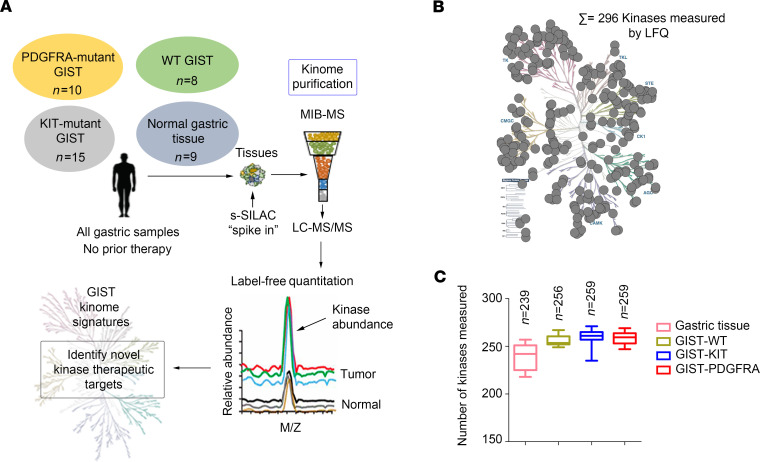
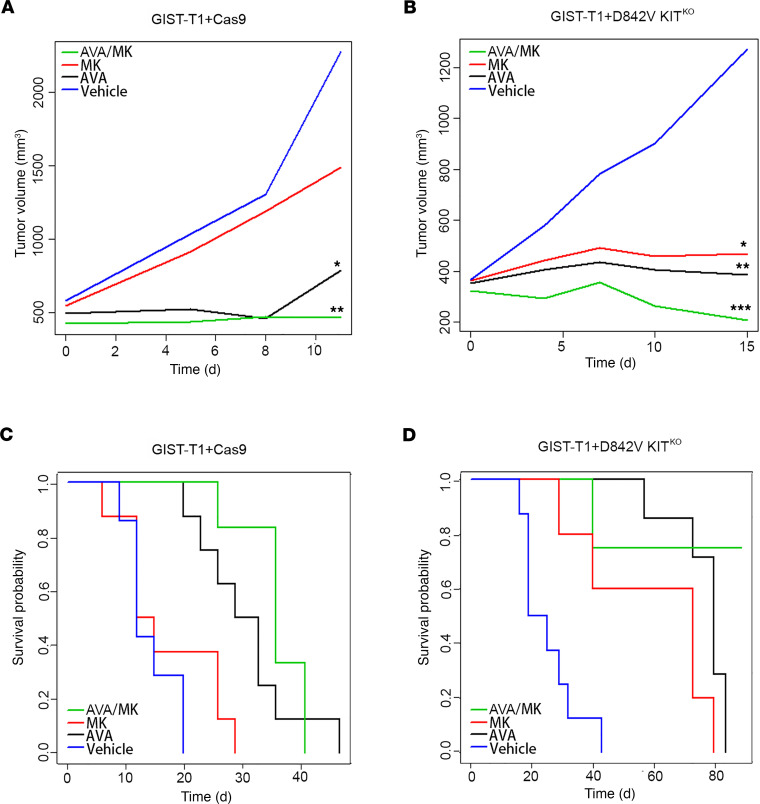
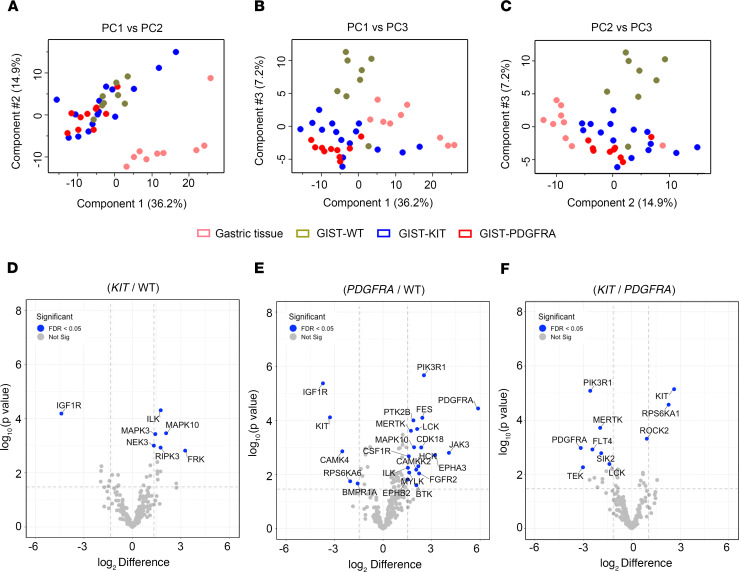
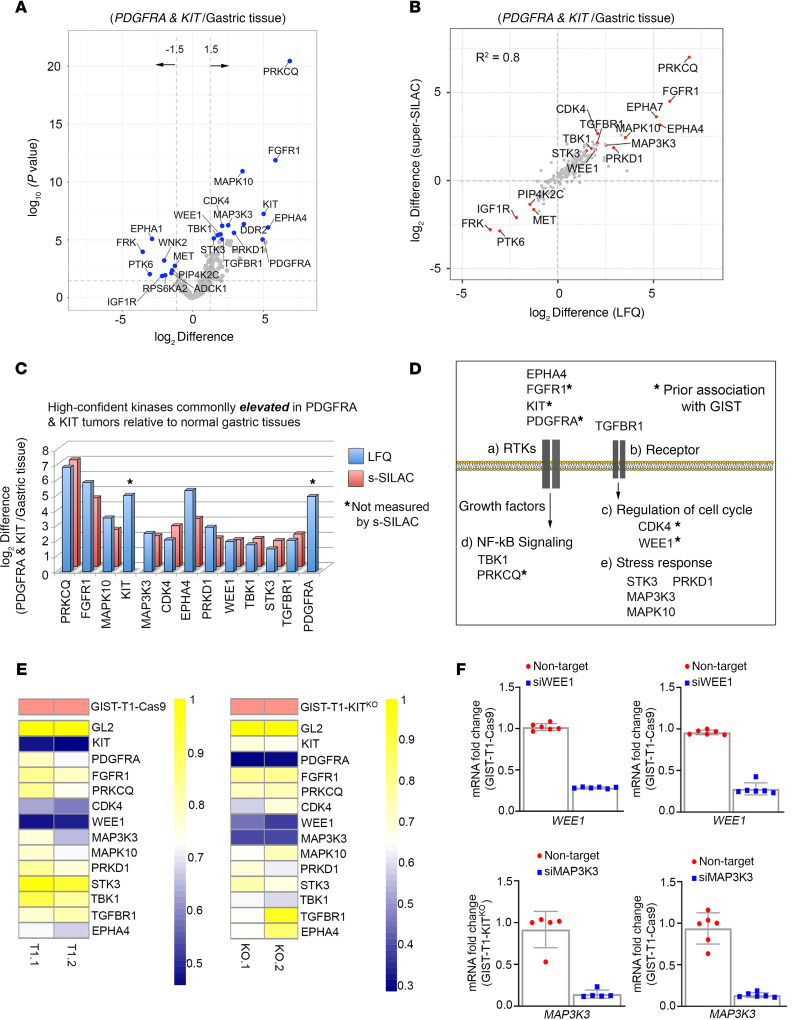
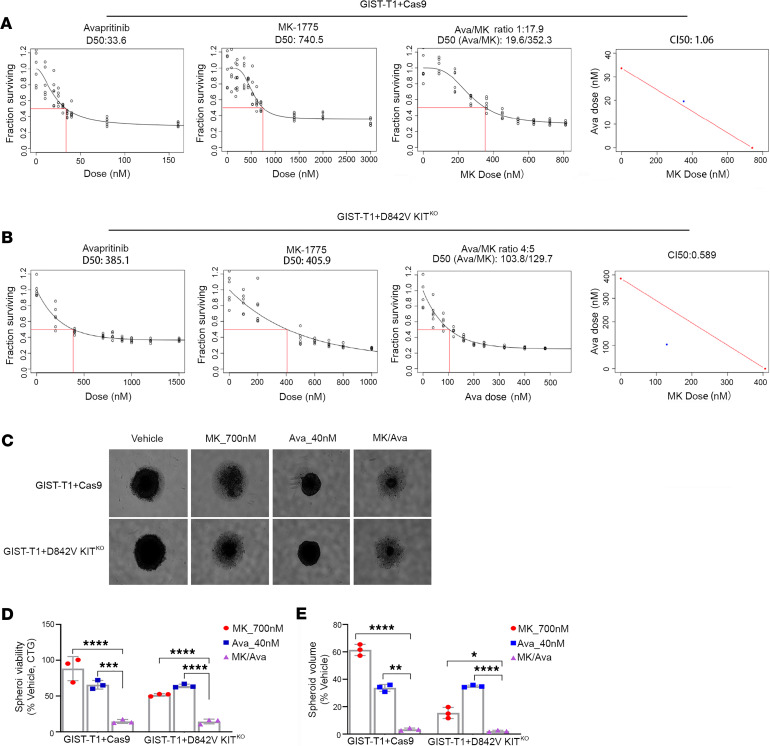
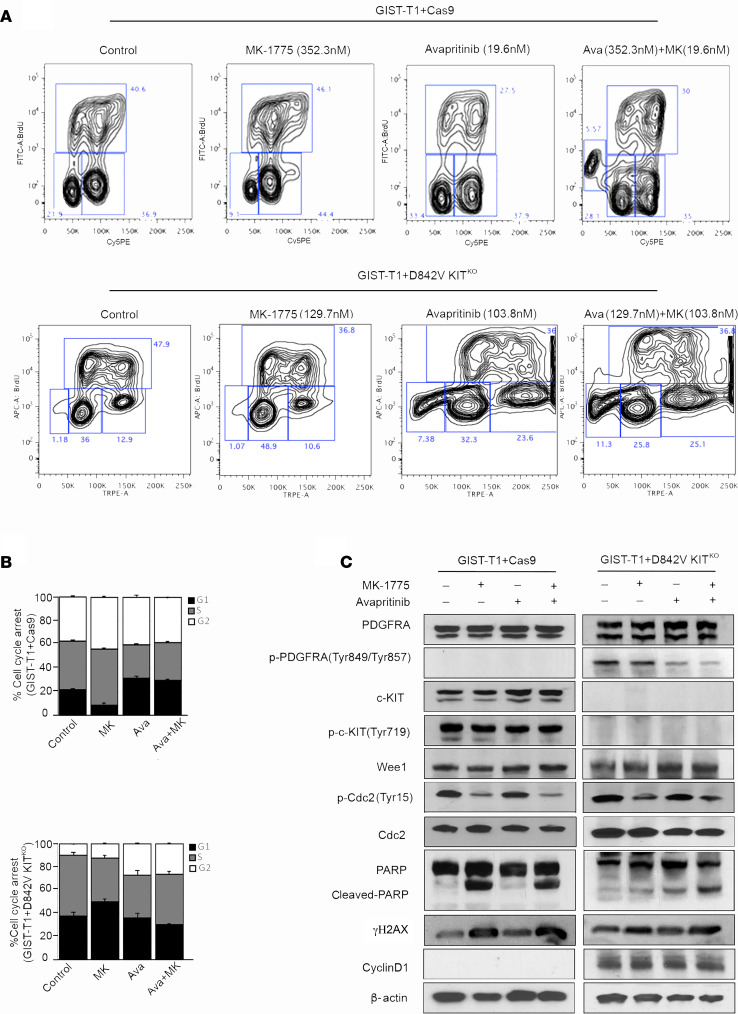
Management of gastrointestinal stromal tumors (GISTs) has been revolutionized by the identification of activating mutations in KIT and PDGFRA and clinical application of RTK inhibitors in advanced disease. Stratification of GISTs into molecularly defined subsets provides insight into clinical behavior and response to approved targeted therapies. Although these RTK inhibitors are effective in most GISTs, resistance remains a significant clinical problem. Development of effective treatment strategies for refractory GISTs requires identification of novel targets to provide additional therapeutic options. Global kinome profiling has the potential to identify critical signaling networks and reveal protein kinases essential in GISTs. Using multiplexed inhibitor beads and mass spectrometry, we explored the majority of the kinome in GIST specimens from the 3 most common molecular subtypes (KIT mutant, PDGFRA mutant, and succinate dehydrogenase deficient) to identify kinase targets. Kinome profiling with loss-of-function assays identified an important role for G2/M tyrosine kinase, Wee1, in GIST cell survival. In vitro and in vivo studies revealed significant efficacy of MK-1775 (Wee1 inhibitor) in combination with avapritinib in KIT mutant and PDGFRA mutant GIST cell lines as well as notable efficacy of MK-1775 as a monotherapy in the engineered PDGFRA mutant line. These studies provide strong preclinical justification for the use of MK-1775 in GIST.
胃肠道间质瘤(GIST)的治疗已经发生了革命性的变化,这要归功于 KIT 和 PDGFRA 激活突变的鉴定,以及 RTK 抑制剂在晚期疾病中的临床应用。将 GIST 分层为分子定义的亚组,深入了解了临床行为和对已批准的靶向治疗的反应。尽管这些 RTK 抑制剂在大多数 GIST 中有效,但耐药性仍然是一个重大的临床问题。开发有效的难治性 GIST 治疗策略需要确定新的靶点,以提供额外的治疗选择。全球激酶组谱分析有可能确定关键的信号转导网络,并揭示 GIST 中必不可少的蛋白激酶。我们使用多重抑制剂珠和质谱法,在来自最常见的 3 种分子亚型(KIT 突变、PDGFRA 突变和琥珀酸脱氢酶缺陷)的 GIST 标本中探索了大部分激酶组,以确定激酶靶标。通过功能丧失测定的激酶组谱分析表明,G2/M 酪氨酸激酶 Wee1 在 GIST 细胞存活中具有重要作用。体外和体内研究表明,MK-1775(Wee1 抑制剂)与 avapritinib 联合在 KIT 突变和 PDGFRA 突变 GIST 细胞系中具有显著疗效,MK-1775 作为单药在工程化 PDGFRA 突变系中也具有显著疗效。这些研究为 MK-1775 在 GIST 中的应用提供了强有力的临床前依据。