Department of Neurosciences and Shiley-Marcos Alzheimer's Disease Research Center, University of California San Diego, La Jolla.
Institute of Gerontology, Wayne State University, Detroit, Michigan.
JAMA Otolaryngol Head Neck Surg. 2021 Apr 1;147(4):377-387. doi: 10.1001/jamaoto.2020.4835.
Both cardiovascular disease risk and hearing impairment are associated with cognitive dysfunction. However, the combined influence of the 2 risk factors on cognition is not well characterized.
To examine associations between hearing impairment, cardiovascular disease risk, and cognitive function.
DESIGN, SETTING, AND PARTICIPANTS: This population-based, prospective cohort, multisite cross-sectional analysis of baseline data collected between 2008 and 2011 as part of the Hispanic Community Health Study/Study of Latinos included 9623 Hispanic or Latino adults aged 45 to 74 years in New York, Chicago, Miami, and San Diego.
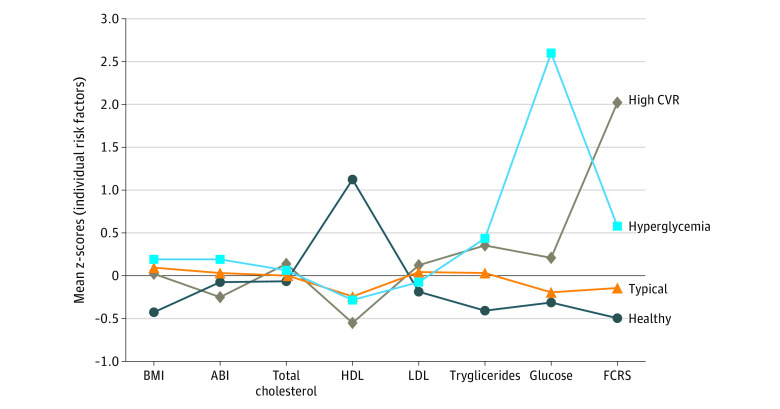
Hearing impairment of at least mild severity was defined as the pure tone average of 500, 1000, 2000, and 4000 Hz greater than 25 dB hearing level (dB HL) in the better ear. Our measure of cardiovascular disease risk was a latent class variable derived from body mass index, ankle-brachial index, low-density lipoprotein cholesterol, high-density lipoprotein cholesterol, triglycerides, fasting blood glucose, and the Framingham Cardiovascular Risk score.
Results on Brief-Spanish English Verbal Learning Test (episodic learning and memory), and Word Fluency (verbal fluency), and Digit Symbol Subtest (processing speed/executive functioning), and a cognitive composite of the mentioned tests (overall cognition).
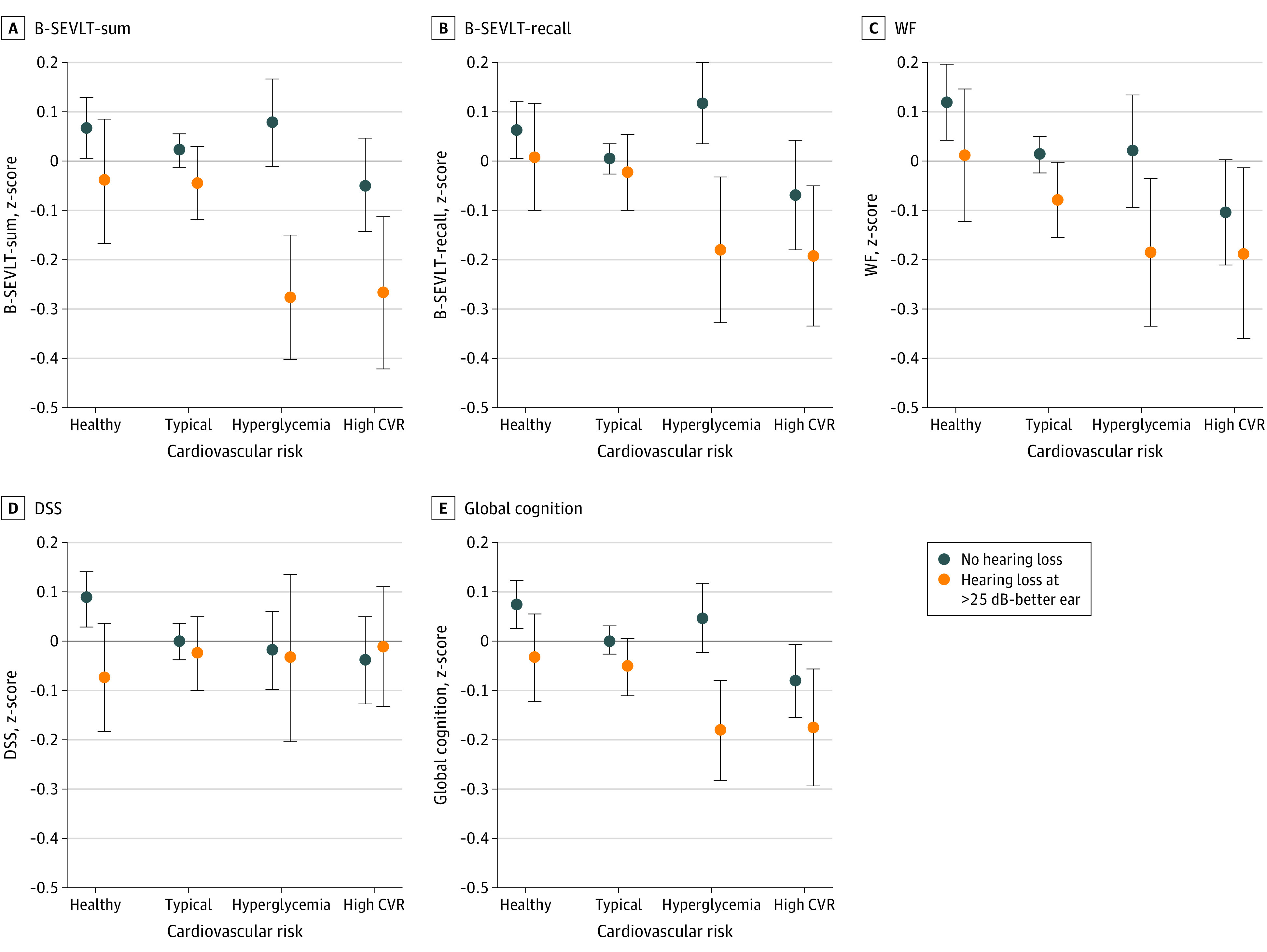
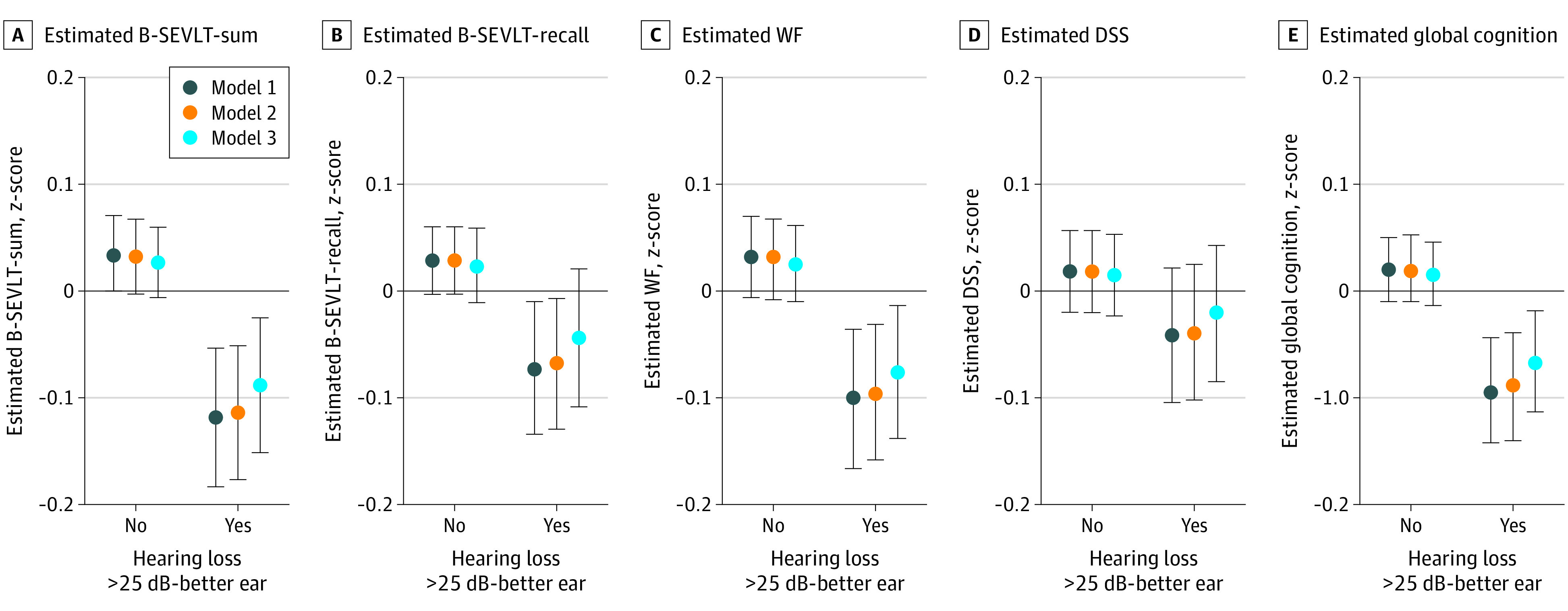
Participants (N = 9180) were 54.4% female and age 56.5 years on average. Hearing impairment was associated with poorer performance on all cognitive measures (global cognition: unstandardized β, -0.11; 95% CI, -0.16 to 0.07). Cardiovascular grouping (healthy, typical, high cardiovascular disease risk, and hyperglycemia) did not attenuate the associations between hearing impairment and cognition (global cognition: unstandardized β, -0.11; 95% CI, -0.15 to -0.06). However, cardiovascular grouping interacted with hearing impairment such that hyperglycemia in the context of hearing impairment exacerbated poor performance on learning and memory tasks (F3 = 3.70 and F3 = 2.92, respectively).
The findings of this cohort study suggest that hearing impairment increases the likelihood that individuals with excessively high glucose perform poorly on learning and memory tasks. Further research is needed to specify the mechanisms by which cardiovascular disease risk and hearing impairment are collectively associated with cognition.
心血管疾病风险和听力损伤均与认知功能障碍相关。然而,这两种风险因素对认知的综合影响尚不清楚。
研究听力损伤、心血管疾病风险与认知功能之间的关联。
设计、地点和参与者:这是一项基于人群的前瞻性队列、多地点横断面分析,纳入了 2008 年至 2011 年期间作为西班牙裔美国人健康研究/拉丁裔研究的一部分收集的基线数据,包括纽约、芝加哥、迈阿密和圣地亚哥的 9623 名年龄在 45 至 74 岁的西班牙裔或拉丁裔成年人。
至少为中度严重程度的听力损伤定义为较好耳的 500、1000、2000 和 4000 Hz 的纯音平均听阈大于 25 分贝(dB HL)。我们的心血管疾病风险衡量标准是一个潜在类别变量,由体重指数、踝臂指数、低密度脂蛋白胆固醇、高密度脂蛋白胆固醇、甘油三酯、空腹血糖和弗雷明汉心血管风险评分得出。
采用简短西班牙语英语词语学习测试(情节学习和记忆)、词语流畅性(词语流畅性)、数字符号替代测试(处理速度/执行功能)以及这些测试的认知综合测试(整体认知)来评估结果。
参与者(N=9180)中 54.4%为女性,平均年龄为 56.5 岁。听力损伤与所有认知测量的表现较差相关(整体认知:未标准化β,-0.11;95%置信区间,-0.16 至 0.07)。心血管分组(健康、典型、高心血管疾病风险和高血糖)并没有减轻听力损伤与认知之间的关联(整体认知:未标准化β,-0.11;95%置信区间,-0.15 至 -0.06)。然而,心血管分组与听力损伤相互作用,使得听力损伤背景下的高血糖恶化了学习和记忆任务的表现(F3=3.70 和 F3=2.92)。
这项队列研究的结果表明,听力损伤增加了血糖过高的个体在学习和记忆任务中表现不佳的可能性。需要进一步研究来明确心血管疾病风险和听力损伤共同影响认知的机制。