Department of Education Administration, Beijing University of Chinese Medicine, Beijing, China.
Department of Scientific Research, Beijing University of Chinese Medicine, Beijing, China.
PLoS One. 2020 Dec 17;15(12):e0244125. doi: 10.1371/journal.pone.0244125. eCollection 2020.
A worldwide outbreak of coronavirus disease (COVID-19), since 2019, has brought a disaster to people all over the world. Many researchers carried out clinical epidemiological studies on patients with COVID-19 previously, but risk factors for patients with different levels of severity are still unclear.
562 patients with laboratory-confirmed COVID-19 from 12 hospitals in China were included in this retrospective study. Related clinical information, therapies, and imaging data were extracted from electronic medical records and compared between patients with severe and non-severe status. We explored the risk factors associated with different severity of COVID-19 patients by logistic regression methods.
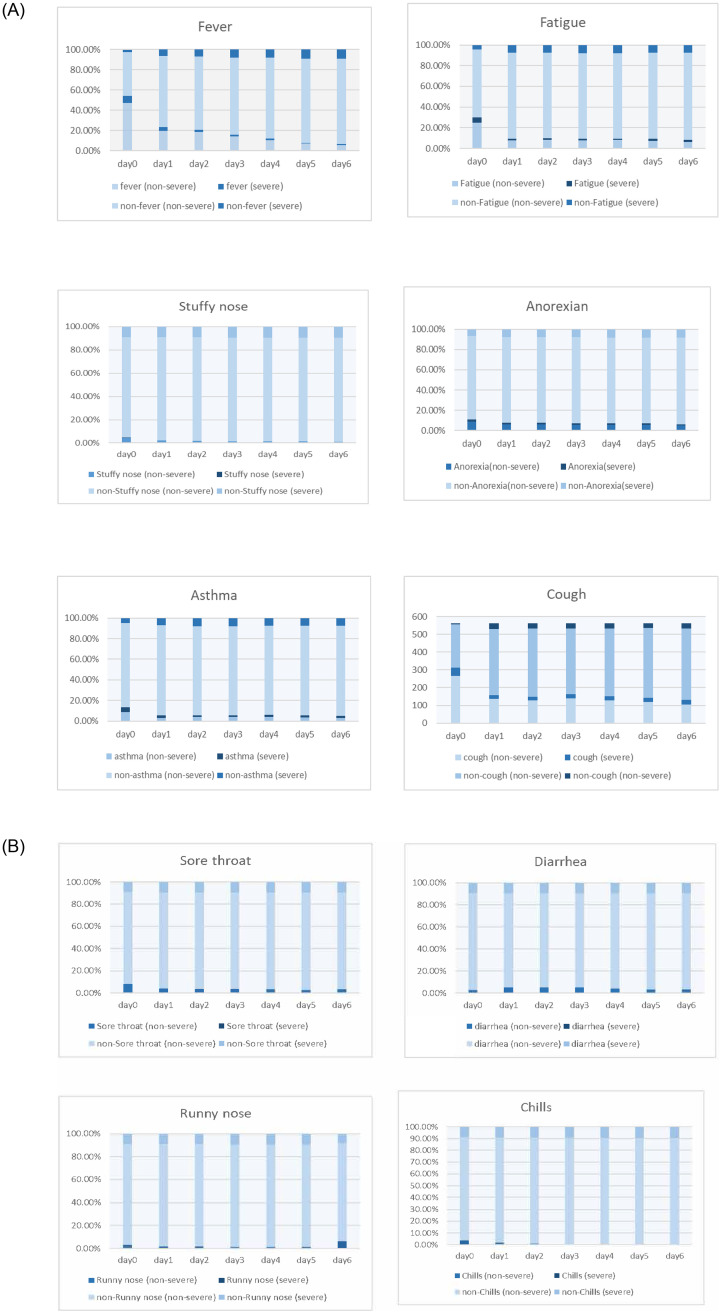
Based on the guideline we cited, 509 patients were classified as non-severe and 53 were severe. The age range of whom was 5-87 years, with a median age of 47 (IQR 35.0-57.0). And the elderly patients (older than 60 years old) in non-severe group were more likely to suffer from fever and asthma, accompanied by higher level of D-dimer, red blood cell distribution width and low-density lipoprotein. Furthermore, we found that the liver and kidney function of male patients was worse than that of female patients in both severe and non-severe groups with different age levels, while the severe females had faster ESR and lower inflammatory markers. Of major laboratory markers in non-severe cases, baseline albumin and the lymphocyte percentage were higher, while the white blood cell and the neutrophil count were lower. In addition, severe patients were more likely to be accompanied by an increase in cystatin C, mean hemoglobin level and a decrease in oxygen saturation. Besides that, advanced age and indicators such as count of white blood cell, glucose were proved to be the most common risk factors preventing COVID-19 patients from aggravating.
The potential risk factors found in our study have shown great significance to prevent COVID-19 patients from aggravating and turning to critical cases during treatment. Meanwhile, focusing on gender and age factors in groups with different severity of COVID-19, and paying more attention to specific clinical symptoms and characteristics, could improve efficacy of personalized intervention to treat COVID-19 effectively.
自 2019 年以来,一场全球性的冠状病毒病(COVID-19)爆发给全世界人民带来了灾难。此前,许多研究人员对 COVID-19 患者进行了临床流行病学研究,但不同严重程度患者的危险因素仍不清楚。
本回顾性研究纳入了来自中国 12 家医院的 562 例实验室确诊的 COVID-19 患者。从电子病历中提取相关临床信息、治疗和影像学数据,并比较严重和非严重状态患者之间的差异。我们通过逻辑回归方法探讨了与 COVID-19 患者不同严重程度相关的危险因素。
根据我们引用的指南,509 例患者被分类为非严重,53 例为严重。年龄范围为 5-87 岁,中位数年龄为 47(IQR 35.0-57.0)。非严重组中年龄较大(>60 岁)的患者更易出现发热和哮喘,且 D-二聚体、红细胞分布宽度和低密度脂蛋白水平较高。此外,我们发现,无论年龄大小,非严重组中男性患者的肝肾功能均较女性患者差,而严重组中女性患者的 ESR 更快,炎症标志物水平更低。非严重组中主要实验室标志物的基线白蛋白和淋巴细胞百分比较高,而白细胞和中性粒细胞计数较低。此外,严重患者更易出现胱抑素 C、平均血红蛋白水平升高和氧饱和度降低。此外,高龄和白细胞计数等指标被证明是预防 COVID-19 患者病情加重的最常见危险因素。
本研究发现的潜在危险因素对治疗过程中预防 COVID-19 患者病情加重和转为危重症具有重要意义。同时,关注不同严重程度 COVID-19 患者的性别和年龄因素,并关注特定的临床症状和特征,可提高个性化干预治疗 COVID-19 的疗效。