Department of Industrial and Physical Pharmacy, College of Pharmacy, Purdue University, 575 Stadium Mall Drive, West Lafayette, IN 47907, USA.
Department of Industrial and Physical Pharmacy, College of Pharmacy, Purdue University, 575 Stadium Mall Drive, West Lafayette, IN 47907, USA; National Institute for Bioprocessing Research and Training, Belfield, Blackrock, Co. Dublin A94 X099, Ireland.
Int J Pharm. 2021 Feb 1;594:120169. doi: 10.1016/j.ijpharm.2020.120169. Epub 2020 Dec 15.
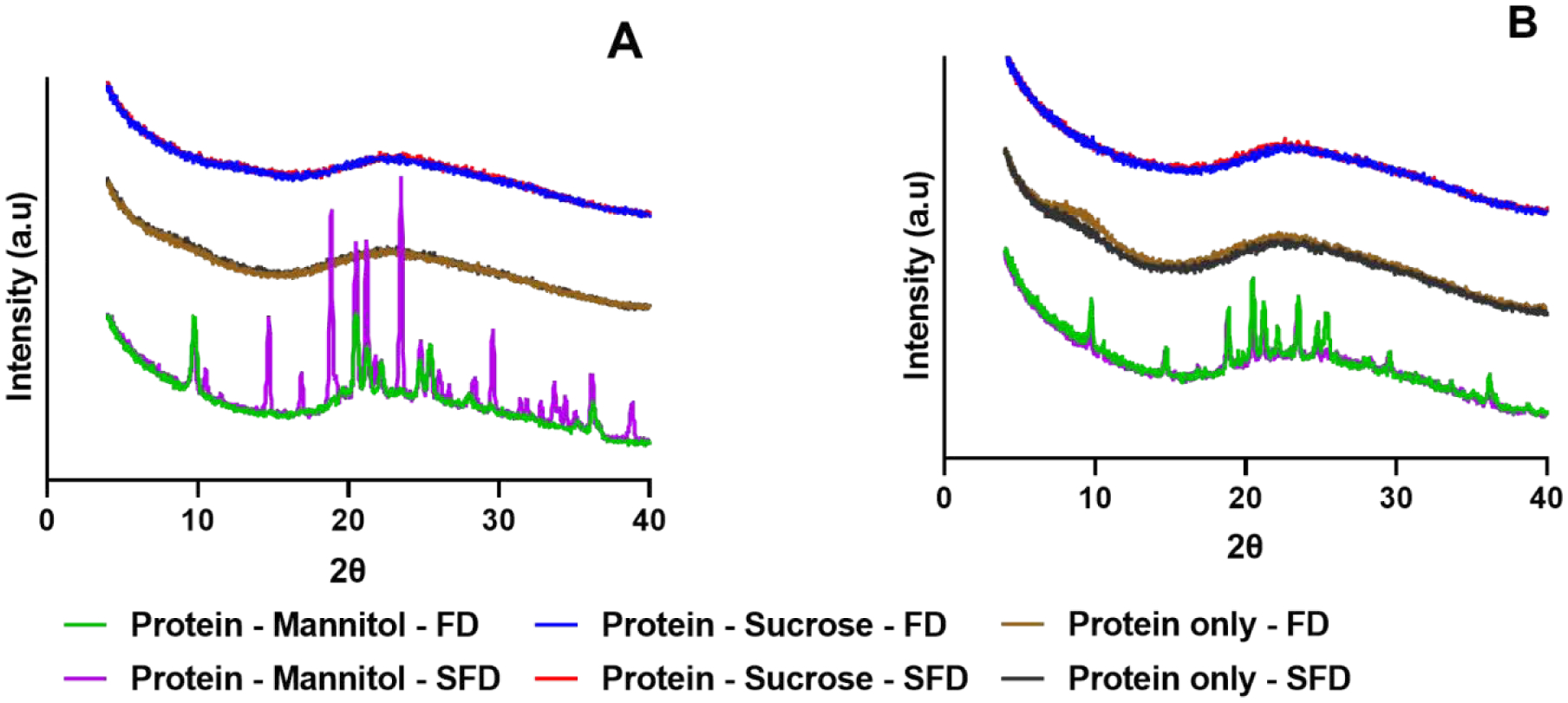
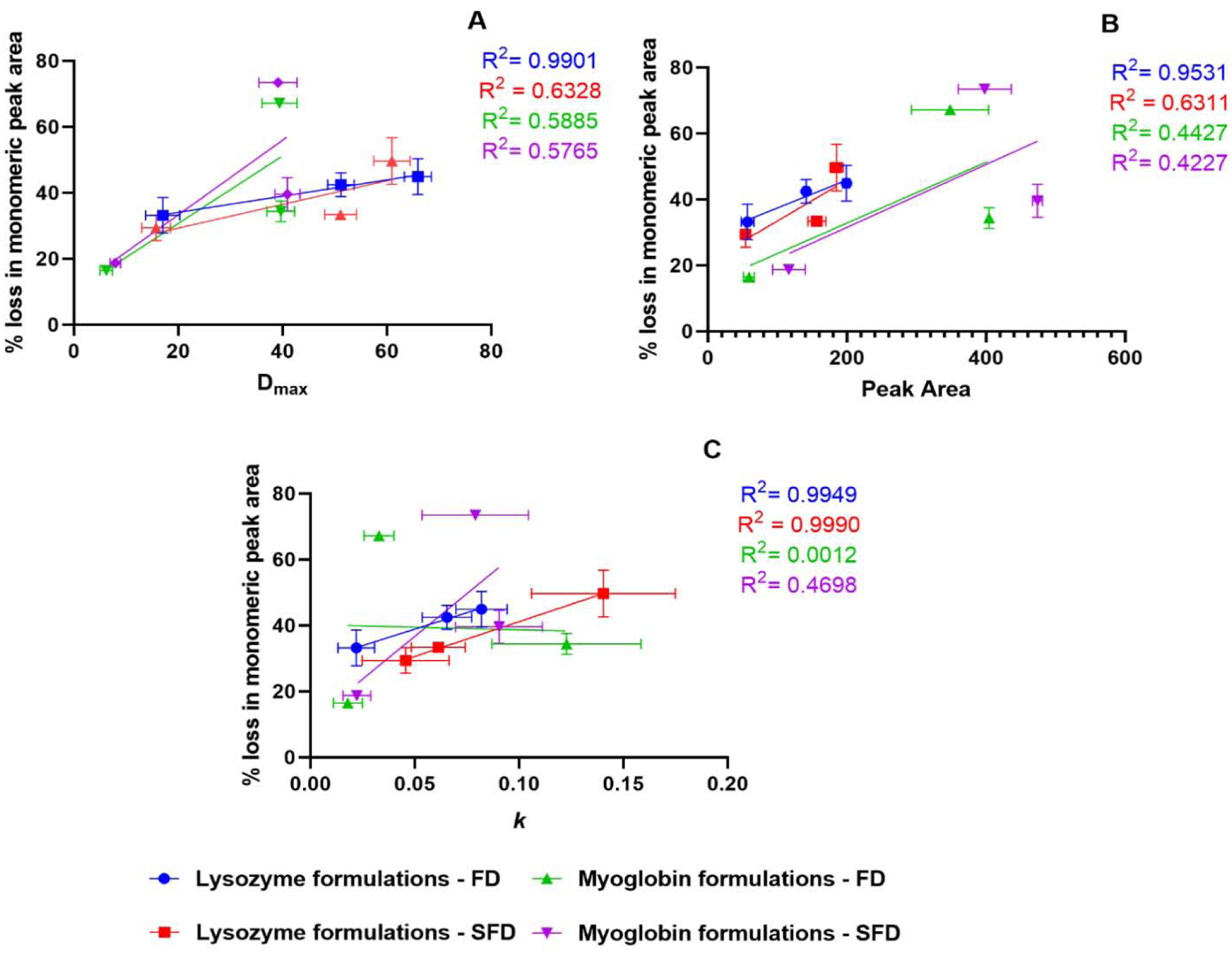
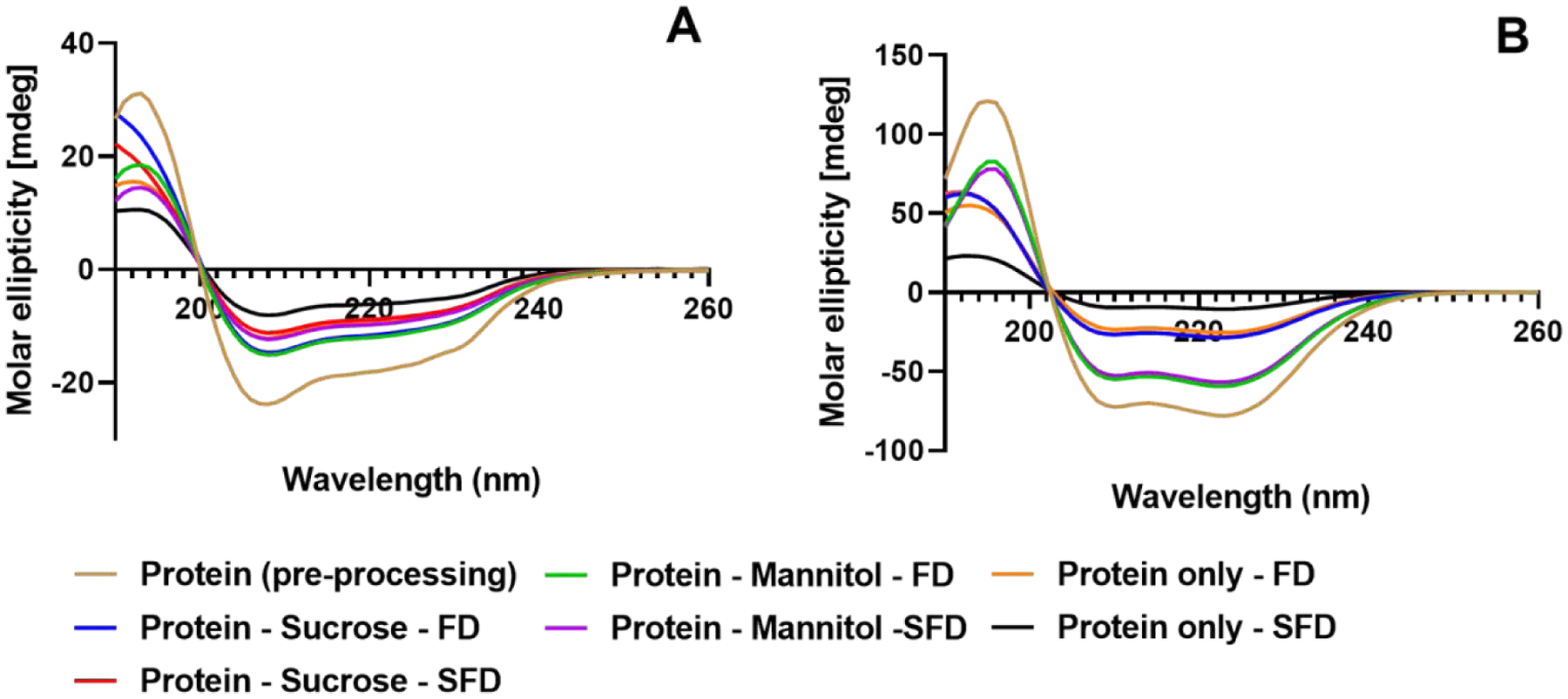
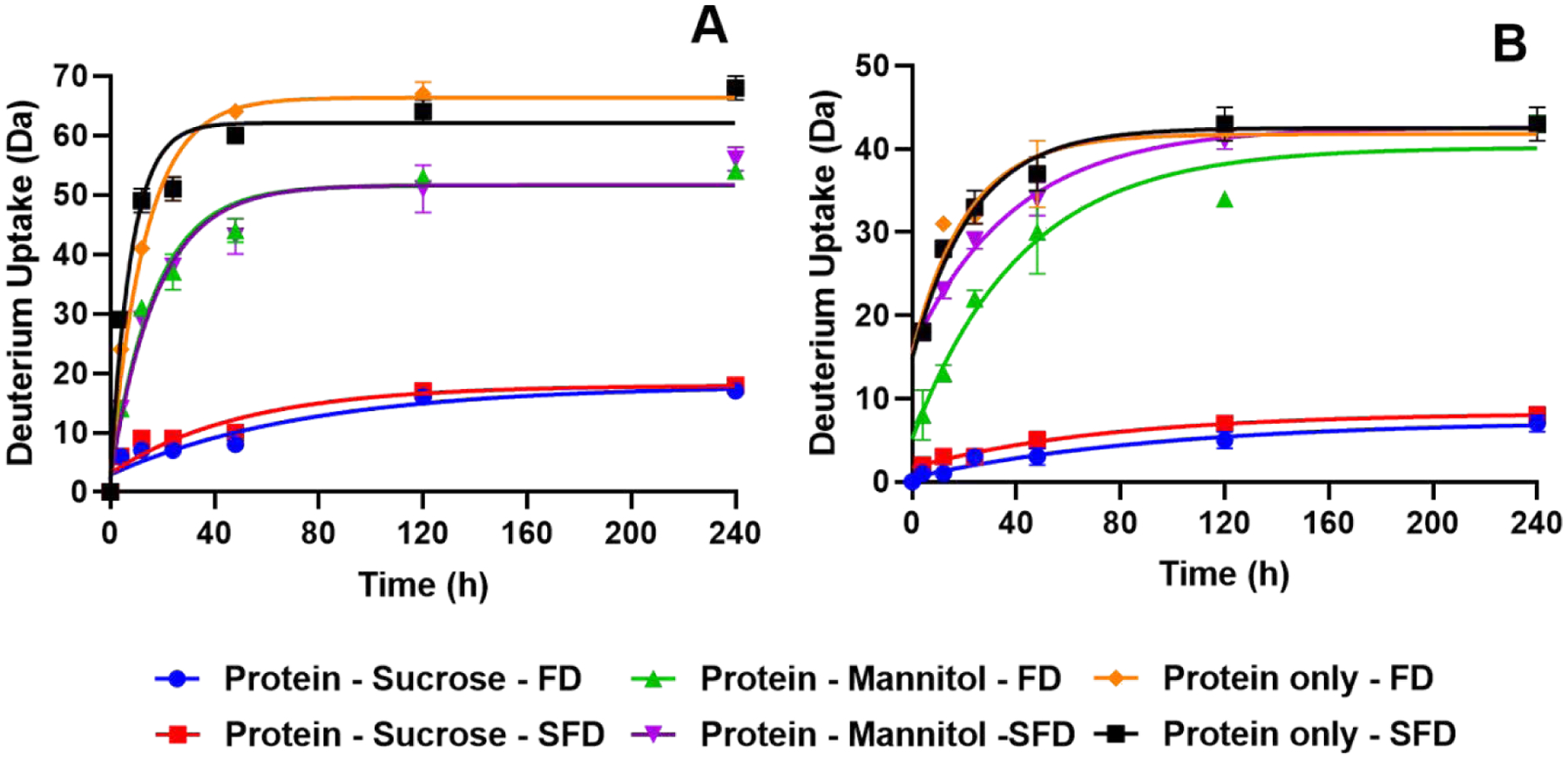
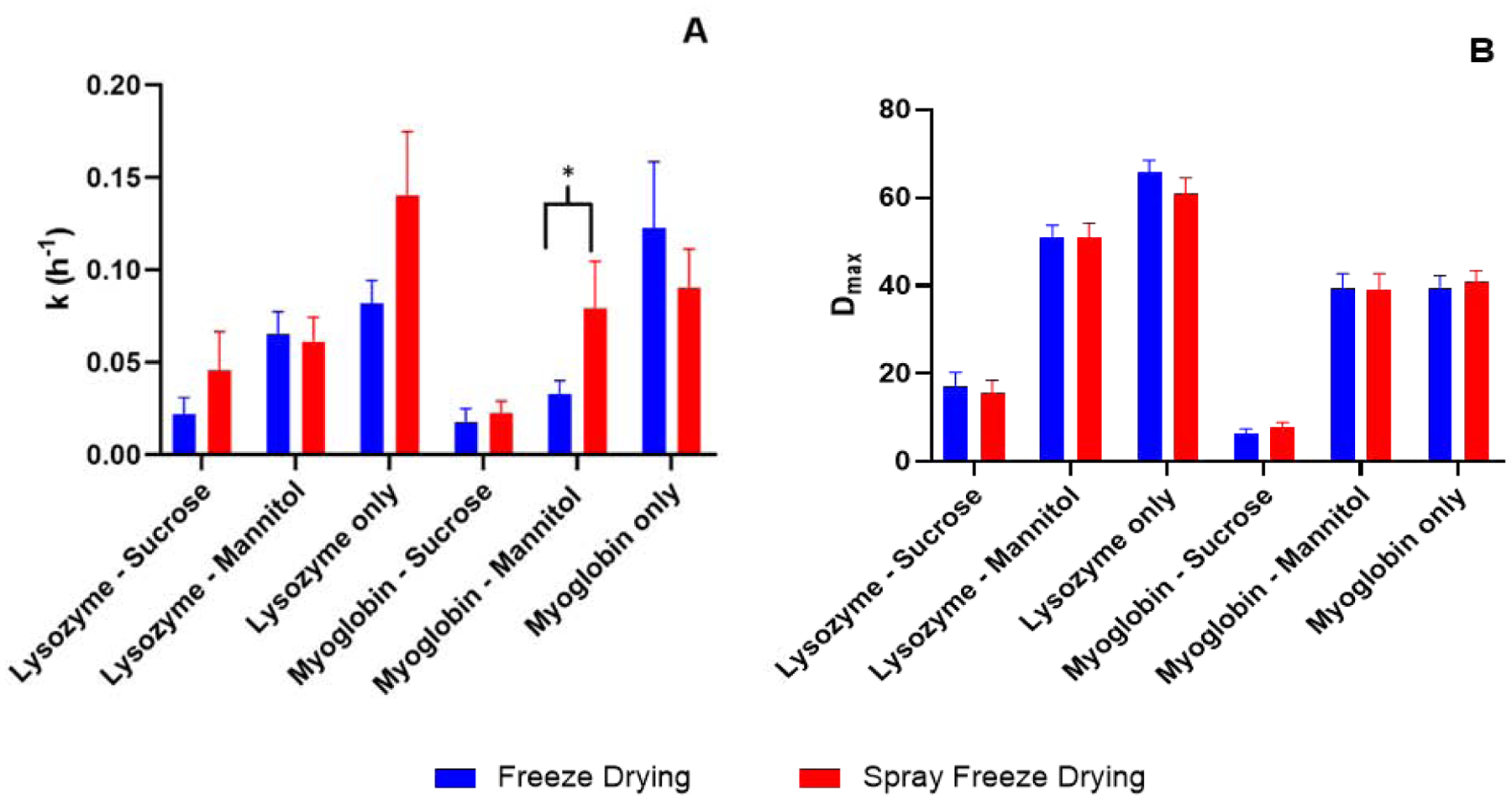
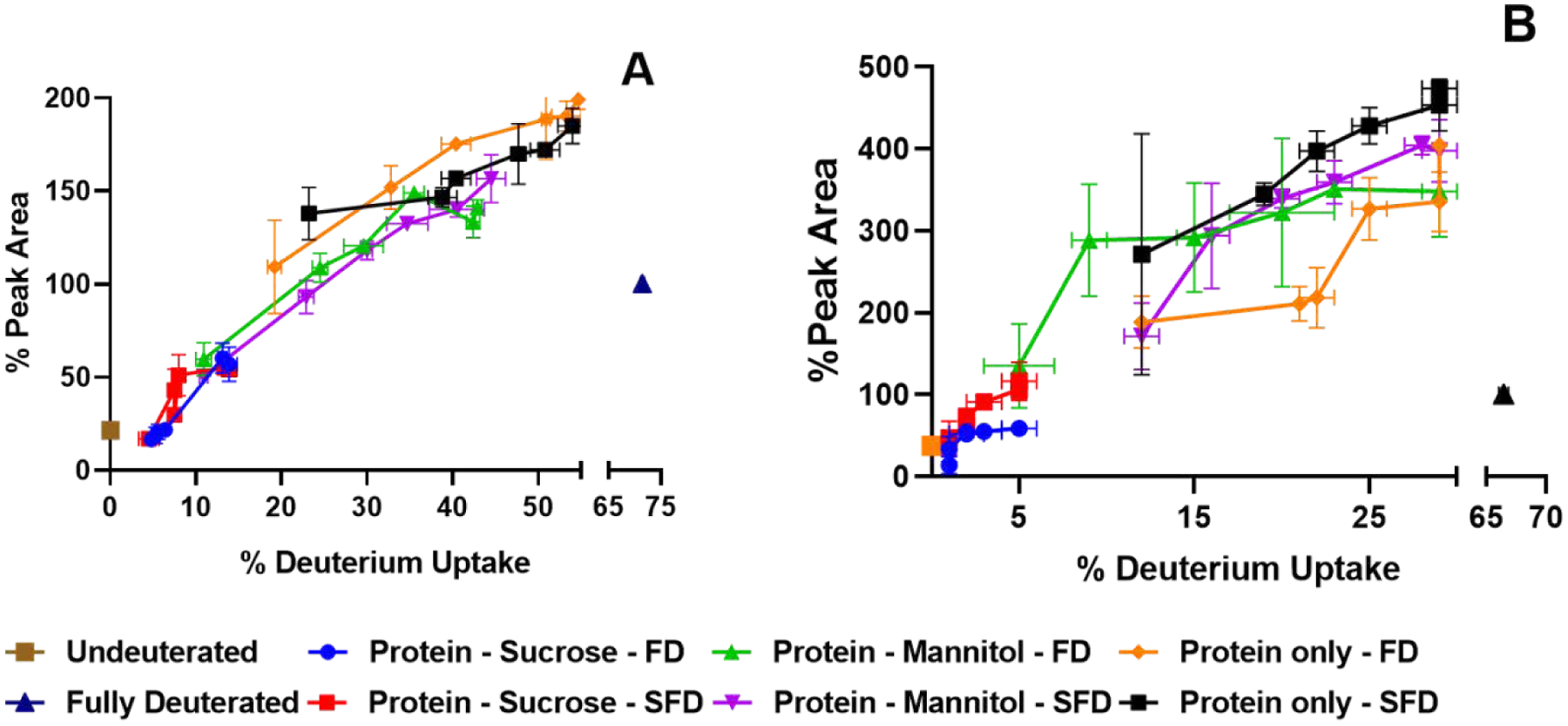
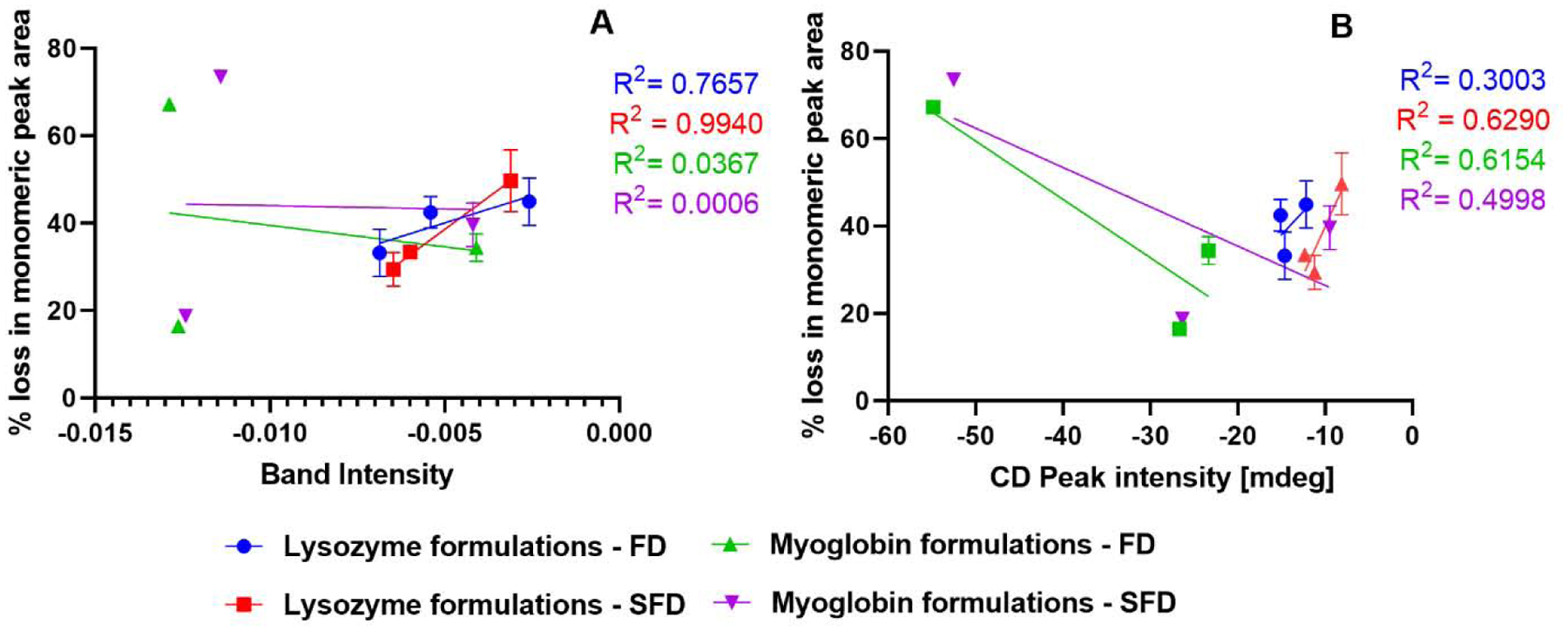
This study aims to determine the impacts of drying method and excipient on changes in protein structure and physical stability of model protein solids. Protein solids containing one of two model proteins (lysozyme or myoglobin) were produced with or without excipients (sucrose or mannitol) using freeze drying or spray freeze drying (SFD). The protein powders were then characterized using solid-state Fourier transform infrared spectroscopy (ssFTIR), differential scanning calorimetry (DSC), circular dichroism spectrometry (CD), size exclusion chromatography (SEC), BET surface area measurements and solid-state hydrogen deuterium exchange with mass spectrometry (ssHDX-MS). ssFTIR and CD could identify little to no difference in structure of the proteins in the formulation. ssHDX-MS was able to identify the population heterogeneity, which was undetectable by conventional characterization techniques of ssFTIR and CD. ssHDX-MS metrics such as D and peak area showed a good correlation with the protein physical instability (loss of the monomeric peak area by size exclusion chromatography) in 90-day stability studies conducted at 40 °C for lysozyme. Higher specific surface area was associated with greater loss in monomer content for myoglobin-mannitol formulations as compared to myoglobin-only formulations. Spray freeze drying seems a viable manufacturing technique for protein solids with appropriate optimization of formulations. The differences observed within the formulations and between the processes using ssHDX-MS, BET surface area measurements and SEC in this study provide an insight into the influence of drying methods and excipients on protein physical stability.
本研究旨在确定干燥方法和赋形剂对模型蛋白固体中蛋白质结构和物理稳定性变化的影响。使用冷冻干燥或喷雾冷冻干燥(SFD),在有或没有赋形剂(蔗糖或甘露醇)的情况下,制备含有两种模型蛋白(溶菌酶或肌红蛋白)之一的蛋白固体。然后使用固态傅里叶变换红外光谱(ssFTIR)、差示扫描量热法(DSC)、圆二色光谱(CD)、尺寸排阻色谱(SEC)、BET 比表面积测量和固态氘氢交换与质谱(ssHDX-MS)对蛋白粉末进行表征。ssFTIR 和 CD 可以识别配方中蛋白质结构几乎没有差异。ssHDX-MS 能够识别群体异质性,这是 ssFTIR 和 CD 等常规特征技术无法检测到的。ssHDX-MS 指标(如 D 和峰面积)与在 40°C 下进行的 90 天稳定性研究中溶菌酶的物理不稳定性(通过尺寸排阻色谱失去单体峰面积)具有良好的相关性。与仅含肌红蛋白的制剂相比,甘露醇肌红蛋白制剂的比表面积较高,单体含量损失较大。喷雾冷冻干燥似乎是一种可行的蛋白固体制造技术,通过适当优化配方即可实现。本研究中使用 ssHDX-MS、BET 比表面积测量和 SEC 观察到制剂内和制剂间以及不同工艺之间的差异,深入了解了干燥方法和赋形剂对蛋白质物理稳定性的影响。