Mulazzani Elisabeth, Zolyniak Nicole, Noe Elisabeth, Mulazzani Matthias, Azad Shahnaz Christina, Kümpfel Tania, Kraft Eduard
Institute of Clinical Neuroimmunology, Biomedical Center and University Hospital, Ludwig-Maximillian University, Munich, Germany.
Department of Orthopaedics, Physical Medicine and Rehabilitation, Ludwig- Maximilians University, Munich, Germany.
BMC Rheumatol. 2020 Dec 18;4(1):71. doi: 10.1186/s41927-020-00168-x.
Pain is the clinical hallmark of patients in patients with autoinflammatory diseases (AID) caused by variants of the NLRP3-, MEFV- or TNFRSF1A gene. However, no systematical analysis of the clinical and psychological presentation of pain has been performed to date.
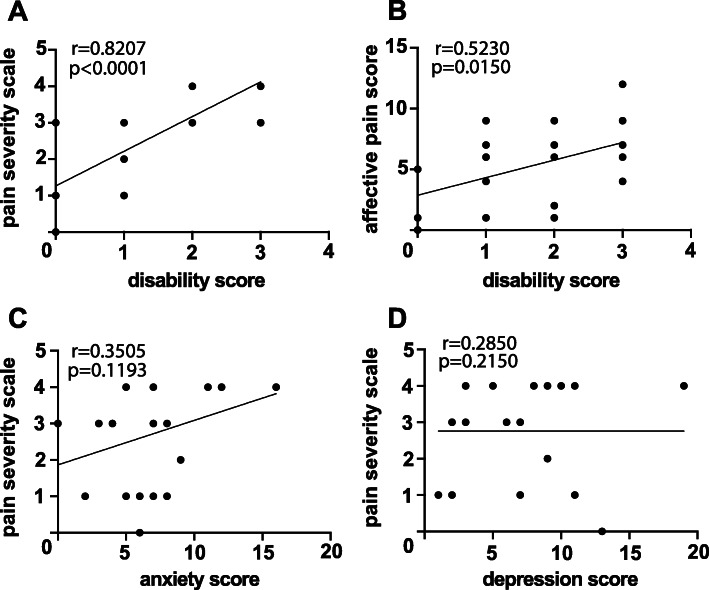
Twenty-one symptomatic patients with variants in the NLRP3-, MEFV- and TNFRSF1A gene and clinical signs suggestive of an AID were retrospectively included in this monocentric cross-sectional case-series study. Patients were examined and interviewed using the German pain questionnaire. The hospital anxiety and depression scale (HADS) was applied to screen patients for anxiety and depression.
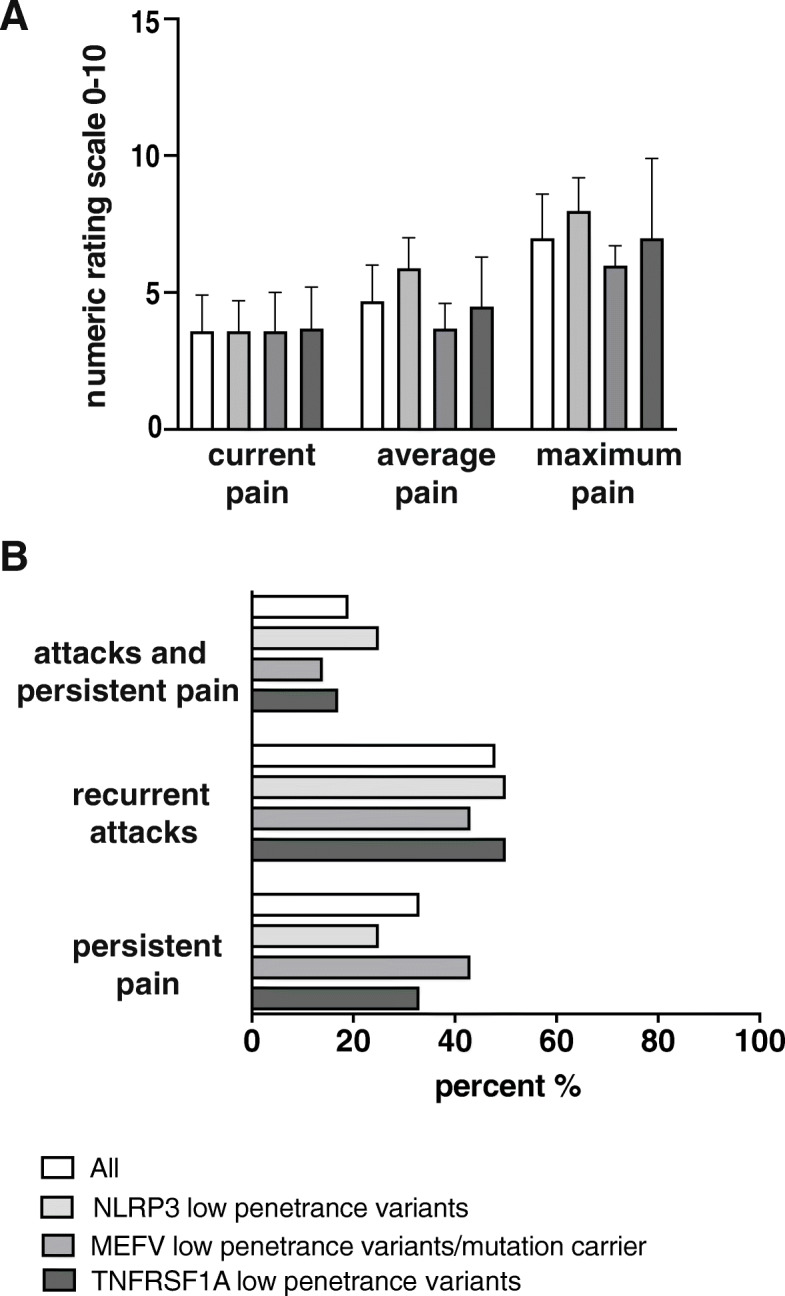
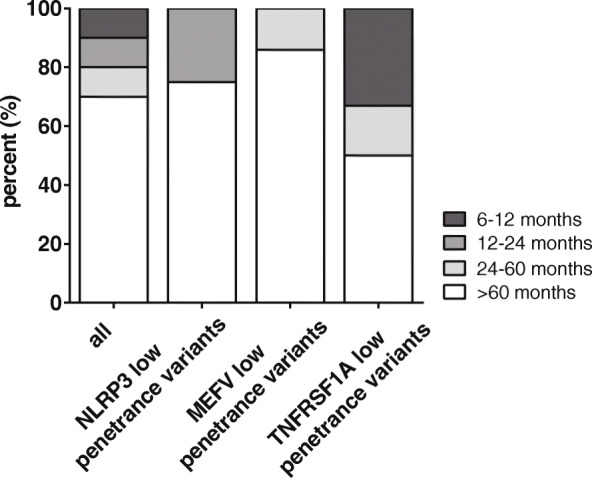
Twenty out of 21 AID patients (95%) reported pain at the time of examination. Mean current pain intensity in all AID patients comprised 3.6 ± 1.3 and mean maximum pain intensity was 7.0 ± 1.6 on a 11-point numeric ranging scale (NRS). In 15 patients (71%), pain was present for more than 60 months. Ten patients (48%) experienced recurrent attacks with asymptomatic intervals and 7 patients (33%) suffered from constant pain, while 4 patients (19%) experienced both. Nociceptive pain including musculoskeletal and visceral affection was the most prominent type of pain (n = 20; 95%). Pain symptoms were treated continuously with analgesic or co-analgesic drugs in 10 patients (48%). Five patients (24%) have been positively screened for concomitant depression or anxiety.
Early and prompt diagnosis is necessary to provide multimodal pain treatment and to avoid the development of chronic pain in patients with AID.
疼痛是由NLRP3、MEFV或TNFRSF1A基因变异引起的自身炎症性疾病(AID)患者的临床特征。然而,迄今为止,尚未对疼痛的临床和心理表现进行系统分析。
本单中心横断面病例系列研究回顾性纳入了21例有NLRP3、MEFV和TNFRSF1A基因变异且有AID临床体征的有症状患者。使用德国疼痛问卷对患者进行检查和访谈。应用医院焦虑抑郁量表(HADS)对患者进行焦虑和抑郁筛查。
21例AID患者中有20例(95%)在检查时报告有疼痛。在11分数字评分量表(NRS)上,所有AID患者当前的平均疼痛强度为3.6±1.3,平均最大疼痛强度为7.0±1.6。15例患者(71%)疼痛持续时间超过60个月。10例患者(48%)经历过无症状间歇期的反复发作,7例患者(33%)患有持续性疼痛,4例患者(19%)两种情况都有。包括肌肉骨骼和内脏受累的伤害性疼痛是最主要的疼痛类型(n = 20;95%)。10例患者(48%)使用镇痛药或辅助镇痛药持续治疗疼痛症状。5例患者(24%)被筛查出伴有抑郁或焦虑。
早期及时诊断对于为AID患者提供多模式疼痛治疗和避免慢性疼痛的发生是必要的。