Quéméneur Marianne, Bel Hassen Malika, Armougom Fabrice, Khammeri Yosra, Lajnef Rim, Bellaaj-Zouari Amel
Aix-Marseille Univ, University of Toulon, CNRS, IRD, MIO UM 110, Mediterranean Institute of Oceanography, Marseille, France.
Institut National des Sciences et Technologies de la Mer, Salammbô, Tunis, Tunisia.
Front Microbiol. 2020 Dec 1;11:593540. doi: 10.3389/fmicb.2020.593540. eCollection 2020.
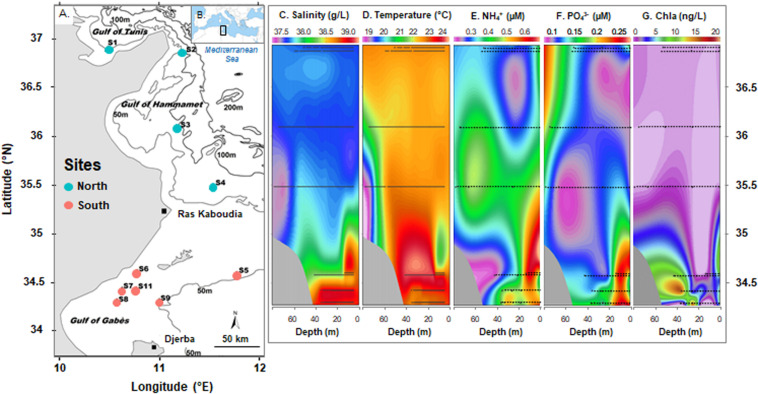
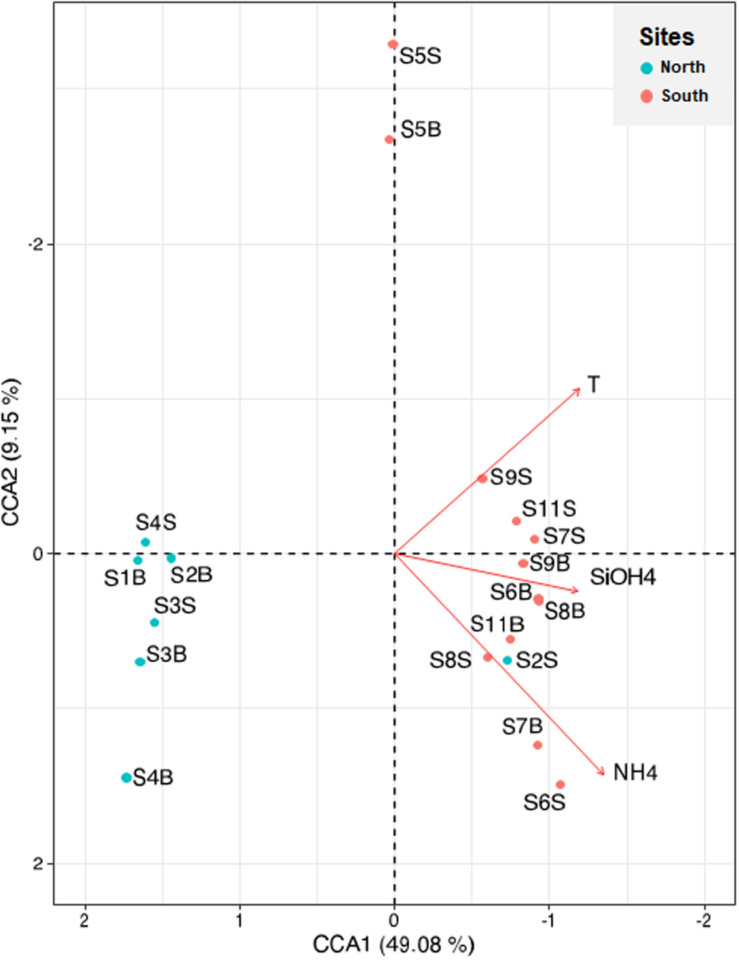
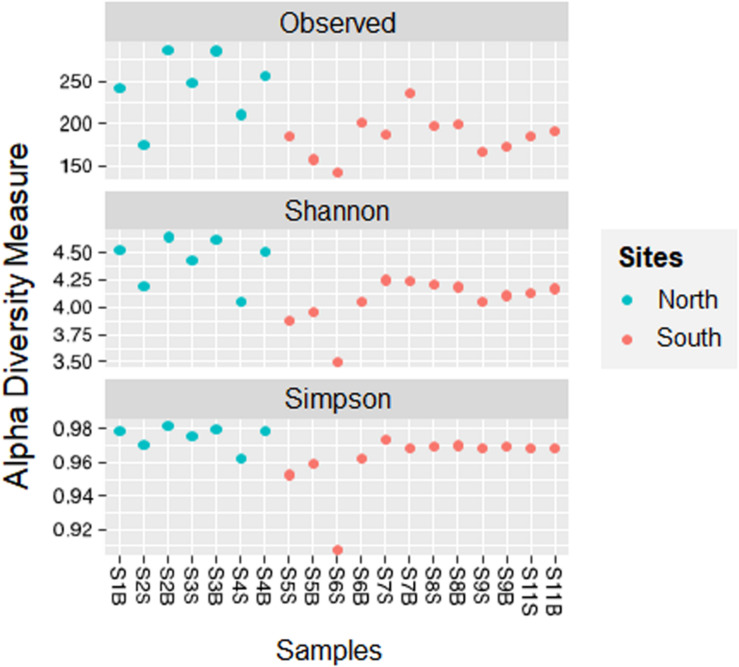
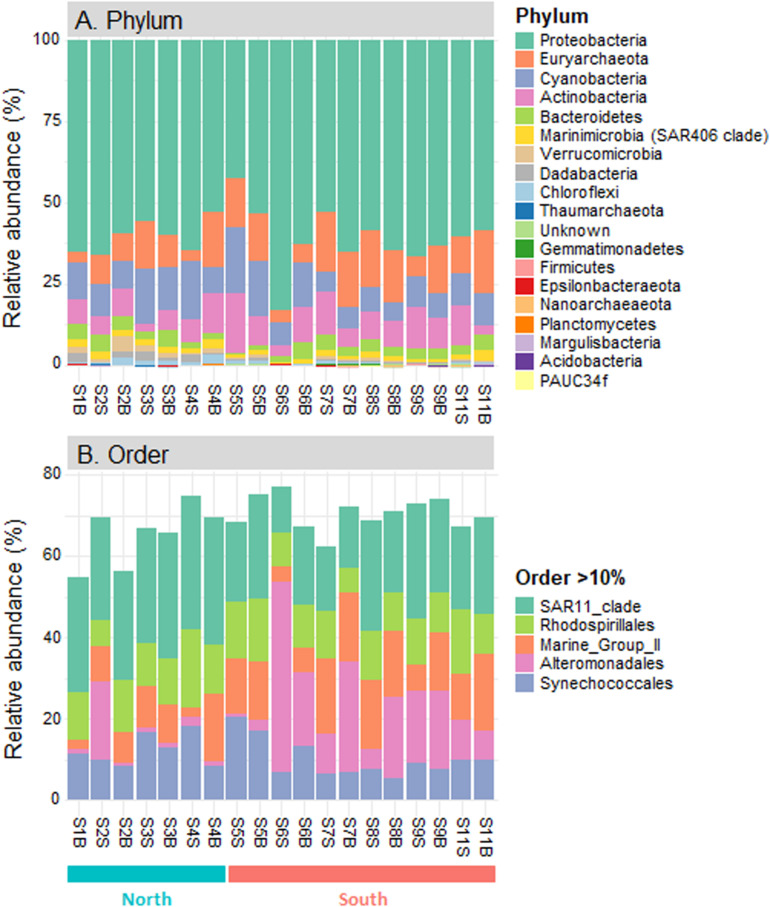
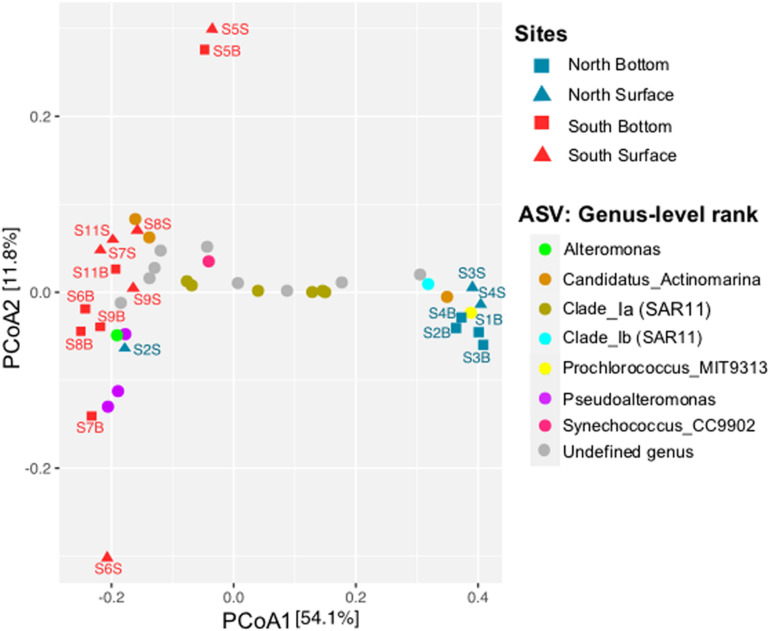
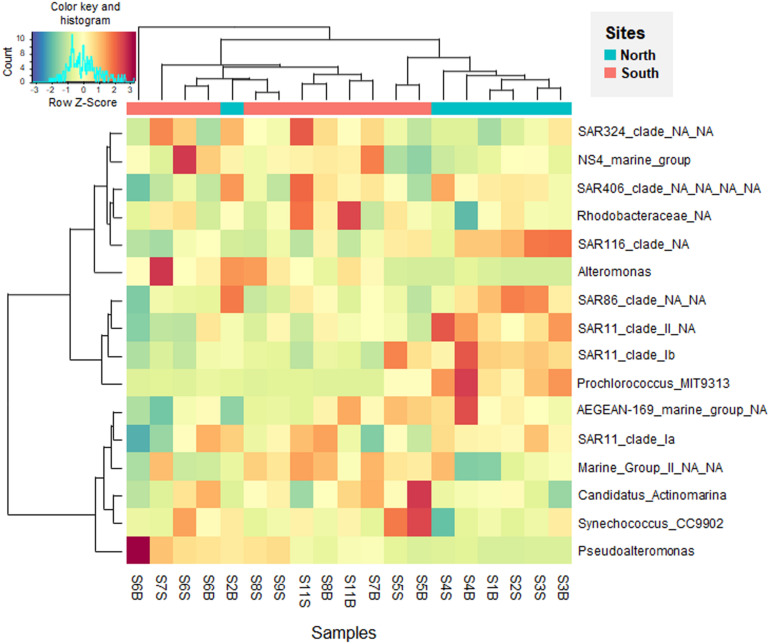
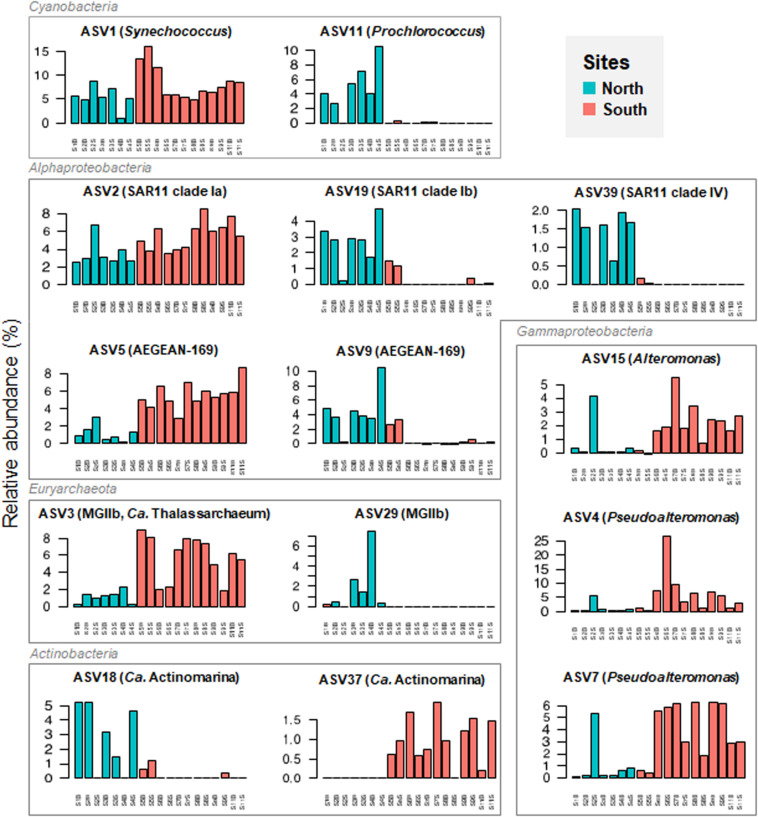
Prokaryotes play an important role in biogeochemical cycling in marine ecosystems, but little is known about their diversity and composition, and how they may contribute to the ecological functioning of coastal areas in the South Mediterranean Sea. This study investigated bacterial and archaeal community diversity in seawater samples along the Tunisian coast subject to important physicochemical disturbances. The 16S amplicon sequencing survey revealed higher prokaryotic diversity in the northern Tunisian bays than in southeastern waters (Gulf of Gabès). The major taxonomic groups identified in all samples were (40.9%), (18.7%), Marine Group II (11.3%), and (10.9%). Among them, the relative abundance of , , and some clades of (SAR11) significantly differed between the northern and the southern bays, whereas no difference was observed across coastal waters in the archaeal Poseidoniales (MGII), , and (SAR11 clade Ia), for which no relationship was observed with the environmental variables. Both and levels increased with the increasing salinity, density and nutrients (NH and/or PO ) gradients detected toward the southern waters, while the SAR11 clades Ib and IV and , decreased in the shallow, salty and nutrient-rich coastal waters of the Gulf of Gabès. was positively correlated with and chlorophyll levels, suggesting a relationship with phytoplankton biomass. The present study provides the first insights into planktonic prokaryotic community composition in the South Mediterranean Sea through the analysis of Tunisian seawaters, which may support further investigations on the role of bacterioplankton in the biogeochemistry of these ecosystems.
原核生物在海洋生态系统的生物地球化学循环中发挥着重要作用,但对于它们的多样性、组成以及它们如何对地中海南部沿海地区的生态功能做出贡献,我们却知之甚少。本研究调查了突尼斯海岸沿线海水样本中细菌和古菌群落的多样性,这些区域受到了重要的物理化学干扰。16S扩增子测序调查显示,突尼斯北部海湾的原核生物多样性高于东南部海域(加贝斯湾)。在所有样本中鉴定出的主要分类群为 (40.9%)、 (18.7%)、海洋第二组 (11.3%)和 (10.9%)。其中,北部和南部海湾之间, 、 以及一些 (SAR11)分支的相对丰度存在显著差异,而在古菌波塞冬菌目(MGII)、 以及 (SAR11分支Ia)的沿海水域中未观察到差异,并且未发现它们与环境变量之间存在关系。随着向南部水域检测到的盐度、密度和营养物质(NH 和/或PO )梯度增加, 和 的水平均升高,而在加贝斯湾浅海、咸水且营养丰富的沿海水域中,SAR第11分支Ib和IV以及 减少。 与 以及叶绿素水平呈正相关,表明与浮游植物生物量存在关系。本研究通过对突尼斯海水的分析,首次深入了解了地中海南部浮游原核生物群落的组成,这可能为进一步研究浮游细菌在这些生态系统生物地球化学中的作用提供支持。