Department of Cardiovascular Medicine, Heart and Vascular Institute, Cleveland Clinic, Cleveland OH, United States.
Department of Internal Medicine, Henry Ford Hospital, Detroit, MI, United States.
Trends Cardiovasc Med. 2021 Apr;31(3):135-140. doi: 10.1016/j.tcm.2020.12.003. Epub 2020 Dec 15.
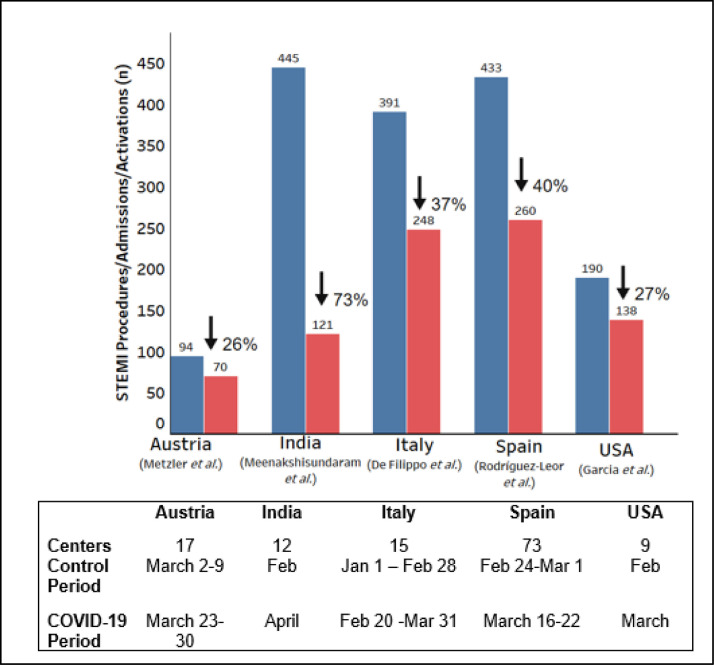
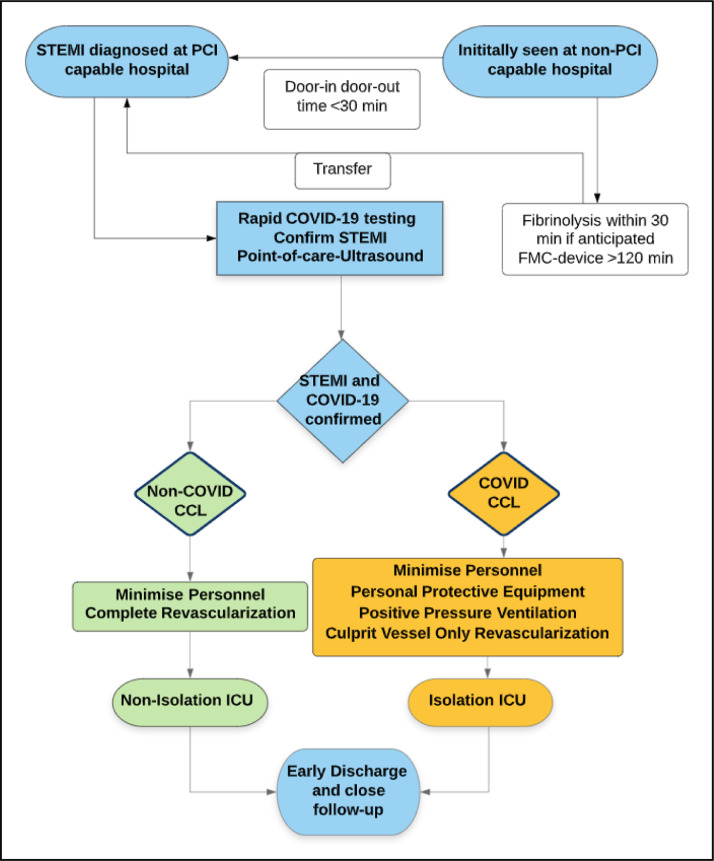
As the prevalence of asymptomatic COVID-19 continues to increase, there is an increasing possibility that patients with COVID-19 may presen with ST-segment elevation myocardial infarction (STEMI). With social distancing and restricted access to preventive healthcare and emergency services, the management of acute cardiac emergencies such as myocardial infarction has suffered collateral damage. Thus far, global trends suggest a decrease in STEMI activations with possible worse outcomes due to delayed presentation and management. In this review, we discuss the challenges to STEMI management in the COVID-19 era and provide potential solutions for adherence to evidence-based therapies as the pandemic progresses into the year 2021.
随着无症状 COVID-19 的患病率持续增加,COVID-19 患者可能出现 ST 段抬高型心肌梗死(STEMI)的可能性也在增加。由于社会隔离以及预防性医疗保健和紧急服务的获取受限,急性心脏急症(如心肌梗死)的管理受到了影响。到目前为止,全球趋势表明 STEMI 的激活数量减少,由于就诊和管理延迟,可能导致结局更差。在这篇综述中,我们讨论了 COVID-19 时代 STEMI 管理所面临的挑战,并为在 2021 年大流行期间遵循循证治疗提供了潜在的解决方案。