Department of Pharmacy, Pharmaceutical and Medicinal Chemistry, Saarland University, Campus C2 3, 66 123 Saarbrücken, Germany.
Molecules. 2020 Dec 16;25(24):5963. doi: 10.3390/molecules25245963.
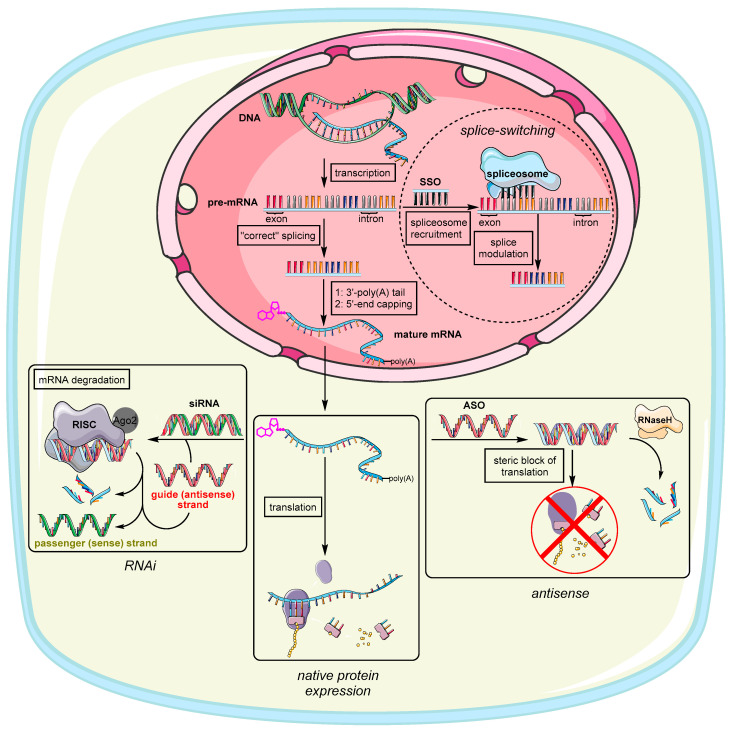
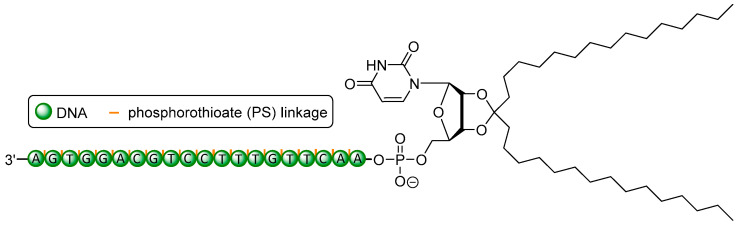
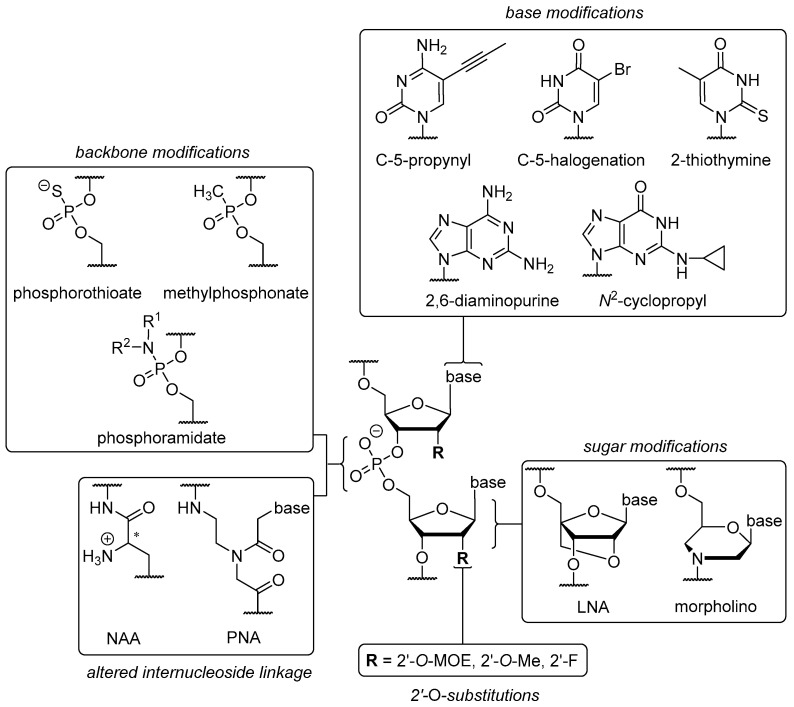
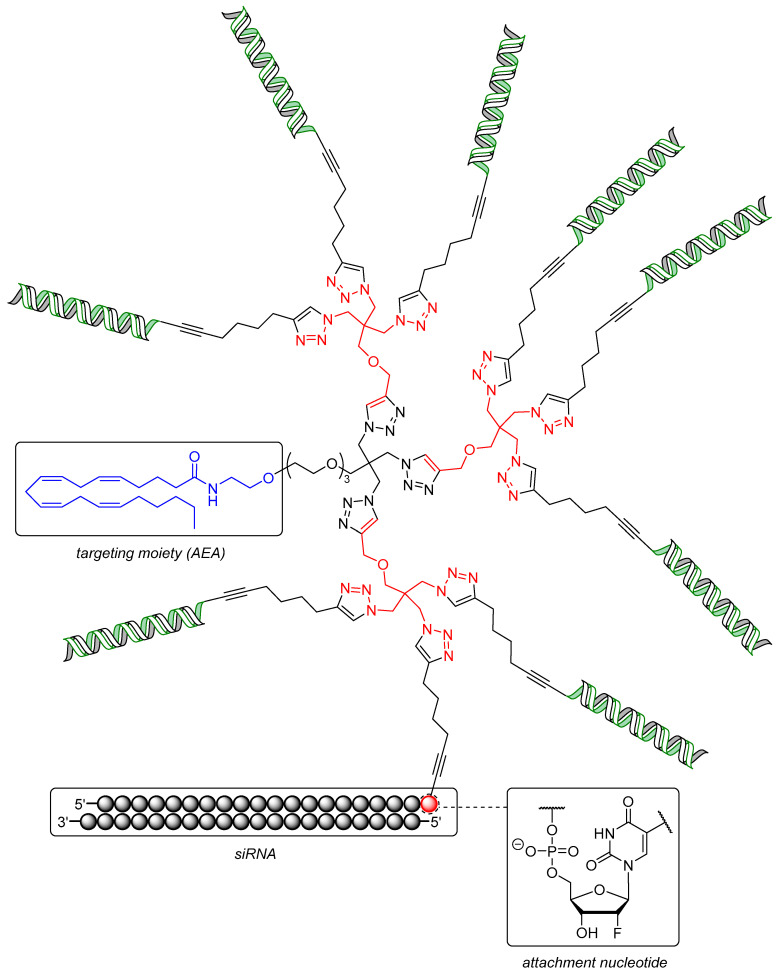
Drug candidates derived from oligonucleotides (ON) are receiving increased attention that is supported by the clinical approval of several ON drugs. Such therapeutic ON are designed to alter the expression levels of specific disease-related proteins, e.g., by displaying antigene, antisense, and RNA interference mechanisms. However, the high polarity of the polyanionic ON and their relatively rapid nuclease-mediated cleavage represent two major pharmacokinetic hurdles for their application in vivo. This has led to a range of non-natural modifications of ON structures that are routinely applied in the design of therapeutic ON. The polyanionic architecture of ON often hampers their penetration of target cells or tissues, and ON usually show no inherent specificity for certain cell types. These limitations can be overcome by conjugation of ON with molecular entities mediating cellular 'targeting', i.e., enhanced accumulation at and/or penetration of a specific cell type. In this context, the use of small molecules as targeting units appears particularly attractive and promising. This review provides an overview of advances in the emerging field of cellular targeting of ON via their conjugation with small-molecule targeting structures.
寡核苷酸(ON)衍生的药物候选物越来越受到关注,这得到了几种 ON 药物临床批准的支持。这些治疗性 ON 旨在改变特定疾病相关蛋白的表达水平,例如通过展示抗基因、反义、和 RNA 干扰机制。然而,多阴离子的 ON 的高极性及其相对较快的核酸酶介导的切割代表了其在体内应用的两个主要药代动力学障碍。这导致了一系列非天然修饰的 ON 结构,这些结构通常应用于治疗性 ON 的设计中。ON 的多阴离子结构常常阻碍它们穿透靶细胞或组织,并且 ON 通常对某些细胞类型没有固有特异性。这些限制可以通过将 ON 与介导细胞“靶向”的分子实体(即,在特定细胞类型中的增强积累和/或穿透)偶联来克服。在这种情况下,小分子作为靶向单元的使用似乎特别有吸引力和有前途。本文综述了通过与小分子靶向结构偶联实现 ON 的细胞靶向这一新兴领域的进展。