Chen Liqin, Song Sirui, Ning Qianqian, Zhu Danying, Jia Jia, Zhang Han, Zhao Jian, Hao Shiying, Liu Fang, Chu Chen, Huang Meirong, Chen Sun, Xie Lijian, Xiao Tingting, Huang Min
Department of Cardiology, Shanghai Children's Hospital, Shanghai Jiao Tong University, Shanghai, China.
Shanghai Center for Bioinformation Technology, Shanghai, China.
Front Pediatr. 2020 Dec 4;8:462367. doi: 10.3389/fped.2020.462367. eCollection 2020.
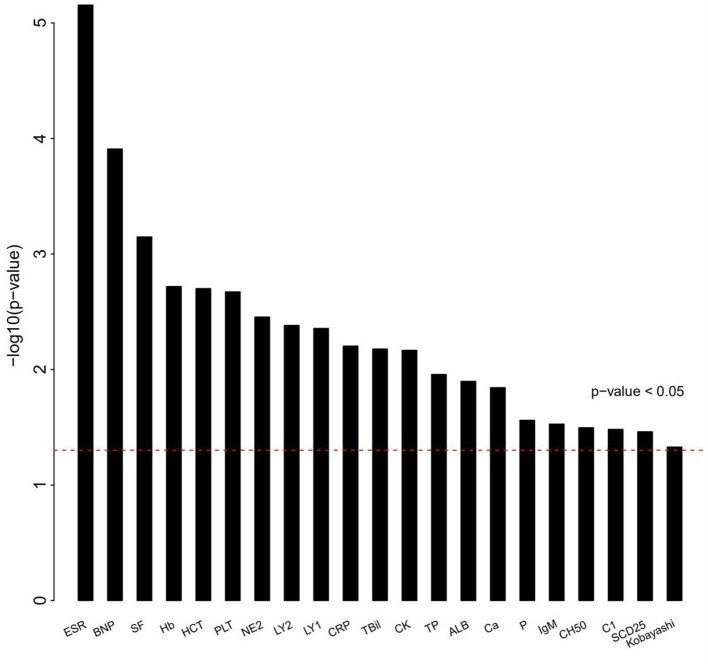
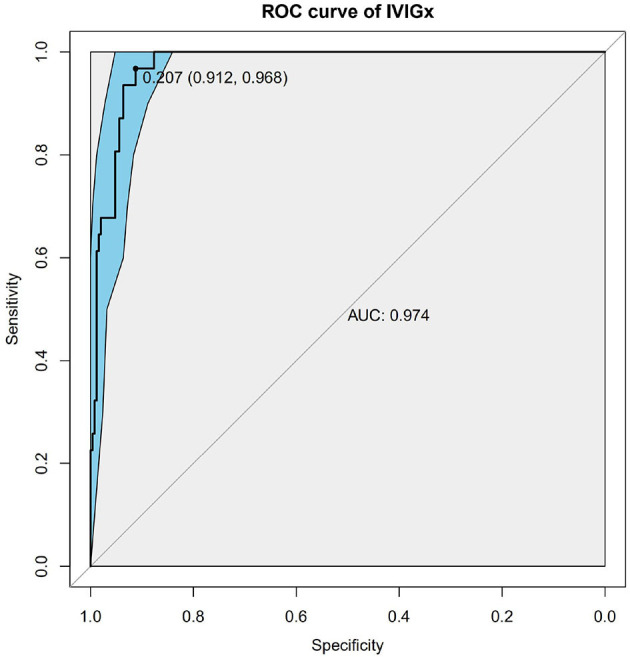
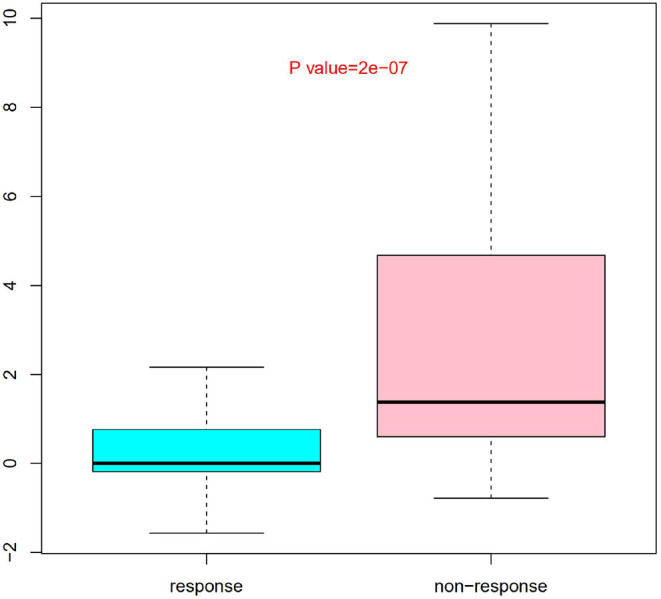
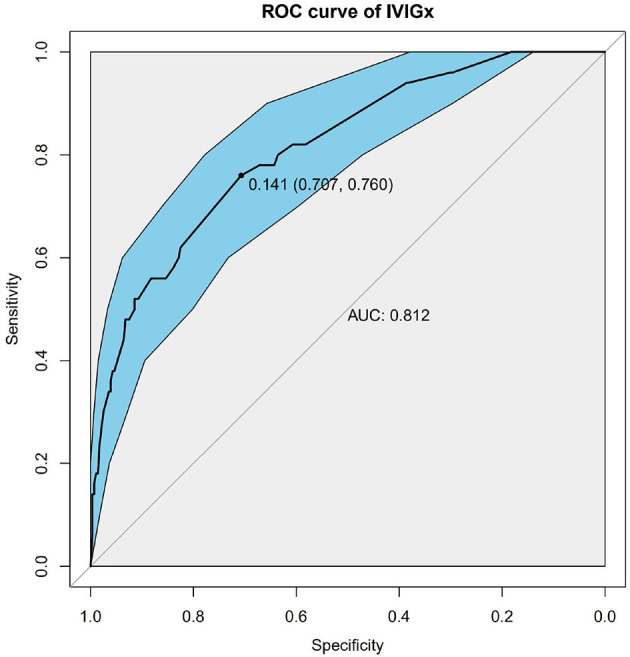
Kawasaki disease (KD) is the most common cause of acquired heart disease. A proportion of patients were resistant to intravenous immunoglobulin (IVIG), the primary treatment of KD, and the mechanism of IVIG resistance remains unclear. The accuracy of current models predictive of IVIG resistance is insufficient and doesn't meet the clinical expectations. To develop a scoring model predicting IVIG resistance of patients with KD. We recruited 330 KD patients (50 IVIG non-responders, 280 IVIG responders) and 105 healthy children to explore the susceptibility loci of IVIG resistance in Kawasaki disease. A next generation sequencing technology that focused on 4 immune-related pathways and 472 single nucleotide polymorphisms (SNPs) was performed. An R package SNPassoc was used to identify the risk loci, and student's -test was used to identify risk factors associated with IVIG resistance. A random forest-based scoring model of IVIG resistance was built based on the identified specific SNP loci with the laboratory data. A total of 544 significant risk loci were found associated with IVIG resistance, including 27 previous published SNPs. Laboratory test variables, including erythrocyte sedimentation rate (ESR), platelet (PLT), and C reactive protein, were found significantly different between IVIG responders and non-responders. A scoring model was built using the top 9 SNPs and clinical features achieving an area under the ROC curve of 0.974. It is the first study that focused on immune system in KD using high-throughput sequencing technology. Our findings provided a prediction of the IVIG resistance by integrating the genotype and clinical variables. It also suggested a new perspective on the pathogenesis of IVIG resistance.
川崎病(KD)是后天性心脏病最常见的病因。一部分患者对KD的主要治疗方法静脉注射免疫球蛋白(IVIG)耐药,IVIG耐药的机制仍不清楚。目前预测IVIG耐药的模型准确性不足,无法满足临床需求。为了建立一个预测KD患者IVIG耐药的评分模型。我们招募了330例KD患者(50例IVIG无反应者,280例IVIG反应者)和105名健康儿童,以探索川崎病中IVIG耐药的易感基因座。采用聚焦于4条免疫相关通路和472个单核苷酸多态性(SNP)的新一代测序技术。使用R包SNPassoc识别风险基因座,使用学生t检验识别与IVIG耐药相关的风险因素。基于识别出的特定SNP基因座和实验室数据,构建了基于随机森林的IVIG耐药评分模型。共发现544个与IVIG耐药相关的显著风险基因座,其中包括27个先前发表的SNP。发现实验室检测变量,包括红细胞沉降率(ESR)、血小板(PLT)和C反应蛋白,在IVIG反应者和无反应者之间存在显著差异。使用前9个SNP和临床特征构建了一个评分模型,其ROC曲线下面积为0.974。这是第一项使用高通量测序技术聚焦于KD免疫系统的研究。我们的研究结果通过整合基因型和临床变量对IVIG耐药进行了预测。它还为IVIG耐药的发病机制提供了新的视角。