Marrocco Jordan, Verhaeghe Remy, Bucci Domenico, Di Menna Luisa, Traficante Anna, Bouwalerh Hammou, Van Camp Gilles, Ghiglieri Veronica, Picconi Barbara, Calabresi Paolo, Ravasi Laura, Cisani Francesca, Bagheri Farzaneh, Pittaluga Anna, Bruno Valeria, Battaglia Giuseppe, Morley-Fletcher Sara, Nicoletti Ferdinando, Maccari Stefania
Harold and Margaret Milliken Hatch Laboratory of Neuroendocrinology, The Rockefeller University, 10065, NY, USA.
IRCCS Neuromed, Località Camerelle, 86077, Pozzilli, Italy.
Neurobiol Stress. 2020 Nov 2;13:100265. doi: 10.1016/j.ynstr.2020.100265. eCollection 2020 Nov.
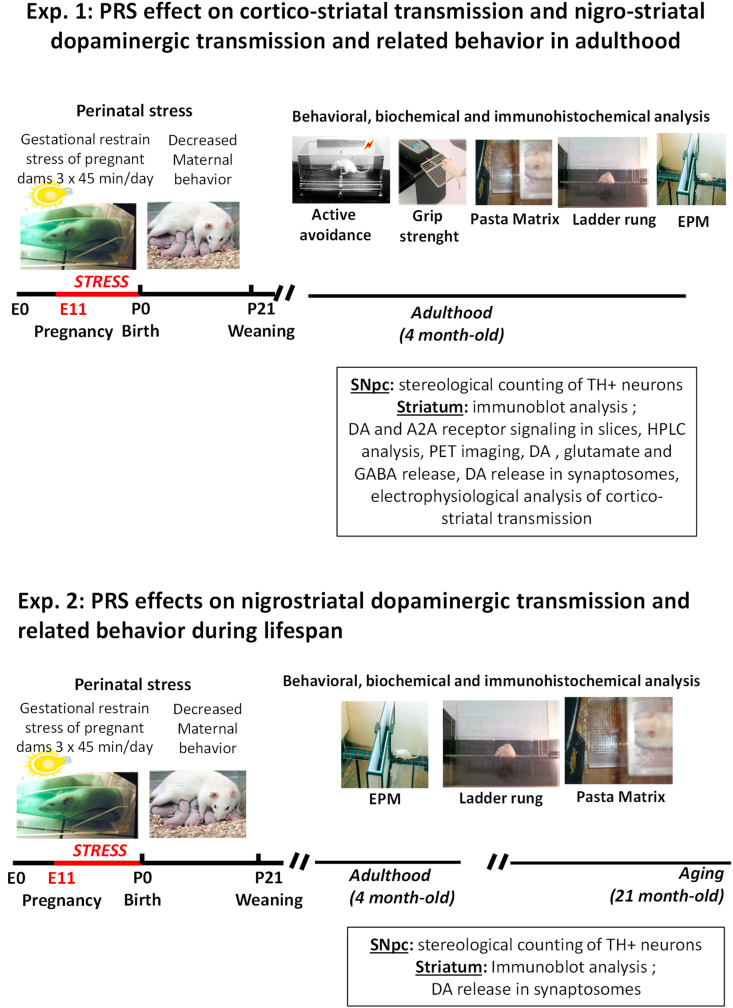
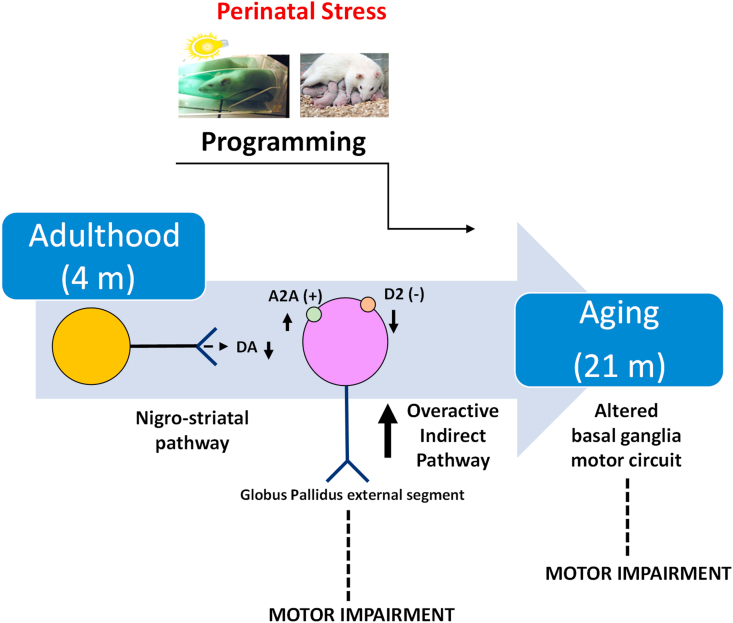
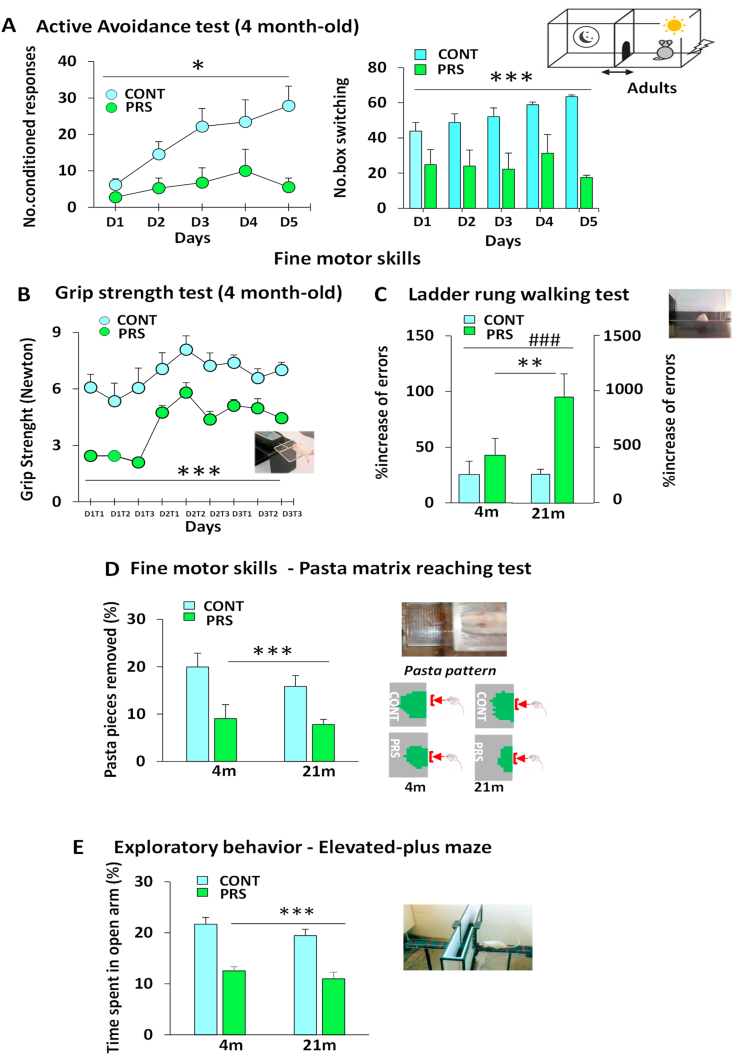
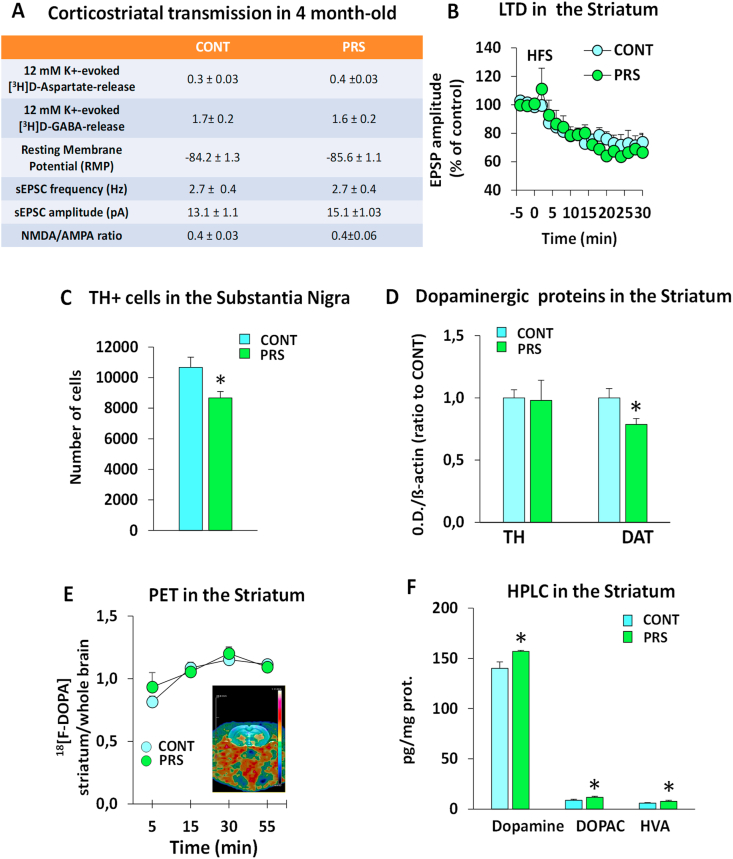
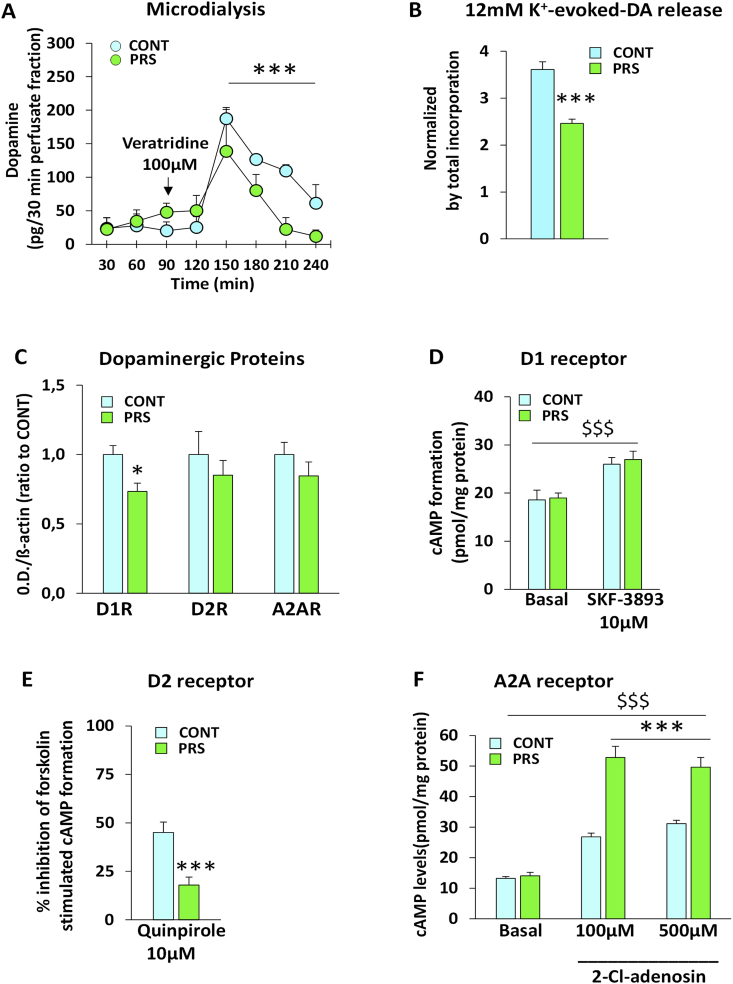
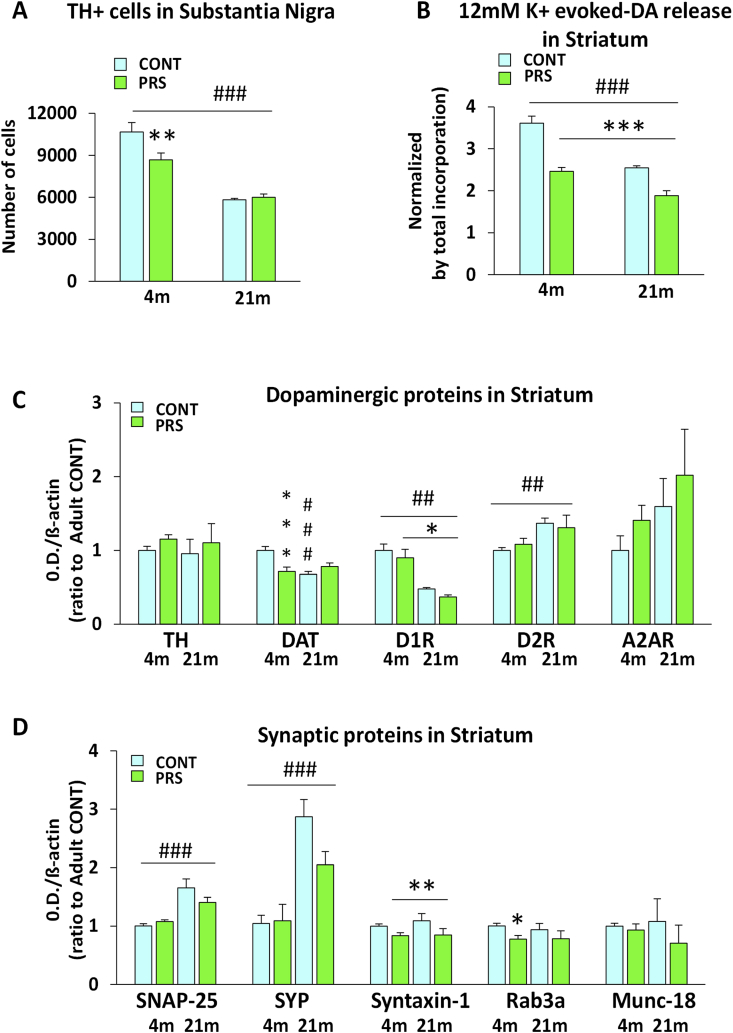
Early-life stress involved in the programming of stress-related illnesses can have a toxic influence on the functioning of the nigrostriatal motor system during aging. We examined the effects of perinatal stress (PRS) on the neurochemical, electrophysiological, histological, neuroimaging, and behavioral correlates of striatal motor function in adult (4 months of age) and old (21 months of age) male rats. Adult PRS offspring rats showed reduced dopamine (DA) release in the striatum associated with reductions in tyrosine hydroxylase-positive (TH) cells and DA transporter (DAT) levels, with no loss of striatal dopaminergic terminals as assessed by positron emission tomography analysis with fluorine-18-l-dihydroxyphenylalanine. Striatal levels of DA and its metabolites were increased in PRS rats. In contrast, D DA receptor signaling was reduced and A adenosine receptor signaling was increased in the striatum of adult PRS rats. This indicated enhanced activity of the indirect pathway of the basal ganglia motor circuit. Adult PRS rats also showed poorer performance in the grip strength test and motor learning tasks. The aged PRS rats also showed a persistent reduction in striatal DA release and defective motor skills in the pasta matrix and ladder rung walking tests. In addition, the old rats showed large increases in the levels of SNAP-25 and synaptophysin, which are synaptic vesicle-related proteins in the striatum, and in the PRS group only, reductions in Syntaxin-1 and Rab3a protein levels were observed. Our findings indicated that the age-dependent threshold for motor dysfunction was lowered in PRS rats. This area of research is underdeveloped, and our study suggests that early-life stress can contribute to an increased understanding of how aging diseases are programmed in early-life.
早年生活应激参与应激相关疾病的编程,在衰老过程中可能对黑质纹状体运动系统的功能产生毒性影响。我们研究了围产期应激(PRS)对成年(4月龄)和老年(21月龄)雄性大鼠纹状体运动功能的神经化学、电生理、组织学、神经影像学及行为相关性的影响。成年PRS后代大鼠纹状体中多巴胺(DA)释放减少,与酪氨酸羟化酶阳性(TH)细胞和DA转运体(DAT)水平降低有关,通过用氟-18 - l -二羟基苯丙氨酸进行正电子发射断层扫描分析评估,纹状体多巴胺能终末未见丢失。PRS大鼠纹状体中DA及其代谢产物水平升高。相反,成年PRS大鼠纹状体中D DA受体信号传导减少,A腺苷受体信号传导增加。这表明基底神经节运动回路间接通路的活性增强。成年PRS大鼠在握力测试和运动学习任务中的表现也较差。老年PRS大鼠在意大利面基质和梯级行走测试中也表现出纹状体DA释放持续减少和运动技能缺陷。此外,老年大鼠纹状体中与突触小泡相关的蛋白质SNAP - 25和突触素水平大幅升高,且仅在PRS组中观察到Syntaxin - 1和Rab3a蛋白水平降低。我们的研究结果表明,PRS大鼠运动功能障碍的年龄依赖性阈值降低。该研究领域尚不完善,我们的研究表明早年生活应激有助于加深对衰老疾病在早年如何编程的理解。