Augustin Ryan C, Delgoffe Greg M, Najjar Yana G
Department of Medicine, University of Pittsburgh, Pittsburgh, PA 15260, USA.
Department of Immunology, University of Pittsburgh, Pittsburgh, PA 15260, USA.
Cancers (Basel). 2020 Dec 17;12(12):3802. doi: 10.3390/cancers12123802.
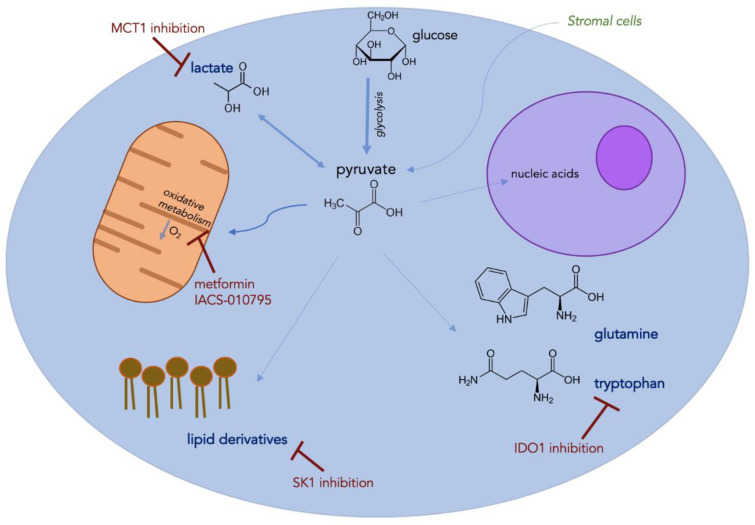
Immunotherapy (IMT) is now a core component of cancer treatment, however, many patients do not respond to these novel therapies. Investigating the resistance mechanisms behind this differential response is now a critical area of research. Immune-based therapies, particularly immune checkpoint inhibitors (ICI), rely on a robust infiltration of T-cells into the tumor microenvironment (TME) for an effective response. While early efforts relied on quantifying tumor infiltrating lymphocytes (TIL) in the TME, characterizing the functional quality and degree of TIL exhaustion correlates more strongly with ICI response. Even with sufficient TME infiltration, immune cells face a harsh metabolic environment that can significantly impair effector function. These tumor-mediated metabolic perturbations include hypoxia, oxidative stress, and metabolites of cellular energetics. Primarily through HIF-1-dependent processes, hypoxia invokes an immunosuppressive phenotype via altered molecular markers, immune cell trafficking, and angiogenesis. Additionally, oxidative stress can promote lipid peroxidation, ER stress, and Treg dysfunction, all associated with immune dysregulation. Finally, the metabolic byproducts of lipids, amino acids, glucose, and cellular energetics are associated with immunosuppression and ICI resistance. This review will explore these biochemical pathways linked to immune cell dysfunction in the TME and highlight potential adjunctive therapies to be used alongside current IMT.
免疫疗法(IMT)如今是癌症治疗的核心组成部分,然而,许多患者对这些新型疗法并无反应。探究这种差异反应背后的耐药机制是当前一个关键的研究领域。基于免疫的疗法,尤其是免疫检查点抑制剂(ICI),依赖T细胞大量浸润到肿瘤微环境(TME)中才能产生有效反应。早期研究致力于量化TME中的肿瘤浸润淋巴细胞(TIL),而TIL耗竭的功能质量和程度与ICI反应的相关性更强。即使TME中有足够的浸润,免疫细胞仍面临恶劣的代谢环境,这会显著损害效应功能。这些肿瘤介导的代谢紊乱包括缺氧、氧化应激和细胞能量代谢产物。缺氧主要通过依赖缺氧诱导因子-1(HIF-1)的过程,通过改变分子标志物、免疫细胞运输和血管生成来引发免疫抑制表型。此外,氧化应激可促进脂质过氧化、内质网应激和调节性T细胞(Treg)功能障碍,所有这些都与免疫失调有关。最后,脂质、氨基酸、葡萄糖和细胞能量代谢的副产物与免疫抑制和ICI耐药相关。本综述将探讨这些与TME中免疫细胞功能障碍相关的生化途径,并重点介绍可与当前IMT联合使用的潜在辅助疗法。