Department of Structural Heart Disease, The First Affiliated Hospital of Xi'an Jiaotong University, Xi'an 710061, China.
Dis Markers. 2020 Nov 28;2020:8880004. doi: 10.1155/2020/8880004. eCollection 2020.
A growing body of emerging evidence indicates that metabolic processes play a pivotal role in the biological processes underlying acute myocardial infarction (AMI). The aim of the current study was to identify featured metabolism-related genes in patients with AMI using a support vector machine (SVM) and to further explore the value of these genes in the diagnosis of AMI.
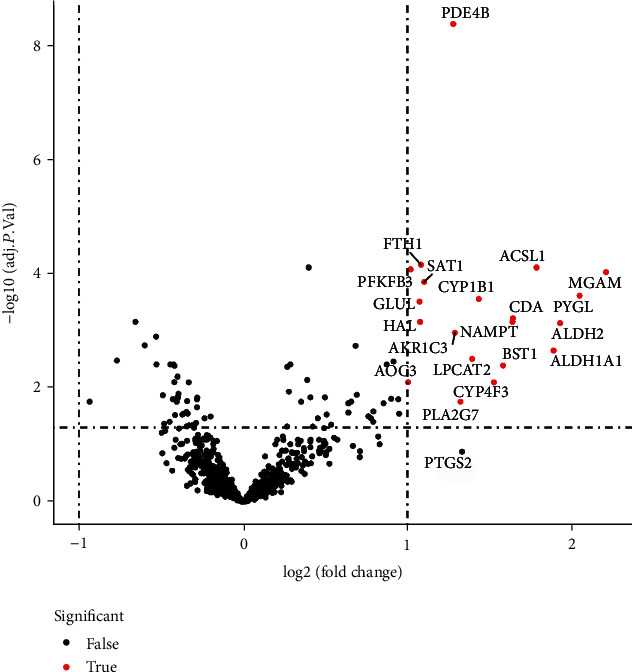
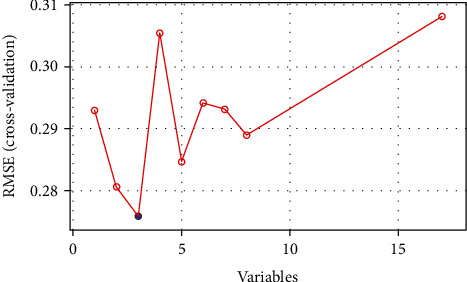
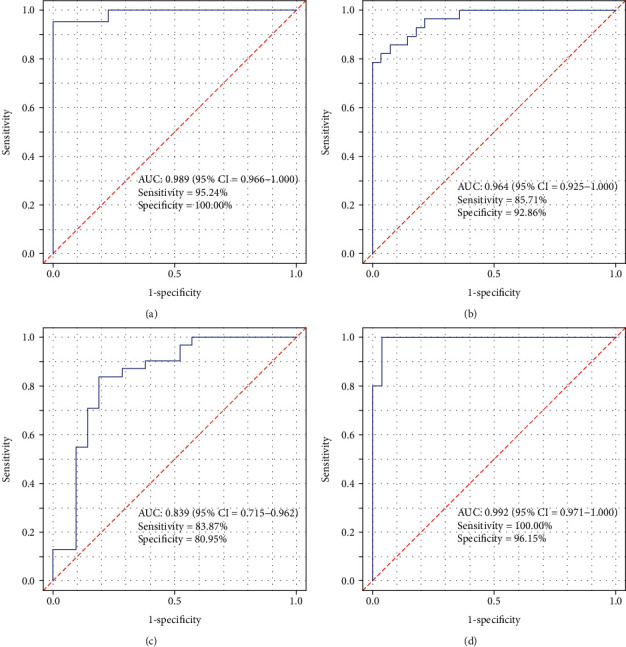
Gene microarray expression data related to AMI were downloaded from the GSE66360 dataset in the Gene Expression Omnibus (GEO) database. This data set consisted of 50 AMI samples and 49 normal controls that were randomly classified into a discovery cohort (21 AMI samples and 22 normal controls) and a validation cohort (28 AMI and 28 normal controls). We applied a machine learning method that combined SVM with recursive feature elimination (RFE) to discriminate AMI patients from normal controls. Based on this, an SVM classifier was constructed. Receiver operating characteristic (ROC) analysis was used to investigate the predictive value for the early diagnosis of AMI in the two cohorts and was then further verified in an independent external cohort.
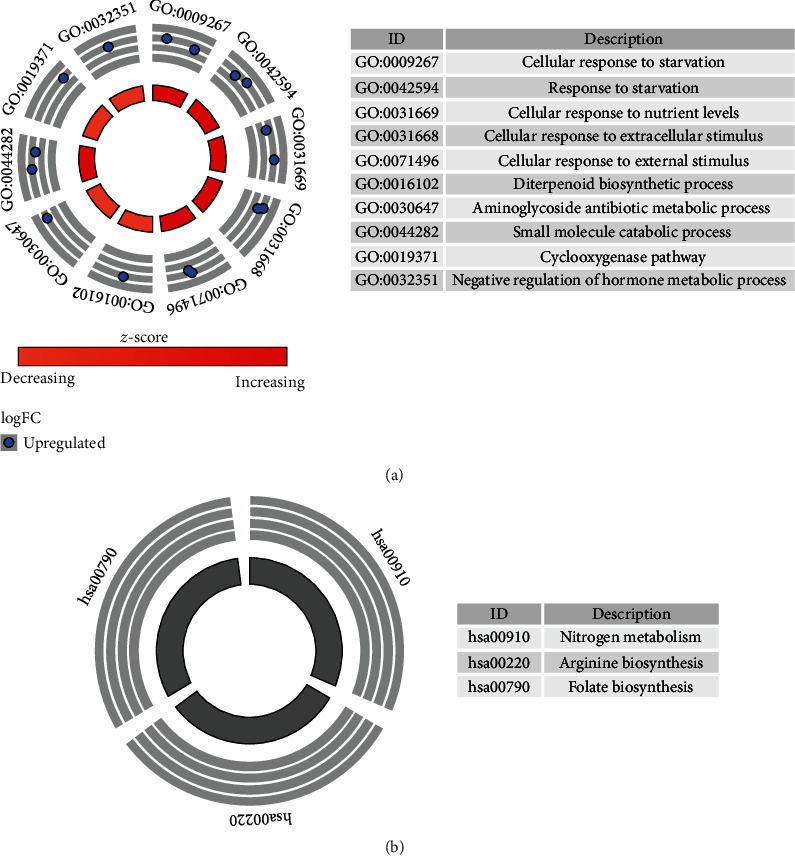
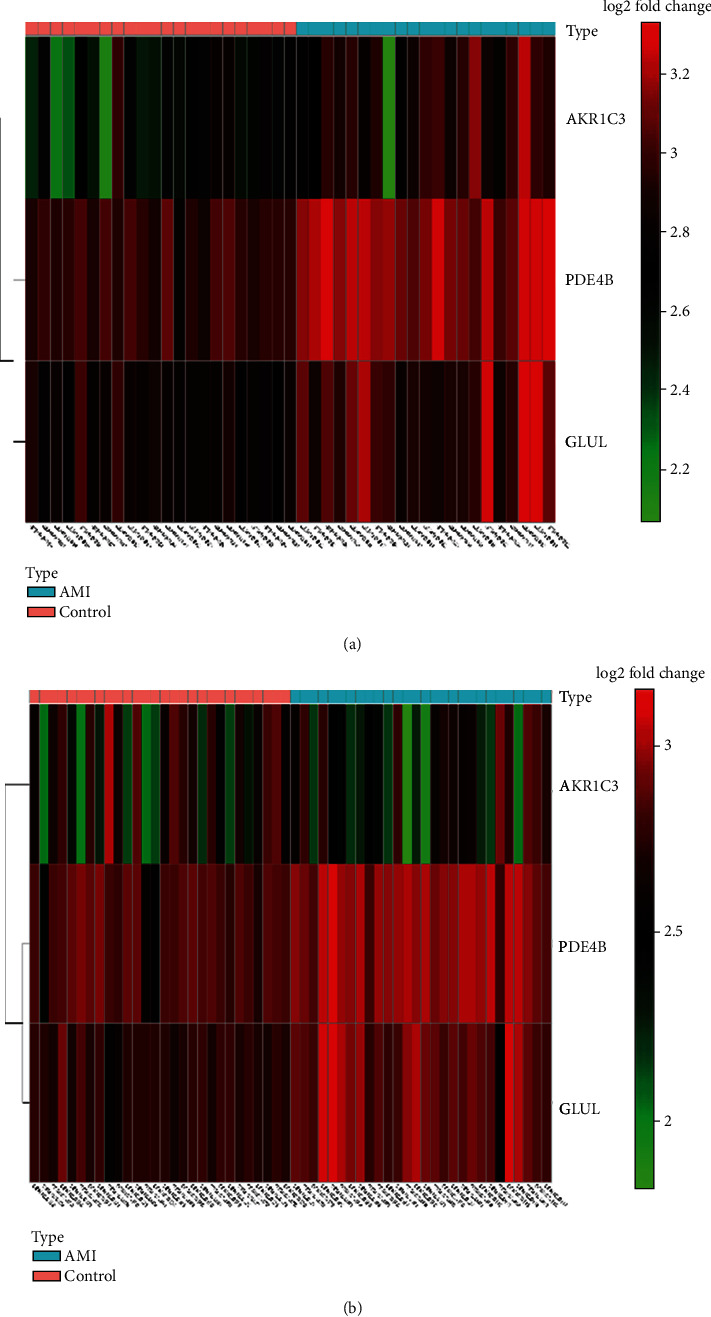
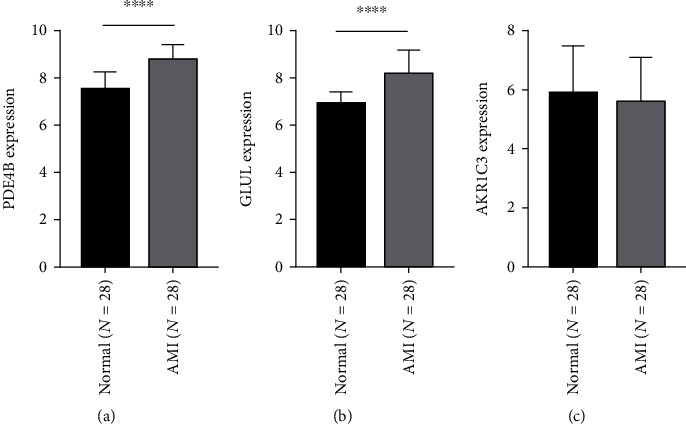
Three metabolism-related genes were identified based on SVM-RFE (, , and ). The SVM classifier based on the three genes allowed for excellent discrimination between AMI and healthy samples in both the discovery cohort (AUC = 0.989) and the validation cohort (AUC = 0.964), and this was further confirmed in the GSE68060 dataset (AUC = 0.839). Additionally, the SVM classifier allowed for perfect discrimination between recurrent AMI events and nonrecurrent events in the GSE68060 cohort (AUC = 0.992). GO and KEGG pathway enrichment analysis of the identified featured genes revealed significant enrichment of specific metabolic pathways.
The identified metabolism-related genes may play important roles in the development of AMI and may represent diagnostic and therapeutic biomarkers of AMI.
越来越多的新兴证据表明,代谢过程在急性心肌梗死(AMI)的生物学过程中起着关键作用。本研究旨在使用支持向量机(SVM)鉴定 AMI 患者的特征代谢相关基因,并进一步探讨这些基因在 AMI 诊断中的价值。
从基因表达综合数据库(GEO)的 GSE66360 数据集下载与 AMI 相关的基因微阵列表达数据。该数据集包含 50 个 AMI 样本和 49 个正常对照,随机分为发现队列(21 个 AMI 样本和 22 个正常对照)和验证队列(28 个 AMI 和 28 个正常对照)。我们应用一种机器学习方法,将 SVM 与递归特征消除(RFE)相结合,以区分 AMI 患者和正常对照。在此基础上,构建了 SVM 分类器。使用接受者操作特征(ROC)分析评估该分类器在两个队列中的 AMI 早期诊断的预测价值,并在一个独立的外部队列中进行了进一步验证。
基于 SVM-RFE 确定了 3 个代谢相关基因(、和)。基于这 3 个基因的 SVM 分类器在发现队列(AUC=0.989)和验证队列(AUC=0.964)中均能很好地区分 AMI 患者和健康样本,这在 GSE68060 数据集中也得到了进一步证实(AUC=0.839)。此外,SVM 分类器在 GSE68060 队列中还能很好地区分复发性 AMI 事件和非复发性事件(AUC=0.992)。对鉴定出的特征基因进行 GO 和 KEGG 通路富集分析显示,特定代谢通路存在显著富集。
鉴定出的代谢相关基因可能在 AMI 的发生发展中起重要作用,可能代表 AMI 的诊断和治疗生物标志物。