Department of Pathology, University of Arizona College of Medicine and College of Pharmacy, Tucson, AZ, USA.
Department of Pharmacology, University of Arizona College of Medicine and College of Pharmacy, Tucson, AZ, USA; The Center for Innovation in Brain Sciences, The University of Arizona Health Sciences, Tucson, AZ, United States; The BIO5 Institute, University of Arizona, United States.
Neurobiol Dis. 2021 Feb;149:105224. doi: 10.1016/j.nbd.2020.105224. Epub 2020 Dec 24.
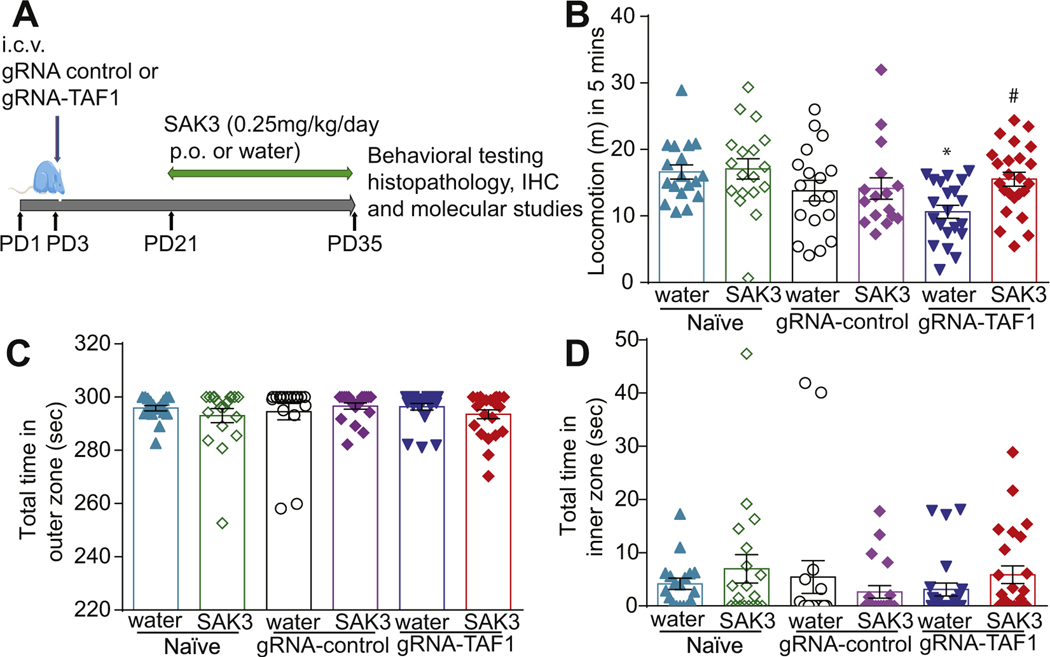
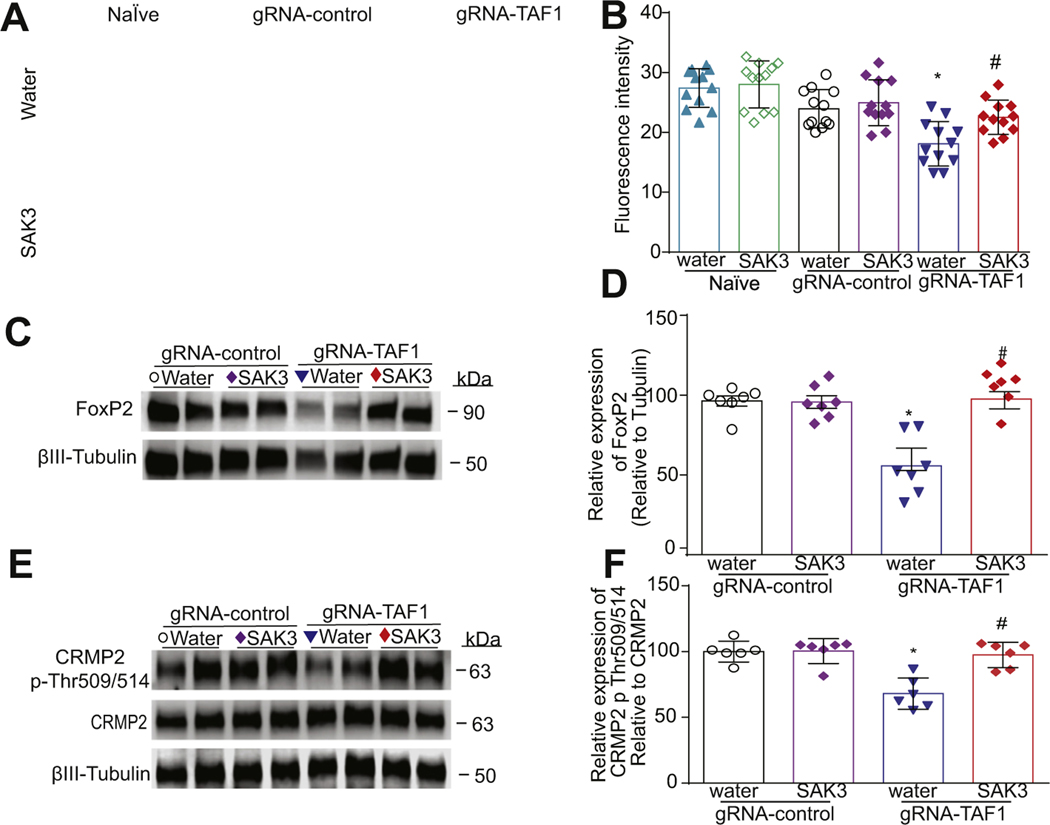
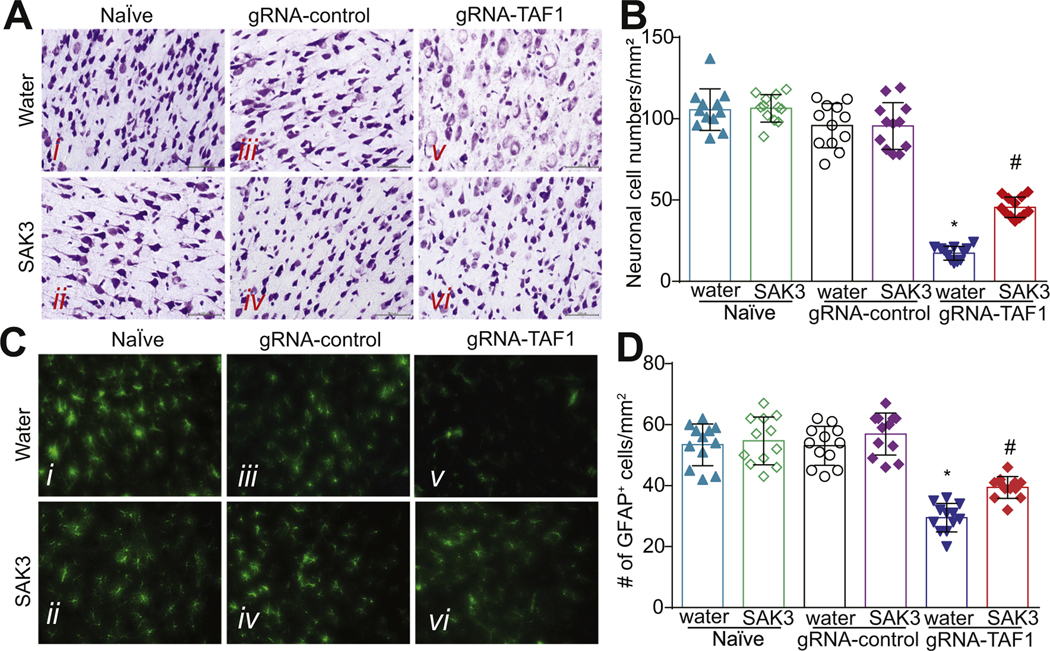
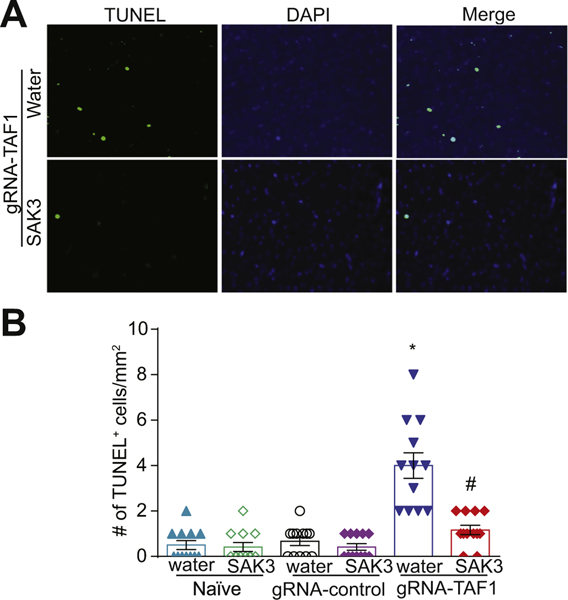
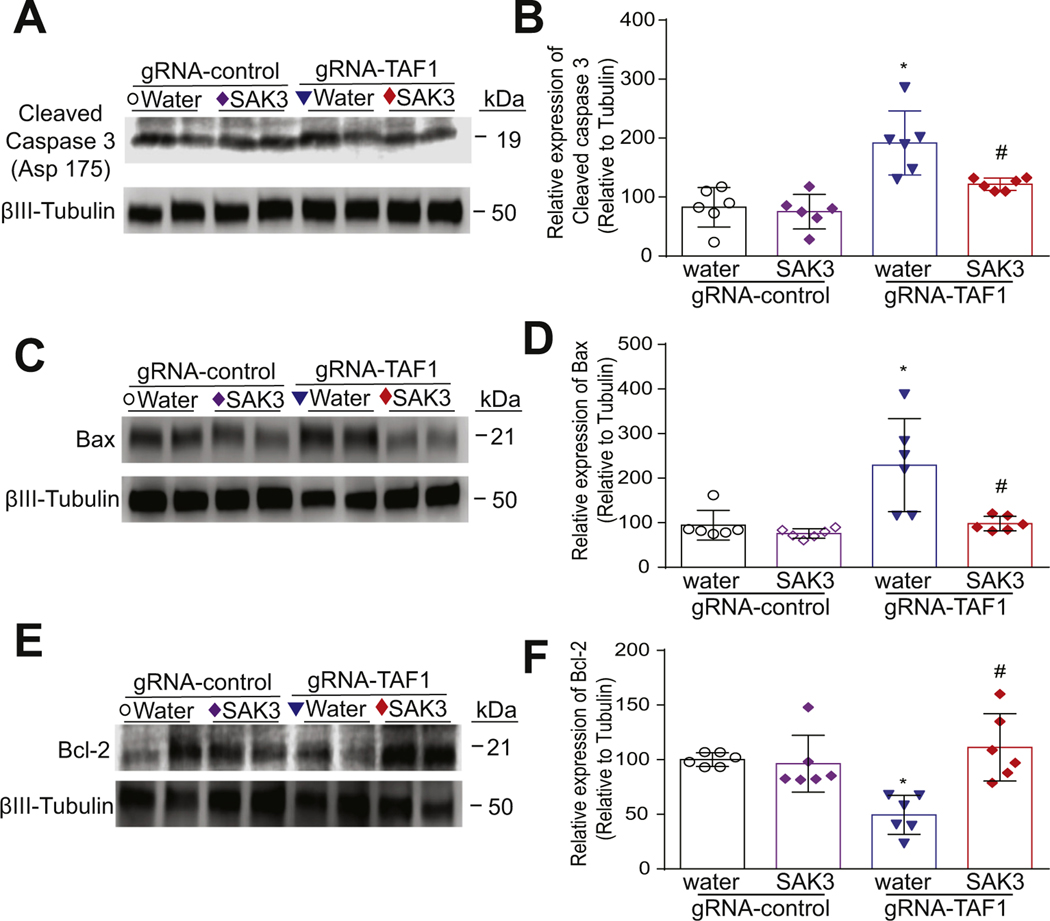
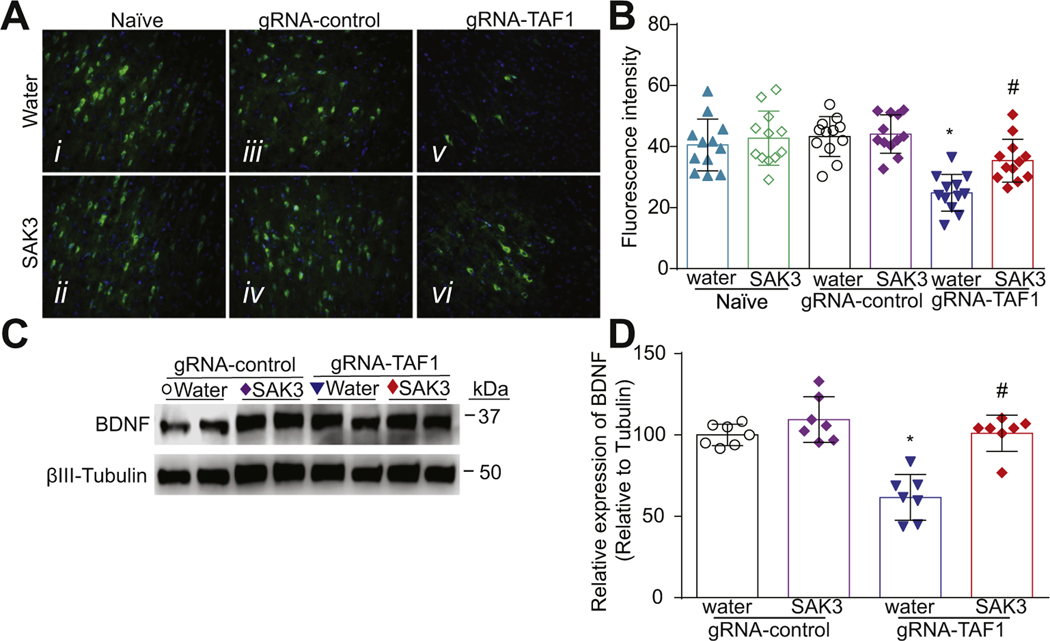
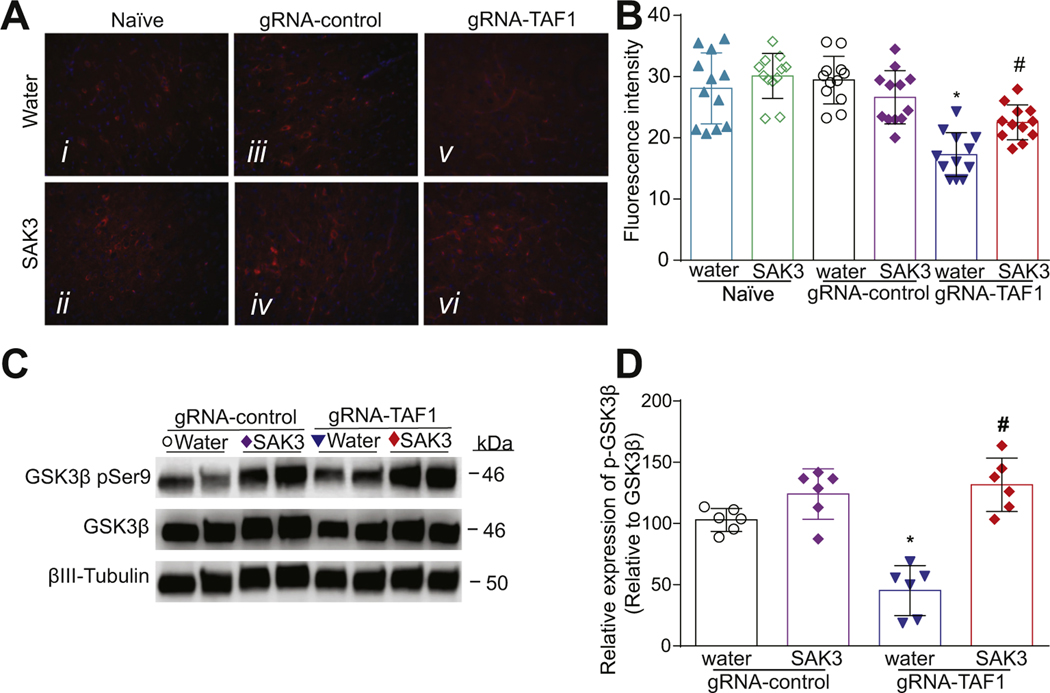
The TATA-box binding protein associated factor 1 (TAF1) is part of the TFIID complex that plays a key role during the initiation of transcription. Variants of TAF1 are associated with neurodevelopmental disorders. Previously, we found that CRISPR/Cas9 based editing of the TAF1 gene disrupts the morphology of the cerebral cortex and blunts the expression as well as the function of the CaV3.1 (T-type) voltage gated calcium channel. Here, we tested the efficacy of SAK3 (ethyl 8'-methyl-2', 4-dioxo-2-(piperidin-1-yl)-2'H-spiro [cyclopentane-1, 3'-imidazo [1, 2-a] pyridine]-2-ene-3-carboxylate), a T-type calcium channel enhancer, in an animal model of TAF1 intellectual disability (ID) syndrome. At post-natal day 3, rat pups were subjected to intracerebroventricular (ICV) injection of either gRNA-control or gRNA-TAF1 CRISPR/Cas9 viruses. At post-natal day 21, the rat pups were given SAK3 (0.25 mg/kg, p.o.) or vehicle for 14 days (i.e. till post-natal day 35) and then subjected to behavioral, morphological, and molecular studies. Oral administration of SAK3 (0.25 mg/kg, p.o.) significantly rescued locomotion abnormalities associated with TAF1 gene editing. SAK3 treatment prevented the loss of cortical neurons and GFAP-positive astrocytes observed after TAF1 gene editing. In addition, SAK3 protected cells from apoptosis. SAK3 also restored the Brain-derived neurotrophic factor/protein kinase B/Glycogen Synthase Kinase 3 Beta (BDNF/AKT/GSK3β) signaling axis in TAF1 edited animals. Finally, SAK3 normalized the levels of three GSK3β substrates - CaV3.1, FOXP2, and CRMP2. We conclude that the T-type calcium channel enhancer SAK3 is beneficial against the deleterious effects of TAF1 gene-editing, in part, by stimulating the BDNF/AKT/GSK3β signaling pathway.
TATA 框结合蛋白相关因子 1(TAF1)是 TFIID 复合物的一部分,在转录起始过程中发挥关键作用。TAF1 的变体与神经发育障碍有关。此前,我们发现基于 CRISPR/Cas9 的 TAF1 基因编辑会破坏大脑皮层的形态,并削弱 CaV3.1(T 型)电压门控钙通道的表达和功能。在这里,我们测试了 SAK3(乙基 8'-甲基-2',4-二氧代-2-(哌啶-1-基)-2'H-螺[环戊烷-1,3'-咪唑[1,2-a]吡啶]-2-烯-3-羧酸酯),一种 T 型钙通道增强剂,在 TAF1 智力障碍(ID)综合征的动物模型中的疗效。在出生后第 3 天,大鼠幼仔接受脑室内(ICV)注射 gRNA-对照或 gRNA-TAF1 CRISPR/Cas9 病毒。在出生后第 21 天,给予 SAK3(0.25mg/kg,口服)或载体 14 天(即直至出生后第 35 天),然后进行行为、形态和分子研究。口服 SAK3(0.25mg/kg,口服)可显著挽救与 TAF1 基因编辑相关的运动异常。SAK3 治疗可防止 TAF1 基因编辑后观察到的皮质神经元和 GFAP 阳性星形胶质细胞丢失。此外,SAK3 可防止细胞凋亡。SAK3 还恢复了 TAF1 编辑动物中的脑源性神经营养因子/蛋白激酶 B/糖原合酶激酶 3β(BDNF/AKT/GSK3β)信号通路。最后,SAK3 使 GSK3β 的三个底物 - CaV3.1、FOXP2 和 CRMP2 的水平正常化。我们得出结论,T 型钙通道增强剂 SAK3 通过刺激 BDNF/AKT/GSK3β 信号通路,对 TAF1 基因编辑的有害影响有益。