Department of Microbiology and Immunology, Penn State College School of Medicine, Hershey, Pennsylvania, United States of America.
W. Harry Feinstone Department of Molecular Microbiology and Immunology, Johns Hopkins Bloomberg School of Public Health, Baltimore, Maryland, United States of America.
PLoS Pathog. 2020 Dec 23;16(12):e1008504. doi: 10.1371/journal.ppat.1008504. eCollection 2020 Dec.
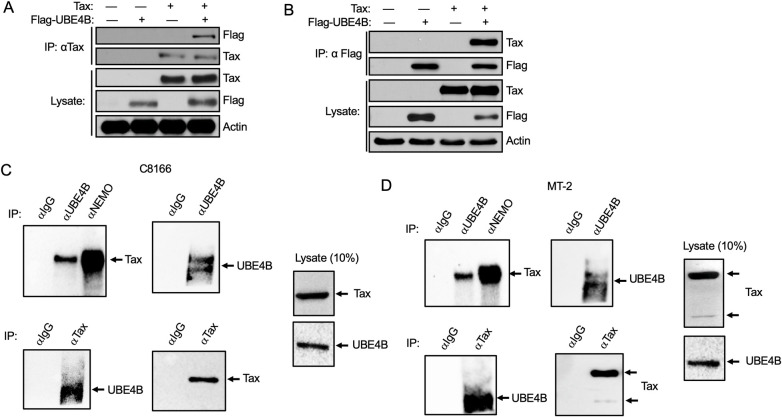
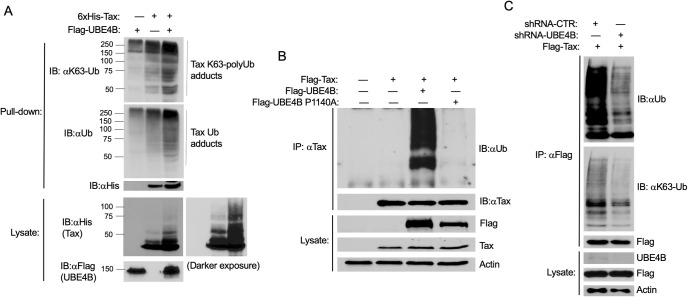
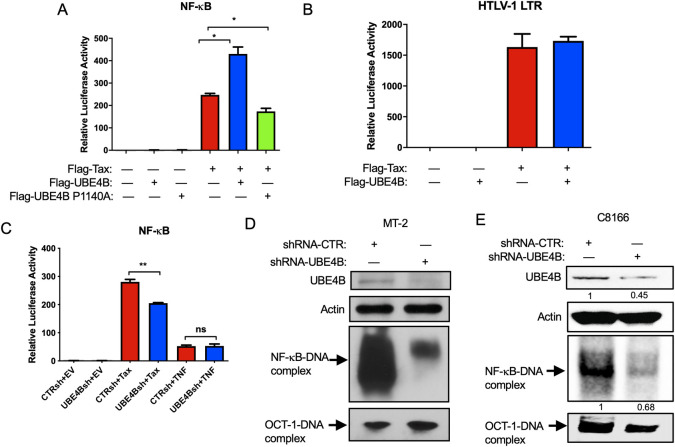
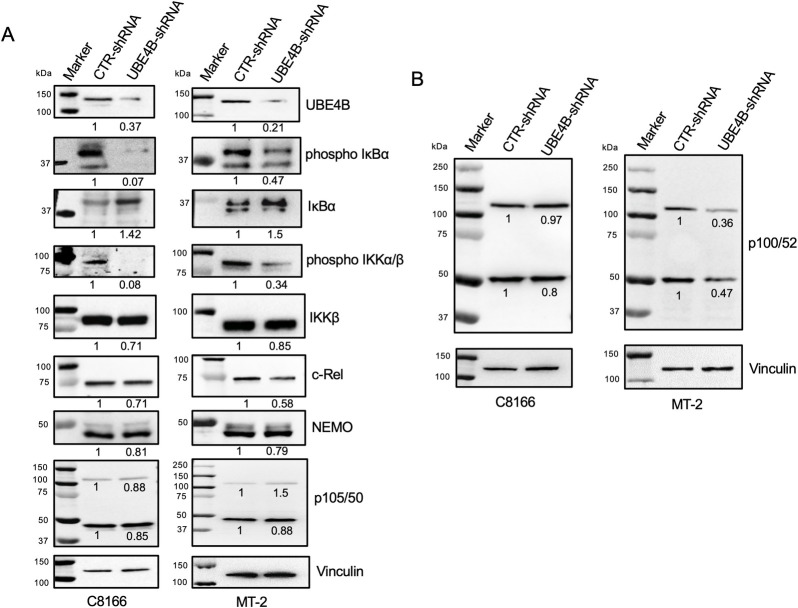
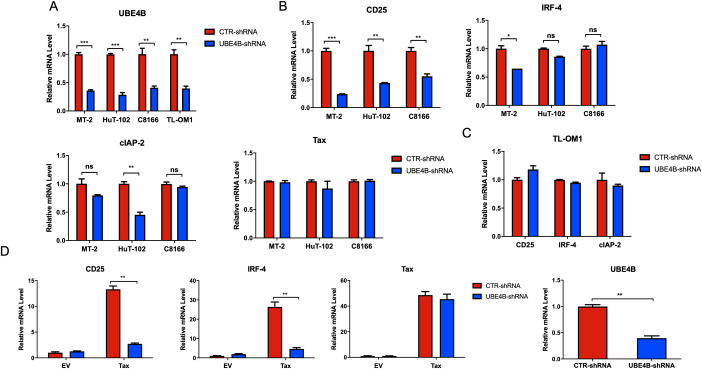
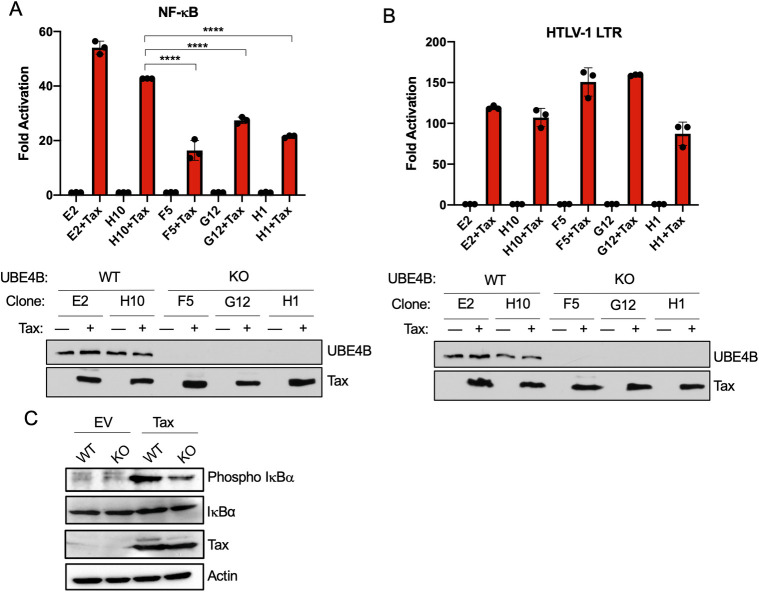
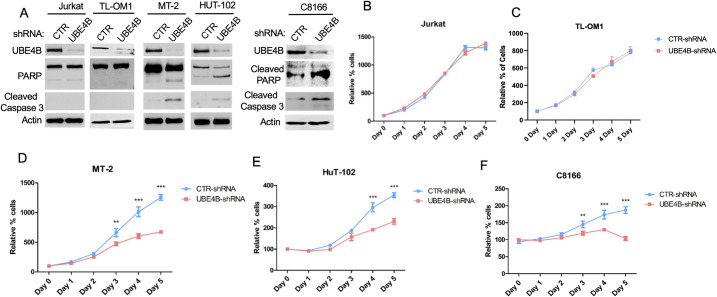
Human T-cell leukemia virus type 1 (HTLV-1) is the etiological agent of adult T-cell leukemia/lymphoma (ATLL), and the neurological disease HTLV-1-associated myelopathy/tropical spastic paraparesis (HAM/TSP). The HTLV-1 Tax protein persistently activates the NF-κB pathway to enhance the proliferation and survival of HTLV-1 infected T cells. Lysine 63 (K63)-linked polyubiquitination of Tax provides an important regulatory mechanism that promotes Tax-mediated interaction with the IKK complex and activation of NF-κB; however, the host proteins regulating Tax ubiquitination are largely unknown. To identify new Tax interacting proteins that may regulate its ubiquitination we conducted a yeast two-hybrid screen using Tax as bait. This screen yielded the E3/E4 ubiquitin conjugation factor UBE4B as a novel binding partner for Tax. Here, we confirmed the interaction between Tax and UBE4B in mammalian cells by co-immunoprecipitation assays and demonstrated colocalization by proximity ligation assay and confocal microscopy. Overexpression of UBE4B specifically enhanced Tax-induced NF-κB activation, whereas knockdown of UBE4B impaired Tax-induced NF-κB activation and the induction of NF-κB target genes in T cells and ATLL cell lines. Furthermore, depletion of UBE4B with shRNA resulted in apoptotic cell death and diminished the proliferation of ATLL cell lines. Finally, overexpression of UBE4B enhanced Tax polyubiquitination, and knockdown or CRISPR/Cas9-mediated knockout of UBE4B attenuated both K48- and K63-linked polyubiquitination of Tax. Collectively, these results implicate UBE4B in HTLV-1 Tax polyubiquitination and downstream NF-κB activation.
人类 T 细胞白血病病毒 1 型(HTLV-1)是成人 T 细胞白血病/淋巴瘤(ATLL)和神经疾病 HTLV-1 相关脊髓病/热带痉挛性截瘫(HAM/TSP)的病原体。HTLV-1 Tax 蛋白持续激活 NF-κB 途径,增强 HTLV-1 感染 T 细胞的增殖和存活。Tax 的赖氨酸 63(K63)连接多泛素化提供了一个重要的调节机制,促进 Tax 介导的与 IKK 复合物的相互作用和 NF-κB 的激活;然而,调节 Tax 泛素化的宿主蛋白在很大程度上是未知的。为了鉴定可能调节其泛素化的新的 Tax 相互作用蛋白,我们使用 Tax 作为诱饵进行了酵母双杂交筛选。该筛选产生了 E3/E4 泛素连接因子 UBE4B 作为 Tax 的一种新的结合伴侣。在这里,我们通过共免疫沉淀实验证实了 Tax 和 UBE4B 之间在哺乳动物细胞中的相互作用,并通过邻近连接分析和共聚焦显微镜证实了共定位。UBE4B 的过表达特异性增强了 Tax 诱导的 NF-κB 激活,而 UBE4B 的敲低则损害了 Tax 诱导的 NF-κB 激活和 T 细胞和 ATLL 细胞系中 NF-κB 靶基因的诱导。此外,用 shRNA 耗尽 UBE4B 导致细胞凋亡和 ATLL 细胞系增殖减少。最后,UBE4B 的过表达增强了 Tax 的多泛素化,而 UBE4B 的敲低或 CRISPR/Cas9 介导的敲除减弱了 Tax 的 K48 和 K63 连接多泛素化。总之,这些结果表明 UBE4B 参与了 HTLV-1 Tax 的多泛素化和下游 NF-κB 的激活。