The Francis Crick Institute, London, United Kingdom.
Division of Infection and Immunity, University College London, London, United Kingdom.
Front Cell Infect Microbiol. 2020 Dec 11;10:603623. doi: 10.3389/fcimb.2020.603623. eCollection 2020.
Mortality from bacterial meningitis, predominately caused by , exceeds 50% in sub-Saharan African countries with high HIV prevalence. Underlying causes of high mortality are poorly understood. We examined the host and pathogen proteome in the CSF of adults with proven pneumococcal meningitis (PM), testing if there was an association between differentially expressed proteins and outcome.
MATERIALS/METHODS: CSF proteomes were analyzed by quantitative Mass-Spectrometry. Spectra were identified using the Swissprot human and TIGR4 pneumococcal protein libraries. Proteins were quantitated and analyzed against mortality. Unique proteins in PM were identified against published normal CSF proteome. Random-Forest models were used to test for protein signatures discriminating outcome. Proteins of interest were tested for their effects on growth and neutrophil opsonophagocytic killing of .
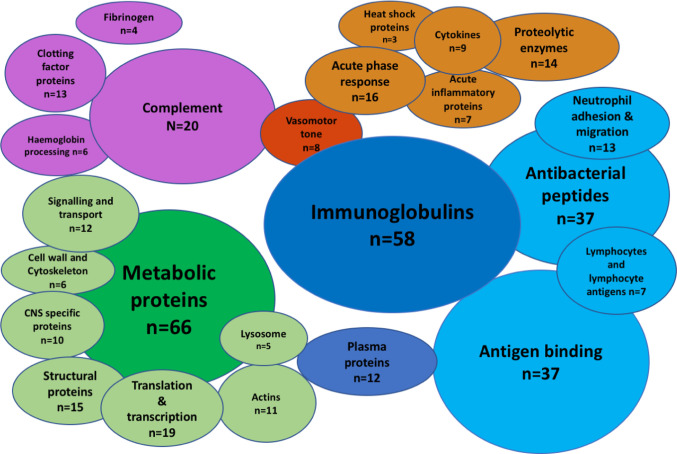
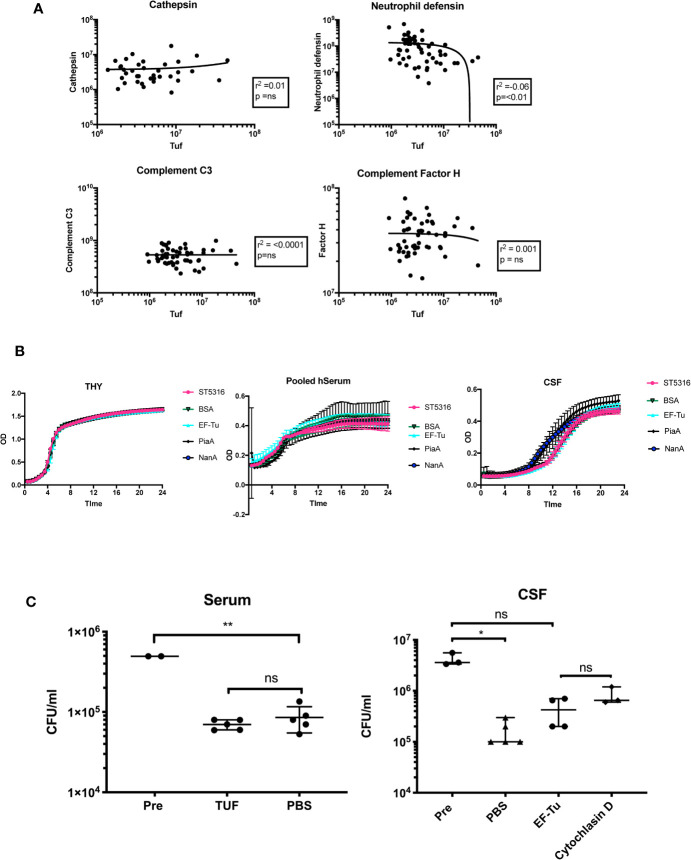
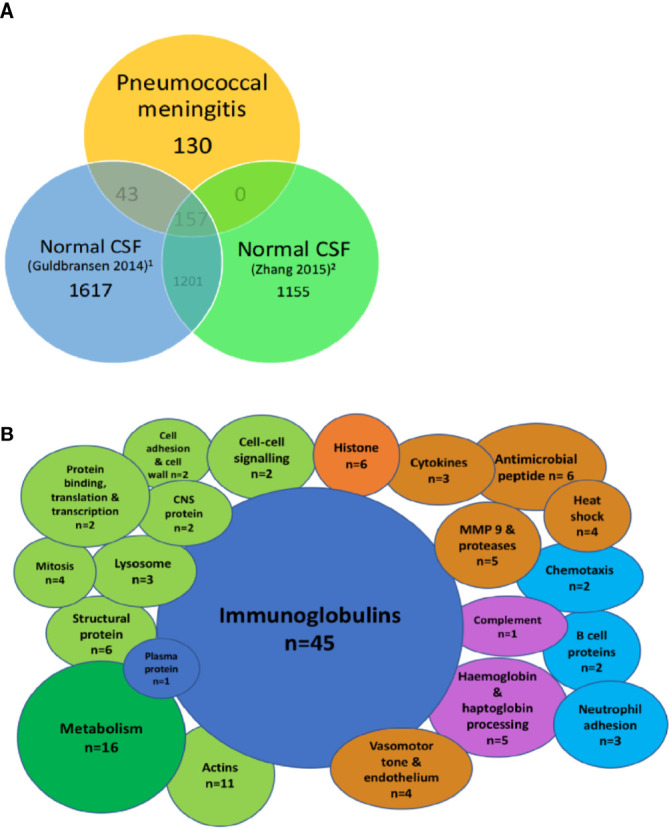
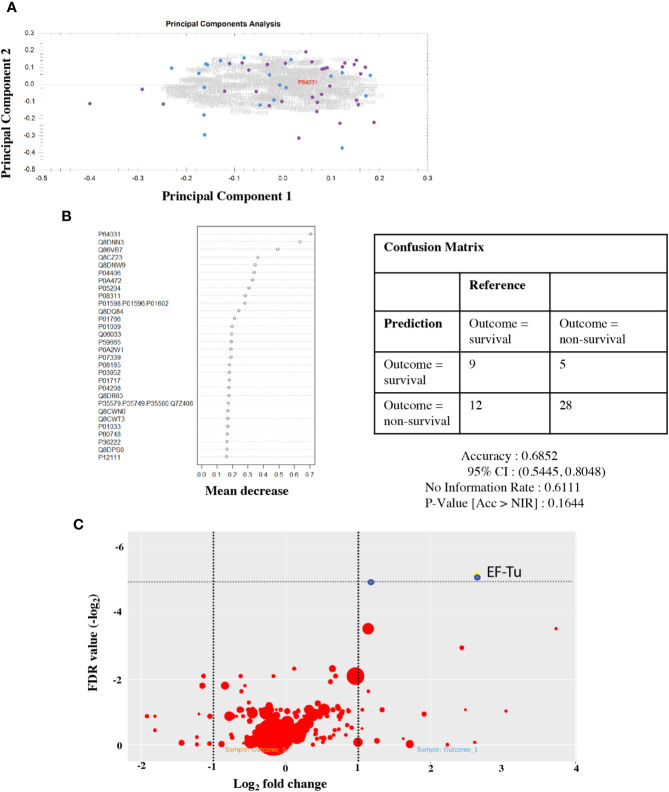
CSF proteomes were available for 57 Adults with PM (median age 32 years, 60% male, 70% HIV-1 co-infected, mortality 63%). Three hundred sixty individual human and 23 pneumococcal proteins were identified. Of the human protein hits, 30% were not expressed in normal CSF, and these were strongly associated with inflammation and primarily related to neutrophil activity. No human protein signature predicted outcome. However, expression of the essential protein Elongation Factor Tu (EF-Tu) was significantly increased in CSF of non-survivors [False Discovery Rate (q) <0.001]. Expression of EF-Tu was negatively cocorrelated against expression of Neutrophil defensin (r 0.4 p p < 0.002), but not against complement proteins C3 or Factor H. , addition of EF-Tu protein impaired neutrophil killing in CSF.
Excessive EF-Tu protein in CSF was associated with reduced survival in meningitis in a high HIV prevalence population. We show EF-Tu may inhibit neutrophil mediated killing of in CSF. Further mechanistic work is required to better understand how avoids essential innate immune responses during PM through production of excess EF-Tu.
在艾滋病毒高发的撒哈拉以南非洲国家,细菌性脑膜炎(主要由 引起)的死亡率超过 50%。高死亡率的根本原因尚不清楚。我们检测了确诊为肺炎球菌性脑膜炎(PM)的成年人脑脊液中的宿主和病原体蛋白质组,以检测差异表达蛋白与预后之间是否存在关联。
材料/方法:通过定量质谱分析 CSF 蛋白质组。使用 Swissprot 人类和 TIGR4 肺炎球菌蛋白质文库鉴定光谱。对蛋白质进行定量分析,并针对死亡率进行分析。针对已发表的正常 CSF 蛋白质组鉴定 PM 中的独特蛋白质。随机森林模型用于测试区分结果的蛋白质特征。对感兴趣的蛋白质进行测试,以检测它们对 生长和中性粒细胞吞噬杀菌作用的影响。
57 名 PM 成人的 CSF 蛋白质组可用(中位年龄 32 岁,60%为男性,70%为 HIV-1 合并感染,死亡率为 63%)。鉴定出 360 个人类和 23 个肺炎球菌蛋白。在人类蛋白命中,30%未在正常 CSF 中表达,这些蛋白与炎症强烈相关,主要与中性粒细胞活性有关。没有人类蛋白质特征可以预测预后。然而,在非幸存者的 CSF 中,必需蛋白延伸因子 Tu(EF-Tu)的表达显著增加[假发现率(q)<0.001]。EF-Tu 的表达与中性粒细胞防御素(r 0.4,p p <0.002)的表达呈负相关,但与补体蛋白 C3 或因子 H 无关。在 CSF 中添加 EF-Tu 蛋白会损害 对中性粒细胞的杀伤作用。
在高艾滋病毒流行人群中,CSF 中过多的 EF-Tu 蛋白与脑膜炎生存率降低相关。我们表明 EF-Tu 可能通过产生过多的 EF-Tu 来抑制 CSF 中中性粒细胞介导的对 的杀伤。需要进一步的机制研究来更好地了解 如何通过产生过量的 EF-Tu 来逃避 PM 期间的基本固有免疫反应。