The International Peace Maternity and Child Health Hospital, School of Medicine, Shanghai Jiao Tong University, Shanghai, China.
Shanghai Key Laboratory of Embryo Original Diseases, Shanghai, China; Chinese Maternal and Child Health Association, Beijing, China.
Front Endocrinol (Lausanne). 2020 Dec 7;11:606723. doi: 10.3389/fendo.2020.606723. eCollection 2020.
COVID-19 (Coronavirus Disease 2019) was first reported in December 2019 and quickly swept across China and around the world. Levels of anxiety and depression were increased among pregnant women during this infectious pandemic. Thyroid function is altered during stressful experiences, and any abnormality during early pregnancy may significantly affect fetal development and pregnancy outcomes. This study aimed to determine whether the COVID-19 pandemic induces thyroid hormone changes in early pregnant women.
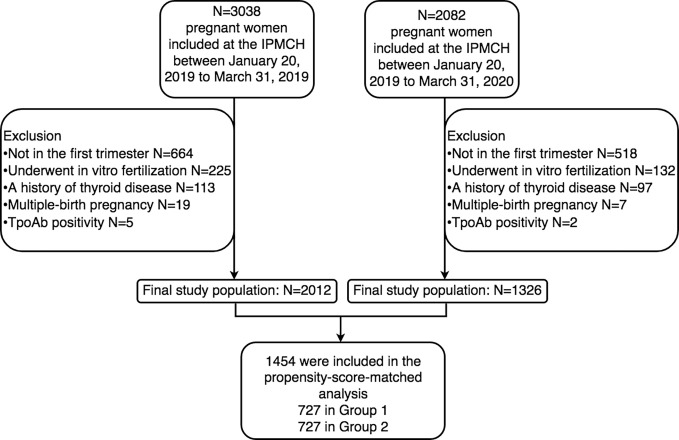
This study comprised two groups of pregnant women in Shanghai in their first trimester - those pregnant women before the COVID-19 outbreak from January 20, 2019, to March 31, 2019 (Group 1) and those pregnant during the COVID-19 outbreak from January 20, 2020, to March 31, 2020 (Group 2). All women were included if they had early pregnancy thyrotropin (TSH), free triiodothyronine (FT3), free thyroxine (FT4), total triiodothyronine (TT3), and total thyroxine (TT4) concentrations, thyroid peroxidase (TPO) antibody or thyroglobulin antibody (TgAb) available and did not have a history of thyroid diseases or received thyroid treatment before or during pregnancy. We used propensity score matching to form a cohort in which patients had similar baseline characteristics.
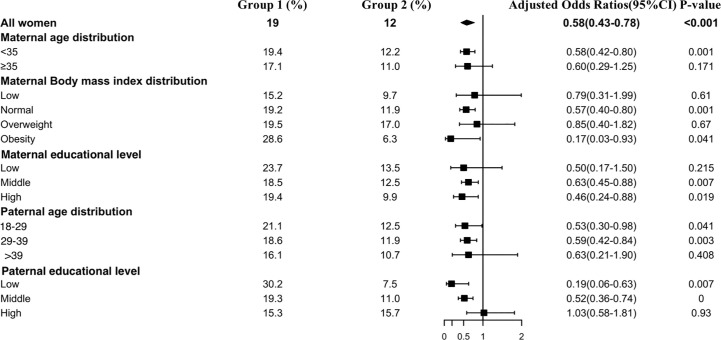
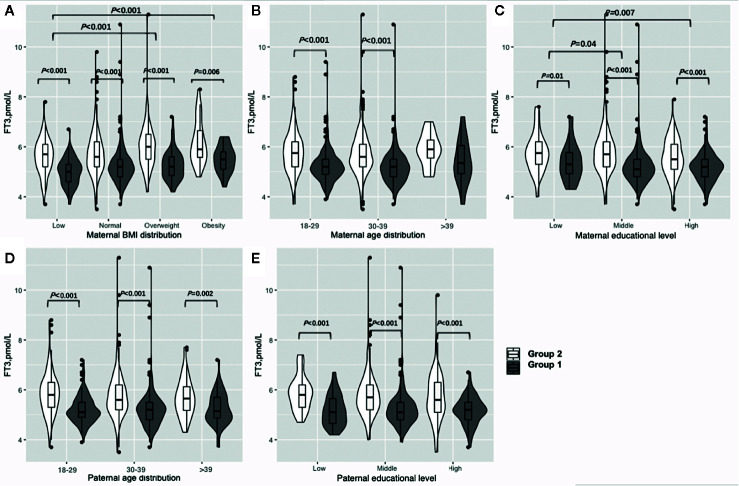
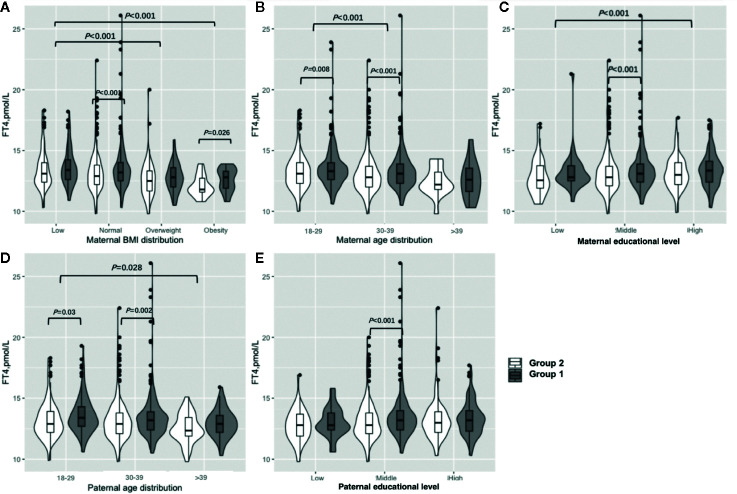
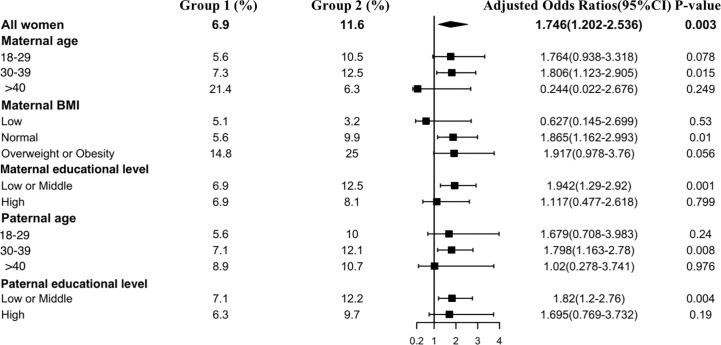
Among 3338 eligible pregnant women, 727 women in Group 1 and 727 in Group 2 had similar propensity scores and were included in the analyses. Pregnant women in Group 2 had significantly higher FT3 (5.7 vs. 5.2 pmol/L, P<0.001) and lower FT4 (12.8 vs. 13.2 pmol/L, P<0.001) concentrations compared with those in Group 1. Pregnant women in Group 2 were more likely to develop isolated hypothyroxinemia (11.6% vs. 6.9%, OR, 1.75 [95% CI, 1.20-2.53], =0.003) than those in Group 1 but had a significantly lower risk of TgAb positivity (12.0% vs. 19.0%, OR, 0.58 [95% CI, 0.43-0.78], <0.001).
Pregnant women in their first trimester in Shanghai during the COVID-19 outbreak were at an increased risk of having higher FT3 concentrations, lower FT4 concentrations, and isolated hypothyroxinemia. The association between thyroid hormones, pregnancy outcomes, and the COVID-19 outbreak should be explored further.
COVID-19(2019 年冠状病毒病)于 2019 年 12 月首次报告,并迅速席卷中国和世界各地。在这一传染性大流行期间,孕妇的焦虑和抑郁水平升高。在应激体验期间甲状腺功能会发生改变,而孕早期的任何异常都可能对胎儿发育和妊娠结局产生重大影响。本研究旨在确定 COVID-19 大流行是否会导致早孕妇女的甲状腺激素变化。
本研究纳入了上海妊娠早期的两组孕妇 - 2019 年 1 月 20 日至 3 月 31 日(第 1 组)和 2020 年 1 月 20 日至 3 月 31 日(第 2 组)期间妊娠的孕妇。所有孕妇均纳入研究,如果她们有早期妊娠促甲状腺激素(TSH)、游离三碘甲状腺原氨酸(FT3)、游离甲状腺素(FT4)、总三碘甲状腺原氨酸(TT3)和总甲状腺素(TT4)浓度、甲状腺过氧化物酶(TPO)抗体或甲状腺球蛋白抗体(TgAb),且无甲状腺疾病史或在妊娠前或妊娠期间接受过甲状腺治疗。我们使用倾向评分匹配来形成一个队列,其中患者具有相似的基线特征。
在 3338 名符合条件的孕妇中,第 1 组中有 727 名孕妇,第 2 组中有 727 名孕妇,具有相似的倾向评分,并纳入分析。与第 1 组相比,第 2 组孕妇的 FT3(5.7 对 5.2 pmol/L,P<0.001)更高,FT4(12.8 对 13.2 pmol/L,P<0.001)更低。与第 1 组相比,第 2 组孕妇更有可能发生单纯性甲状腺功能减退症(11.6%对 6.9%,OR,1.75[95%CI,1.20-2.53],P=0.003),但 TgAb 阳性的风险显著降低(12.0%对 19.0%,OR,0.58[95%CI,0.43-0.78],P<0.001)。
在 COVID-19 爆发期间,上海妊娠早期的孕妇发生 FT3 浓度升高、FT4 浓度降低和单纯性甲状腺功能减退症的风险增加。甲状腺激素、妊娠结局与 COVID-19 大流行之间的关系需要进一步探讨。