Sawamura Masato, Sawa Naoki, Fujiwara Hideomi, Yamanouchi Masayuki, Hayami Noriko, Sekine Akinari, Mizuno Hiroki, Hasegawa Eiko, Suwabe Tatsuya, Hoshino Junichi, Kinowaki Keiichi, Fujii Takeshi, Ubara Yoshifumi
Nephrology Center and Department of Rheumatology, Toranomon Hospital, Tokyo, Japan.
Okinaka Memorial Institute for Medical Research, Toranomon Hospital, Tokyo, Japan.
Mayo Clin Proc Innov Qual Outcomes. 2020 Dec 10;4(6):815-820. doi: 10.1016/j.mayocpiqo.2020.07.007. eCollection 2020 Dec.
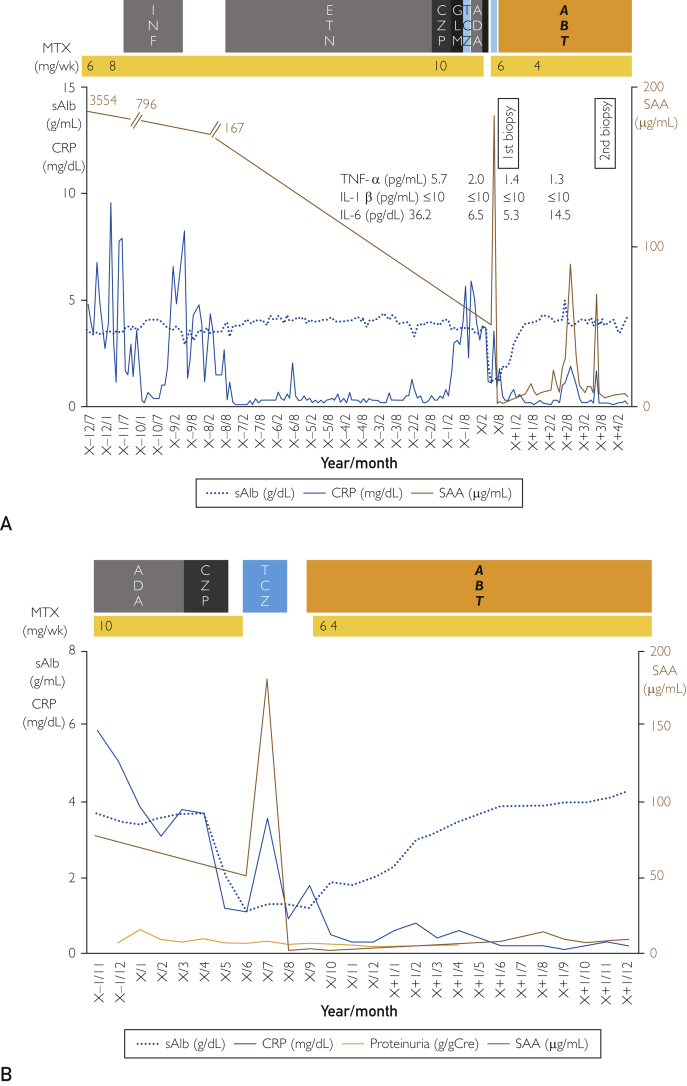
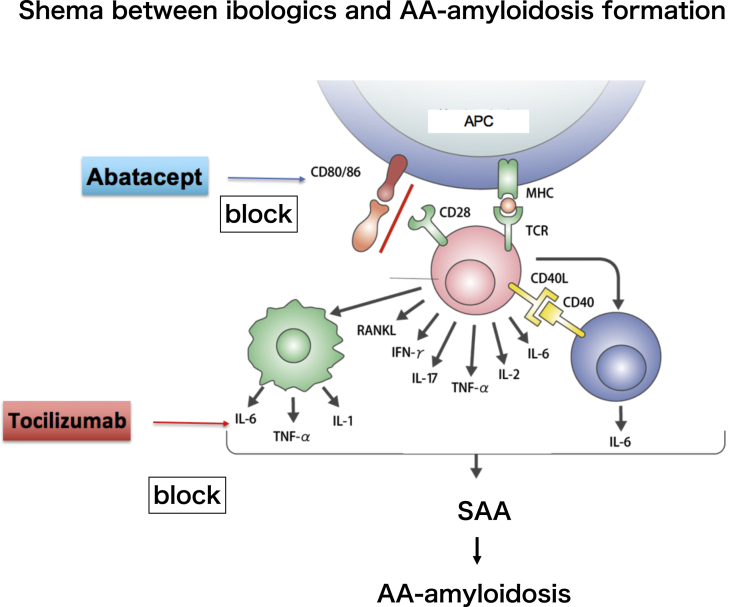
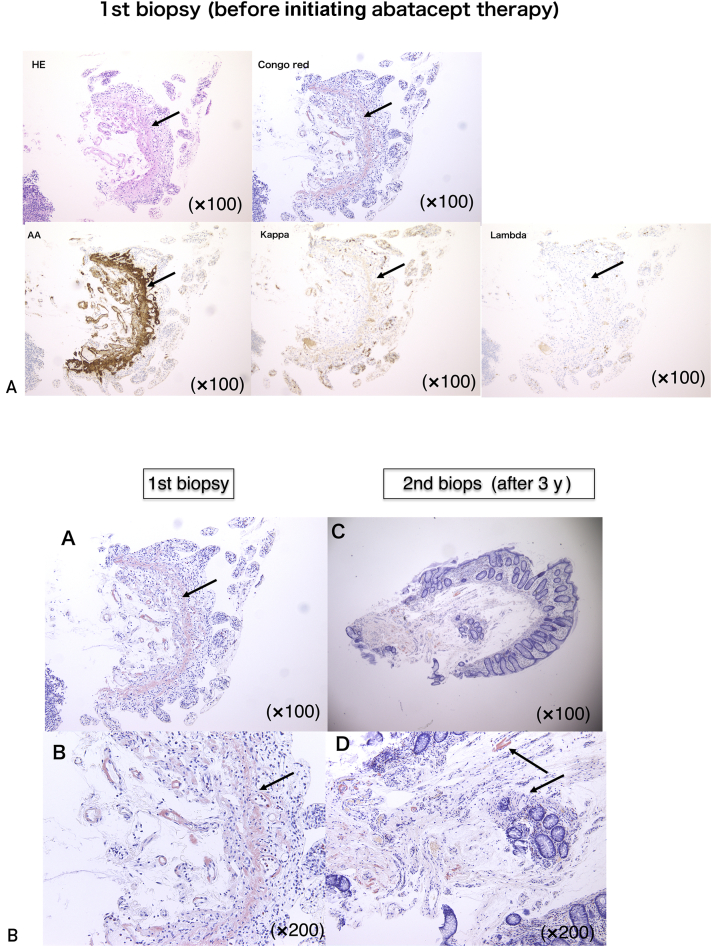
A 71-year-old Japanese woman with a history of rheumatoid arthritis of 50 years' duration was admitted to our hospital with refractory diarrhea. Endoscopic biopsy revealed AA amyloid deposition in the large intestine. Although the patient had been prescribed 5 tumor necrosis factor inhibitors over the past 10 years, rheumatoid arthritis was poorly controlled, with a Disease Activity Score 28 using C-reactive protein score of 6.52 on admission. Treatment with tocilizumab (8 mg/kg every 2 weeks) was initiated, but this was ineffective. After 3 months, abatacept (cytotoxic T-lymphocyte-associated antigen 4 immunoglobulin) was initiated (750 mg/mo) and the patient's diarrhea began to improve. After 3 months of abatacept treatment, serum albumin, C-reactive protein, and serum amyloid A levels had all decreased to within normal ranges. After 3 years of abatacept treatment, a repeat biopsy of the large intestine revealed a marked improvement in amyloid deposition. Interleukin 6 is a key factor in AA amyloid formation, but this case suggests that T-cell activation increases the production of cytokines (including interleukin 6) via a mechanism involving cytotoxic T-lymphocyte-associated antigen 4, resulting in a second key factor of AA amyloid formation.
一名71岁的日本女性,患类风湿关节炎50年,因顽固性腹泻入住我院。内镜活检显示大肠存在AA型淀粉样蛋白沉积。尽管该患者在过去10年中曾使用过5种肿瘤坏死因子抑制剂,但类风湿关节炎控制不佳,入院时使用C反应蛋白计算的疾病活动度评分28为6.52。开始使用托珠单抗治疗(每2周8 mg/kg),但无效。3个月后,开始使用阿巴西普(细胞毒性T淋巴细胞相关抗原4免疫球蛋白)(750 mg/月),患者的腹泻开始改善。阿巴西普治疗3个月后,血清白蛋白、C反应蛋白和血清淀粉样蛋白A水平均降至正常范围。阿巴西普治疗3年后,再次对大肠进行活检显示淀粉样蛋白沉积有明显改善。白细胞介素6是AA型淀粉样蛋白形成的关键因素,但该病例表明,T细胞活化通过涉及细胞毒性T淋巴细胞相关抗原4的机制增加细胞因子(包括白细胞介素6)的产生,从而成为AA型淀粉样蛋白形成的第二个关键因素。