Zhang Guosheng, Liu Na, Luo Yuan, Zhang Haibo, Su Long, Oh Kokyo, Cheng Hongyan
College of Resources and Environment, Shanxi Agricultural University, Taigu 030801, China.
Center for Environmental Science in Saitama, Kazo City, Saitama 347-0115, Japan.
Materials (Basel). 2020 Dec 23;14(1):35. doi: 10.3390/ma14010035.
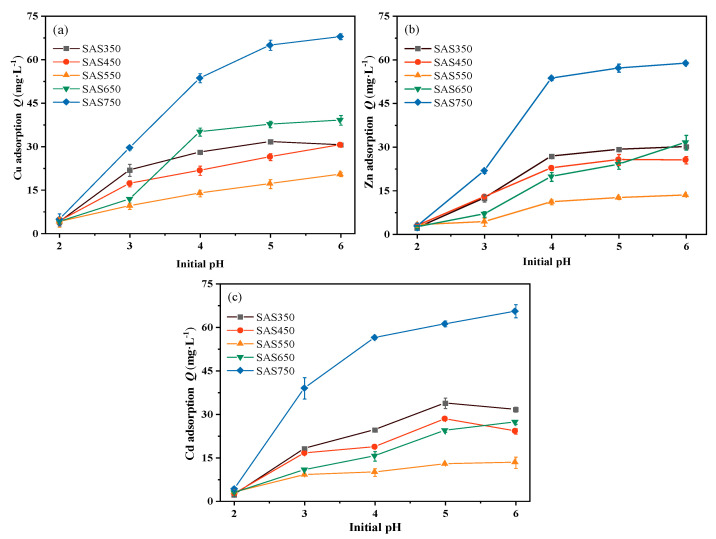
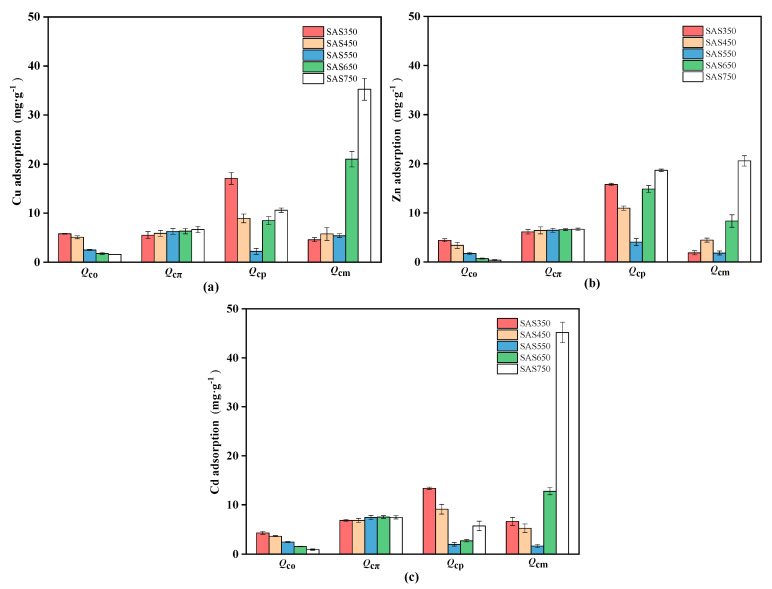
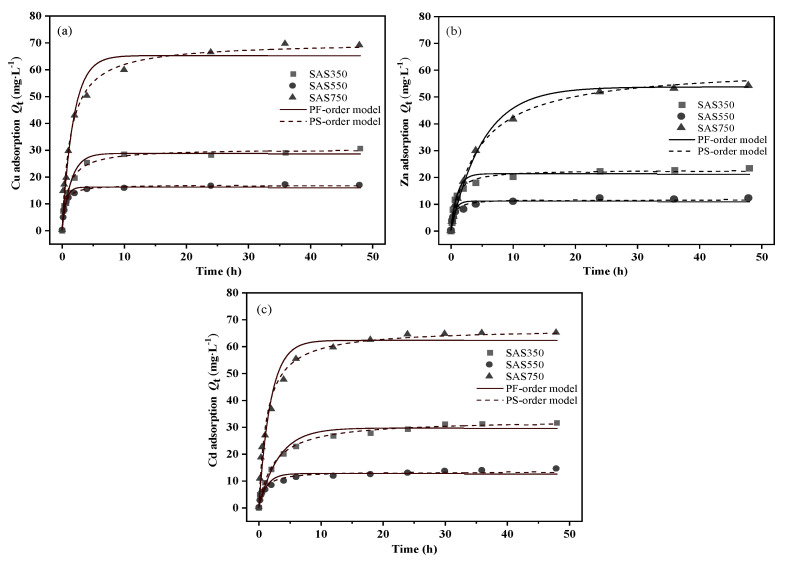
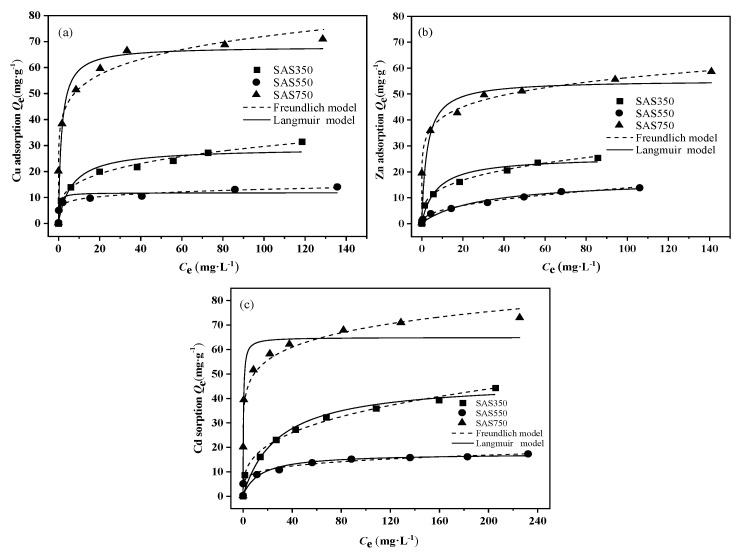
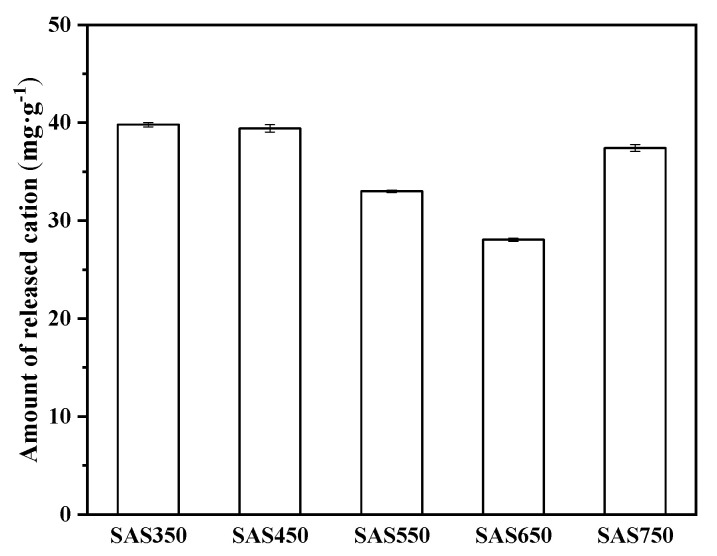
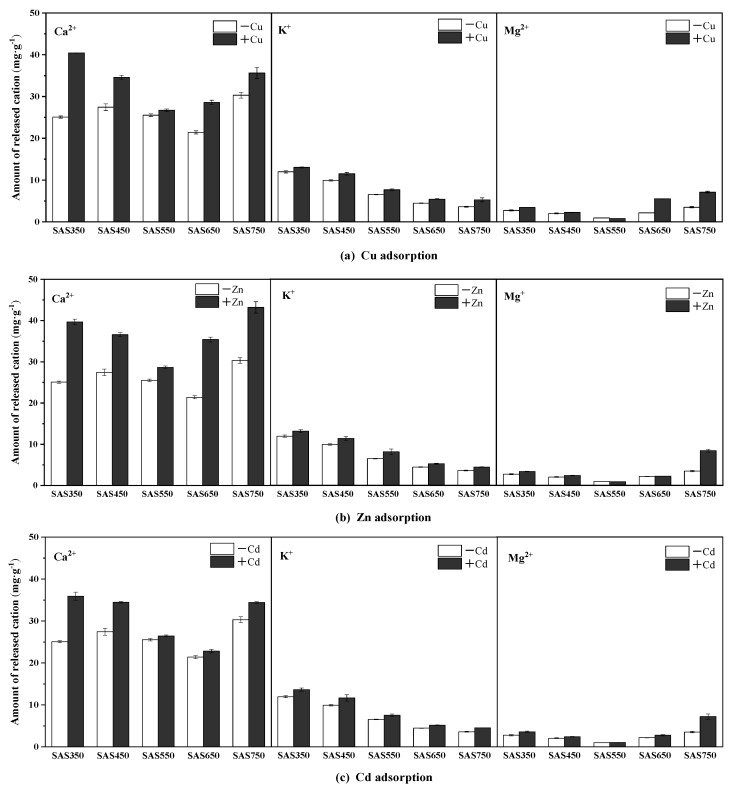
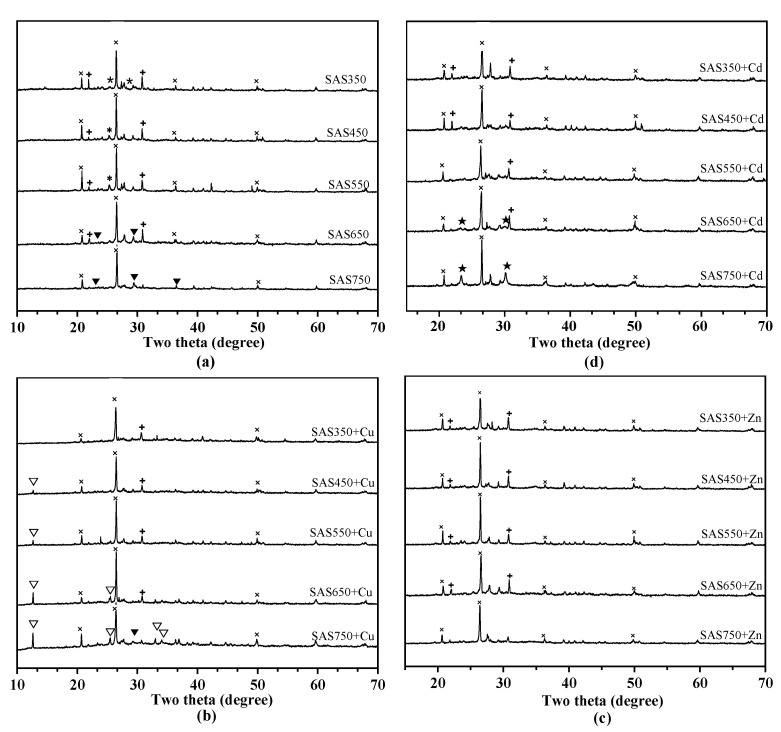
This study evaluated the novel application of a mineral-rich biochar derived from a spent substrate (SAS). Biochars with various pyrolysis temperatures (350-750 °C) were used to remove Cu(II), Zn(II), and Cd(II) from aqueous solutions. The adsorption characteristics and removal mechanisms of the biochars were investigated. The adsorption kinetics and isotherm data were fitted well by pseudo-second-order and Freundlich models. The Langmuir maximum removal capacity () values of Cu(II), Zn(II), and Cd(II) were ordered as SAS750 > SAS350 > SAS550, and the values of SAS750 were 68.1, 55.2, and 64.8 mg·g, respectively. Overall, the removal mechanisms of biochar at a low production temperature (350 °C) to Cu(II), Zn(II), and Cd(II) were mainly via ion exchange (54.0, 56.0, and 43.0%), and at a moderate production temperature (550 °C), removal mechanisms were mainly via coordination with π electrons (38.3, 45.9, and 55.0%), while mineral precipitation (65.2, 44.4, and 76.3%, respectively) was the dominant mechanism at a high produced temperature (750 °C). The variation of the mutual effect of minerals and heavy metals was the predominant factor in the sorption mechanism of mineral precipitation and ion exchange. The results demonstrated that spent substrate biochar is a potential candidate for the efficient removal of heavy metals, which provides a utilization route for spent mushroom substrates.
本研究评估了一种源自废弃基质(SAS)的富含矿物质生物炭的新应用。使用具有不同热解温度(350 - 750°C)的生物炭从水溶液中去除铜(II)、锌(II)和镉(II)。研究了生物炭的吸附特性和去除机制。吸附动力学和等温线数据通过准二级和弗伦德利希模型拟合良好。铜(II)、锌(II)和镉(II)的朗缪尔最大去除容量()值顺序为SAS750 > SAS350 > SAS550,SAS750的值分别为68.1、55.2和64.8 mg·g。总体而言,低生产温度(350°C)下生物炭对铜(II)、锌(II)和镉(II)的去除机制主要是通过离子交换(54.0%、56.0%和43.0%),中等生产温度(550°C)下,去除机制主要是通过与π电子配位(38.3%、45.9%和55.0%),而在高生产温度(750°C)下,矿物沉淀(分别为65.2%、44.4%和76.3%)是主要机制。矿物与重金属相互作用的变化是矿物沉淀和离子交换吸附机制的主要因素。结果表明,废弃基质生物炭是高效去除重金属的潜在候选材料,为废弃蘑菇基质提供了一条利用途径。