La Monica Silvia, Fumarola Claudia, Cretella Daniele, Bonelli Mara, Minari Roberta, Cavazzoni Andrea, Digiacomo Graziana, Galetti Maricla, Volta Francesco, Mancini Maicol, Petronini Pier Giorgio, Tiseo Marcello, Alfieri Roberta
Department of Medicine and Surgery, University of Parma, 43126 Parma, Italy.
Medical Oncology Unit, University Hospital of Parma, 43126 Parma, Italy.
Cancers (Basel). 2020 Dec 22;13(1):6. doi: 10.3390/cancers13010006.
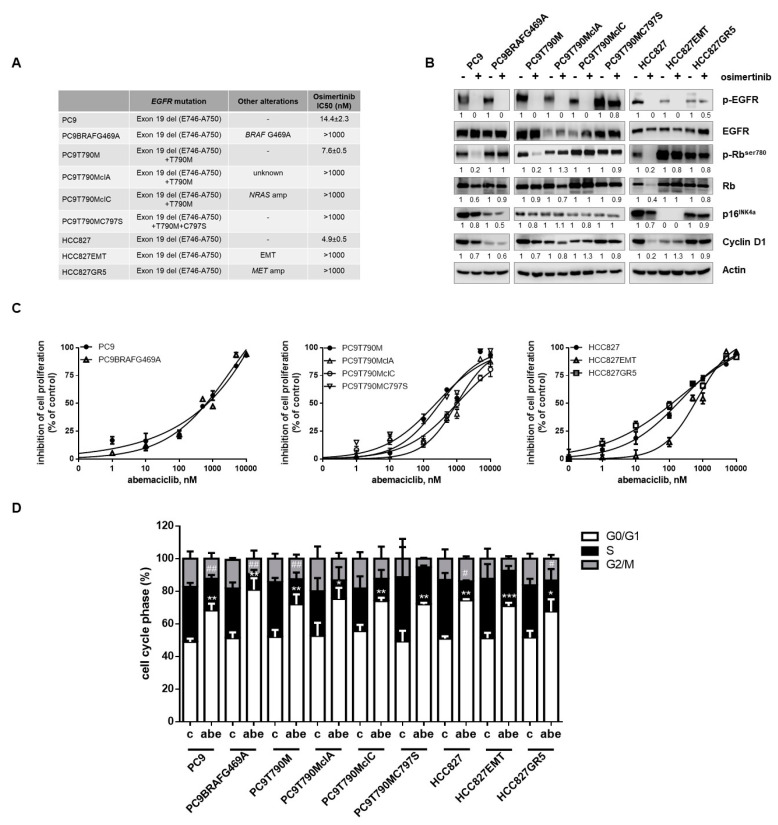
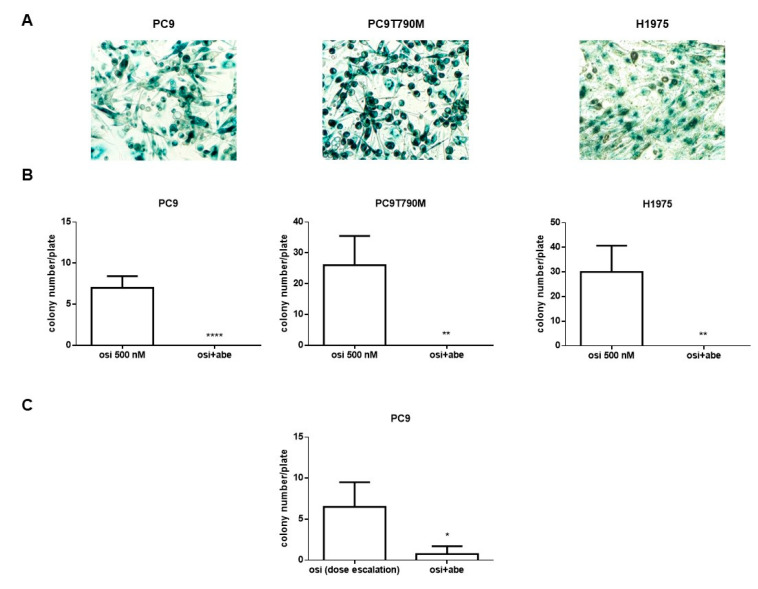
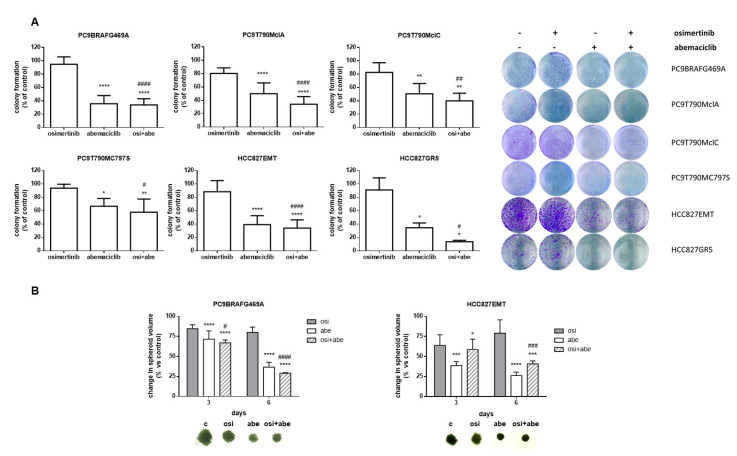
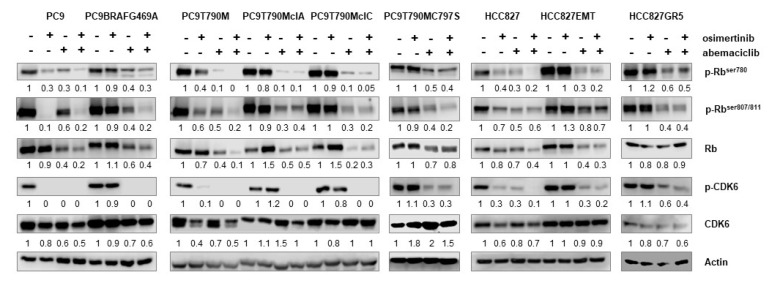
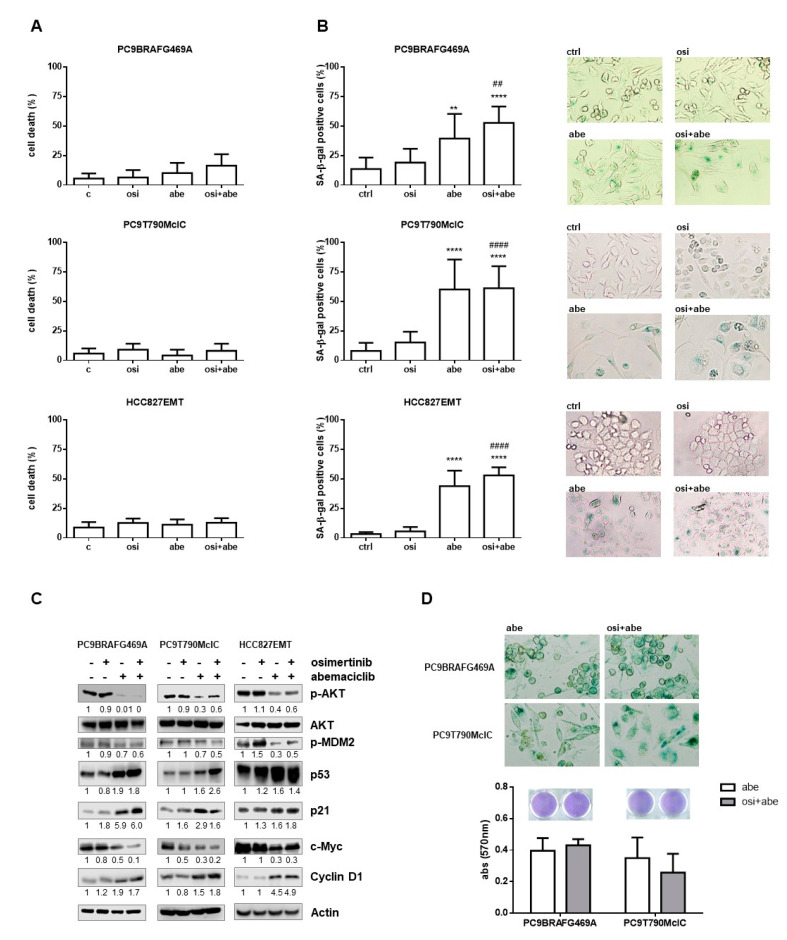
Abemaciclib is an inhibitor of cyclin-dependent kinases (CDK) 4 and 6 that inhibits the transition from the G1 to the S phase of the cell cycle by blocking downstream CDK4/6-mediated phosphorylation of Rb. The effects of abemaciclib alone or combined with the third-generation epidermal growth factor receptor (EGFR) tyrosine kinase inhibitor (TKI) osimertinib were examined in a panel of PC9 and HCC827 osimertinib-resistant non-small cell lung cancer (NSCLC) cell lines carrying EGFR-dependent or -independent mechanisms of intrinsic or acquired resistance. Differently from sensitive cells, all the resistant cell lines analyzed maintained p-Rb, which may be considered as a biomarker of osimertinib resistance and a potential target for therapeutic intervention. In these models, abemaciclib inhibited cell growth, spheroid formation, colony formation, and induced senescence, and its efficacy was not enhanced in the presence of osimertinib. Interestingly, in osimertinib sensitive PC9, PC9T790M, and H1975 cells the combination of abemaciclib with osimertinib significantly inhibited the onset of resistance in long-term experiments. Our findings provide a preclinical support for using abemaciclib to treat resistance in EGFR mutated NSCLC patients progressed to osimertinib either as single treatment or combined with osimertinib, and suggest the combination of osimertinib with abemaciclib as a potential approach to prevent or delay osimertinib resistance in first-line treatment.
阿贝西利是一种细胞周期蛋白依赖性激酶(CDK)4和6的抑制剂,它通过阻断下游CDK4/6介导的Rb磷酸化来抑制细胞周期从G1期向S期的转变。在一组携带EGFR依赖性或非依赖性内在或获得性耐药机制的PC9和HCC827奥希替尼耐药非小细胞肺癌(NSCLC)细胞系中,研究了阿贝西利单独使用或与第三代表皮生长因子受体(EGFR)酪氨酸激酶抑制剂(TKI)奥希替尼联合使用的效果。与敏感细胞不同,所有分析的耐药细胞系均维持p-Rb水平,这可被视为奥希替尼耐药的生物标志物和治疗干预的潜在靶点。在这些模型中,阿贝西利抑制细胞生长、球体形成、集落形成,并诱导衰老,在奥希替尼存在的情况下其疗效并未增强。有趣的是,在奥希替尼敏感的PC9、PC9T790M和H1975细胞中,阿贝西利与奥希替尼联合使用在长期实验中显著抑制了耐药的发生。我们的研究结果为使用阿贝西利治疗进展为奥希替尼的EGFR突变NSCLC患者的耐药性提供了临床前支持,无论是单药治疗还是与奥希替尼联合使用,并表明奥希替尼与阿贝西利联合使用是一线治疗中预防或延迟奥希替尼耐药的潜在方法。