Liu Mengyue, Jiang Xuan, Fu Chao, Zhao Ruili, Jin Tianming, Ma Jifei, Qin Shunyi, Li Liu An, Hu Ye, Zhang Xin
Tianjin Key Laboratory of Agricultural Animal Breeding and Healthy Husbandry, College of Animal Science and Veterinary Medicine, Tianjin Agricultural University, Tianjin 300384, P.R. China.
Oncol Lett. 2021 Feb;21(2):115. doi: 10.3892/ol.2020.12376. Epub 2020 Dec 15.
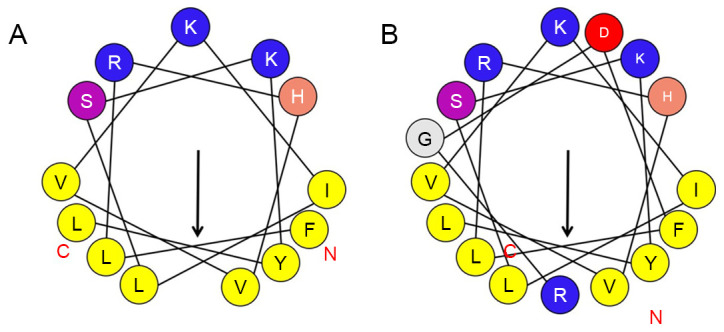
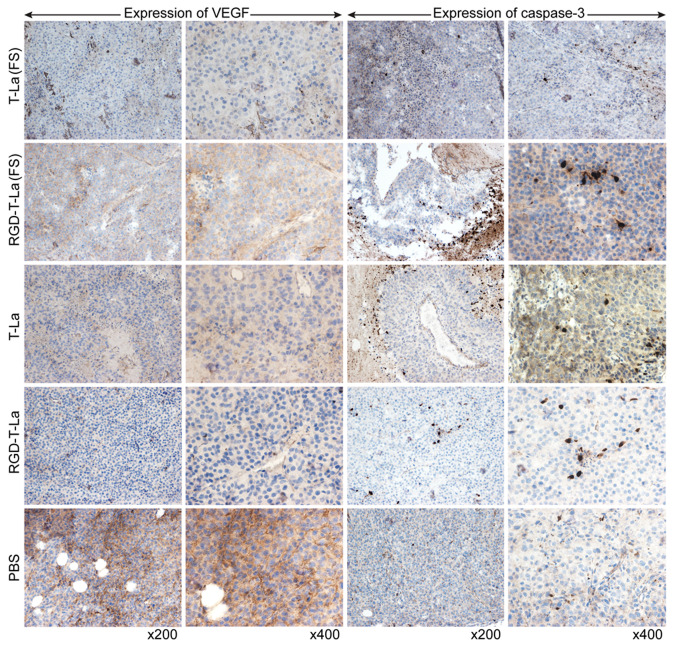
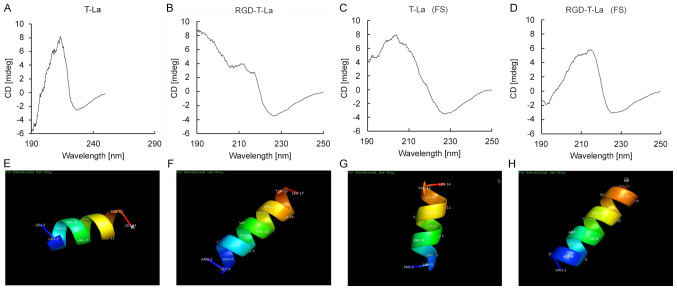
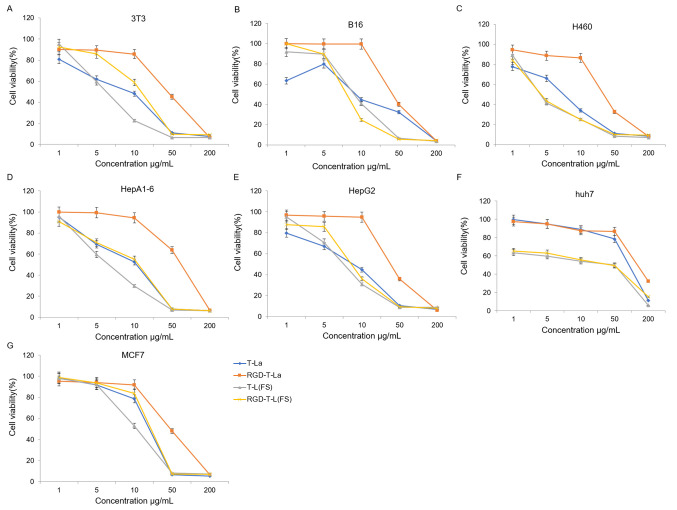
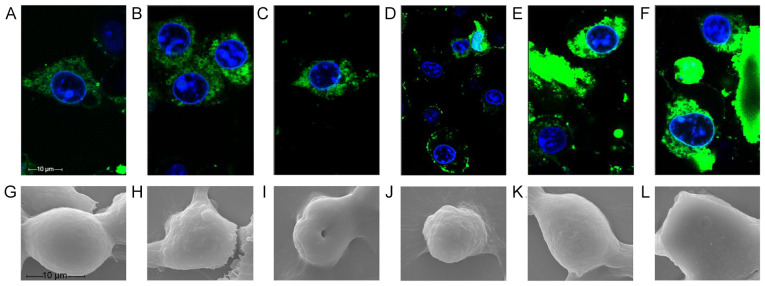
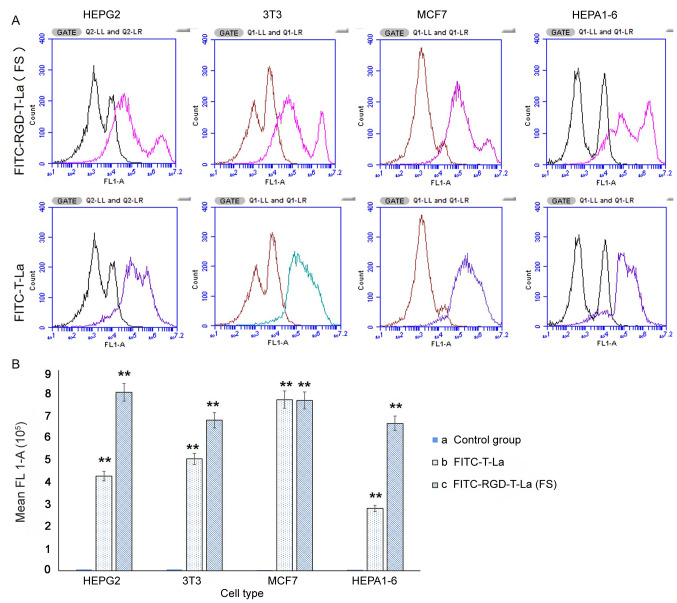
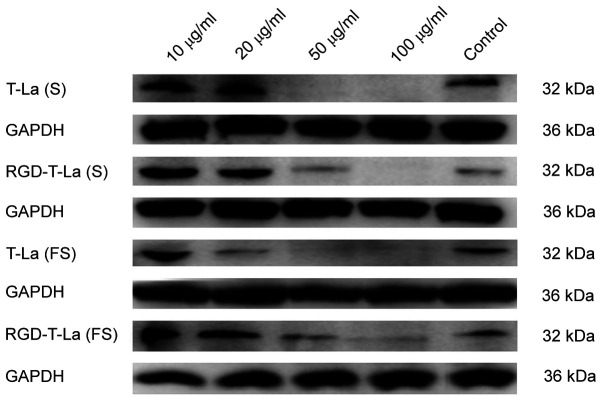
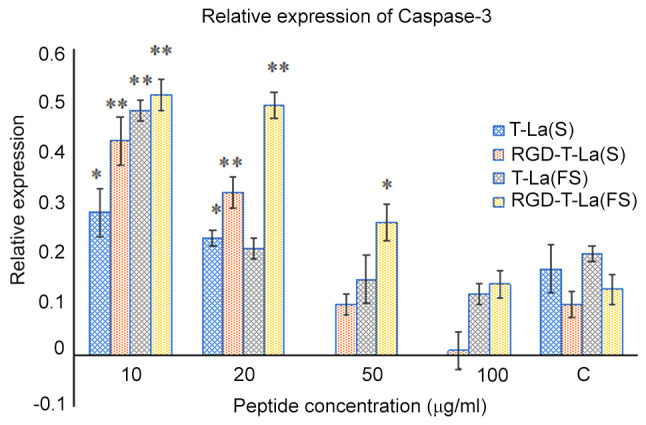
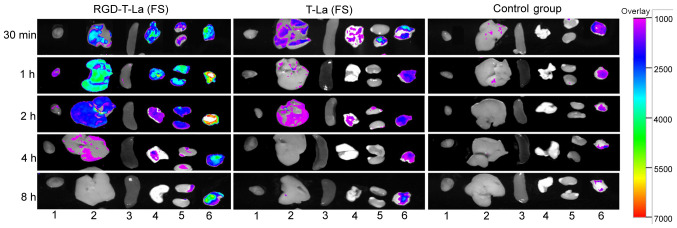
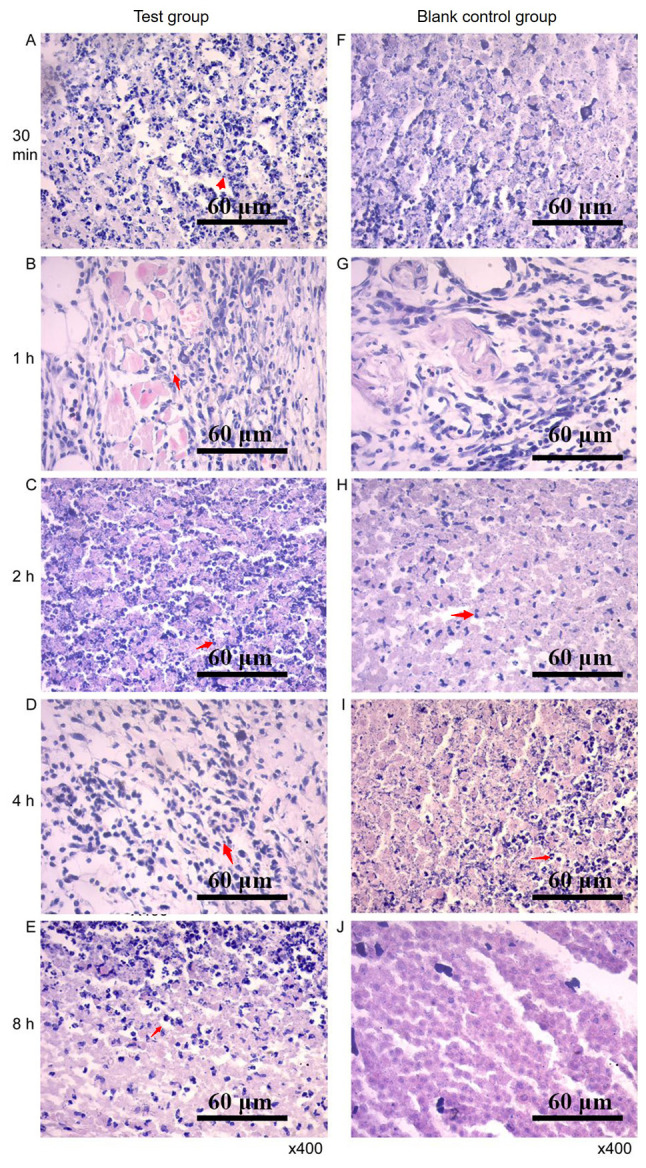
Melanoma is a common malignant skin tumor, which is the only fatal skin tumor at present. Melanoma has a high degree of malignancy and metastasis. The activity of modified Temporin-La (T-La) peptides from bullfrog skin were evaluated for antitumor activity and improved targeting in melanoma cells. The amino acid sequence of T-La was modified, resulting in the antitumor peptide, T-La (FS). T-La and T-La (FS) were coupled to the RGD small molecule polypeptide to form the chimeric peptides RGD-T-La and RGD-T-La (FS), respectively. The secondary structures for the peptides, evaluated using circular dichroism, were found to be α-helical. The structure of T-La was evaluated using bioinformatics. In addition, the antitumor effects of the modified peptide and the targeting of RGD chimeric peptide to the tumor and were analyzed. Antitumor activity was measured using the MTT assay. Tumor cells with high integrin αvβ3 expression were detected using flow cytometry, and tumor cells were screened for sensitivity to RGD-T-La (FS) to establish a tumor model in nude mice. The effects of the peptides on tumor cells were measured using laser confocal microscopy in real-time. The mechanism of the peptide antitumor activity in tumor cells was evaluated with scanning electron microscopy. B16 melanoma cells were the most sensitive to the peptides, for which the cell survival rate was 24.65% for 10 g/ml RGD-T-La (FS). RGD-La (FS) had a rapid effect on tumor cells. RGD chimeric polypeptides exhibited site-targeting cytotoxic effects in tumor cells. In the B16 melanoma mouse model, the peptides exhibited antitumor effects against early melanoma development and induced tumor apoptosis, possibly by inhibiting VEGF and promoting caspase-3 expression. Overall, the present study provides a scientific basis for the application of small molecule antimicrobial peptides as targeted antitumor agents and lays the foundation for the clinical application of these peptides as antitumor drugs.
黑色素瘤是一种常见的恶性皮肤肿瘤,是目前唯一具有致命性的皮肤肿瘤。黑色素瘤具有高度的恶性和转移性。对来自牛蛙皮肤的修饰型天蚕抗菌肽-La(T-La)肽的活性进行了评估,以研究其在黑色素瘤细胞中的抗肿瘤活性和靶向性改善情况。对T-La的氨基酸序列进行了修饰,得到了抗肿瘤肽T-La(FS)。将T-La和T-La(FS)分别与RGD小分子多肽偶联,形成嵌合肽RGD-T-La和RGD-T-La(FS)。使用圆二色性评估的肽的二级结构为α-螺旋。利用生物信息学评估了T-La的结构。此外,分析了修饰肽的抗肿瘤作用以及RGD嵌合肽对肿瘤的靶向性。使用MTT法测定抗肿瘤活性。使用流式细胞术检测整合素αvβ3高表达的肿瘤细胞,并筛选肿瘤细胞对RGD-T-La(FS)的敏感性,以建立裸鼠肿瘤模型。使用激光共聚焦显微镜实时测量肽对肿瘤细胞的影响。用扫描电子显微镜评估肽在肿瘤细胞中的抗肿瘤活性机制。B16黑色素瘤细胞对这些肽最为敏感,对于10μg/ml的RGD-T-La(FS),其细胞存活率为24.65%。RGD-La(FS)对肿瘤细胞具有快速作用。RGD嵌合多肽在肿瘤细胞中表现出靶向细胞毒性作用。在B16黑色素瘤小鼠模型中,这些肽对早期黑色素瘤的发展具有抗肿瘤作用,并诱导肿瘤凋亡,可能是通过抑制血管内皮生长因子(VEGF)和促进半胱天冬酶-3表达来实现的。总体而言,本研究为小分子抗菌肽作为靶向抗肿瘤药物的应用提供了科学依据,并为这些肽作为抗肿瘤药物的临床应用奠定了基础。