Department of Gastrointestinal Surgery, West China Hospital, Sichuan University, Chengdu, Sichuan, China.
Clin Transl Sci. 2021 May;14(3):919-933. doi: 10.1111/cts.12957. Epub 2021 Jan 25.
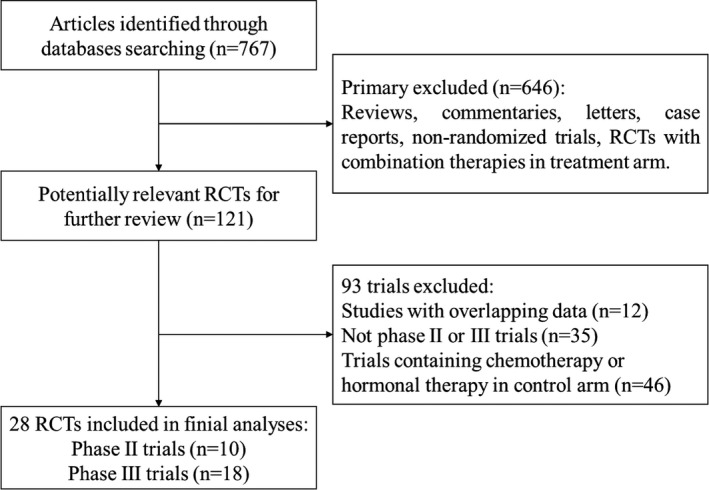
The efficacy of agents targeting epidermal growth factor receptor (EGFR) in patients with various cancers was well elucidated. However, the safety profile of EGFR tyrosine kinase inhibitors (EGFR-TKIs) has not been systematically investigated. This meta-analysis aimed to evaluate the safety profile of EGFR-TKIs in patients with cancer. A systematic search of PubMed, EMBASE, Cochrane Library databases, ASCO, and ESMO abstracts were conducted. Randomized controlled trials (RCTs) that compared safety profile of EGFR-TKIs with placebo were included. The end points included treatment-related adverse events (AEs), treatment discontinuation, and toxic death. Twenty-eight RCTs containing 17,800 patients were included. The analyses showed that the most frequently observed all-grade AEs in patients treated with EGFR-TKIs were diarrhea (53.7%), rash (48.6%), mucositis (46.5%), alanine aminotransferase (ALT) increased (38.9%), and skin reaction (35.2%). The most common high-grade (grade ≥3) AEs were mucositis (14.8%), pain (8.2%,), metabolism and nutrition disorders (7.4%), diarrhea (6.2%), dyspnea (6.1%), and hypertension (6.1%). The incidence of serious AEs, treatment discontinuation, and toxic death due to AEs were 18.2%, 12.36%, and 3.0%, respectively. Pooled risk ratio (RR) showed that the use of EGFR-TKIs was associated with an increased risk of developing AEs. Subgroup analysis indicated that the risk of AEs varied significantly according to tumor type, generation line, and drug type. Our meta-analysis indicates EGFR-TKIs was associated with a significant increased risk of a series of unique AEs. Early detection and proper management of AEs are important to reduce morbidity, avoid treatment discontinuation, and improve patient quality of life. Study Highlights WHAT IS THE CURRENT KNOWLEDGE ON THE TOPIC? The safety profile of epidermal growth factor receptor (EGFR)-tyrosine kinase inhibitors (TKIs) varied in different trials, and has not been systemically investigated. WHAT QUESTION DID THIS STUDY ADDRESS? We conducted this meta-analysis of randomized control trials (RCTs) to provide a comprehensive evaluation of adverse event in patients with cancer receiving EGFR-TKIs. WHAT DOES THIS STUDY ADD TO OUR KNOWLEDGE? Our meta-analysis indicates EGFR-TKIs was associated with a significant increased risk of a series of unique adverse events (AEs). HOW MIGHT THIS CHANGE CLINICAL PHARMACOLOGY OR TRANSLATIONAL SCIENCE? The integrated understanding of safety profile of EGFR-TKIs will help in the future design of new EGFR-TKIs with a better safety profile.
表皮生长因子受体(EGFR)靶向药物在多种癌症患者中的疗效已经得到充分阐明。然而,EGFR 酪氨酸激酶抑制剂(EGFR-TKIs)的安全性概况尚未得到系统研究。本荟萃分析旨在评估癌症患者使用 EGFR-TKIs 的安全性概况。系统检索了 PubMed、EMBASE、Cochrane 图书馆数据库、ASCO 和 ESMO 摘要。纳入了比较 EGFR-TKIs 与安慰剂安全性的随机对照试验(RCT)。终点包括治疗相关不良事件(AE)、治疗中断和毒性死亡。纳入了 28 项包含 17800 名患者的 RCT。分析显示,接受 EGFR-TKIs 治疗的患者最常观察到的所有级别不良事件为腹泻(53.7%)、皮疹(48.6%)、黏膜炎(46.5%)、丙氨酸氨基转移酶(ALT)升高(38.9%)和皮肤反应(35.2%)。最常见的高级别(≥3 级)不良事件为黏膜炎(14.8%)、疼痛(8.2%)、代谢和营养障碍(7.4%)、腹泻(6.2%)、呼吸困难(6.1%)和高血压(6.1%)。严重不良事件、治疗中断和因不良事件导致的毒性死亡的发生率分别为 18.2%、12.36%和 3.0%。汇总风险比(RR)显示,使用 EGFR-TKIs 与发生 AE 的风险增加相关。亚组分析表明,AE 的风险根据肿瘤类型、代系和药物类型而有显著差异。我们的荟萃分析表明,EGFR-TKIs 与一系列独特的 AE 风险显著增加相关。早期发现和适当管理 AE 对于降低发病率、避免治疗中断和提高患者生活质量非常重要。研究亮点 关于该主题目前的知识是什么? EGFR-酪氨酸激酶抑制剂(TKIs)的安全性概况在不同的试验中有所不同,尚未得到系统研究。 这项研究提出了什么问题? 我们进行了这项随机对照试验(RCT)的荟萃分析,以提供接受 EGFR-TKIs 治疗的癌症患者不良事件的综合评估。 这项研究为我们的知识增加了什么? 我们的荟萃分析表明,EGFR-TKIs 与一系列独特的不良事件(AE)的风险显著增加相关。 这将如何改变临床药理学或转化科学? 对 EGFR-TKIs 安全性概况的综合理解将有助于未来设计具有更好安全性概况的新型 EGFR-TKIs。