Jagiellonian Human-Centered Artificial Intelligence Laboratory (JAHCAI) and Institute of Applied Computer Science, Jagiellonian University, 31-007 Krakow, Poland.
Sensors (Basel). 2020 Dec 29;21(1):163. doi: 10.3390/s21010163.
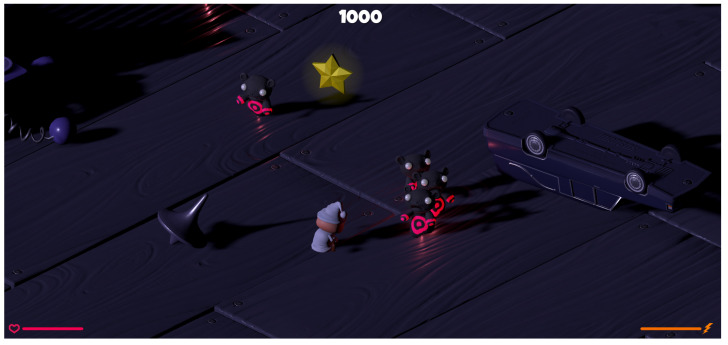
In this article, we propose using personality assessment as a way to adapt affective intelligent systems. This psychologically-grounded mechanism will divide users into groups that differ in their reactions to affective stimuli for which the behaviour of the system can be adjusted. In order to verify the hypotheses, we conducted an experiment on 206 people, which consisted of two proof-of-concept demonstrations: a "classical" stimuli presentation part, and affective games that provide a rich and controllable environment for complex emotional stimuli. Several significant links between personality traits and the psychophysiological signals (electrocardiogram (ECG), galvanic skin response (GSR)), which were gathered while using the BITalino (r)evolution kit platform, as well as between personality traits and reactions to complex stimulus environment, are promising results that indicate the potential of the proposed adaptation mechanism.
在本文中,我们提出使用人格评估作为一种适应情感智能系统的方法。这种基于心理学的机制将用户分为不同的群体,他们对情感刺激的反应不同,因此可以调整系统的行为。为了验证假设,我们在 206 人身上进行了一项实验,该实验由两个概念验证演示组成:一个是“经典”刺激呈现部分,另一个是情感游戏,它们为复杂的情感刺激提供了丰富和可控的环境。使用 BITalino(r)evolution 套件平台收集的人格特质与生理信号(心电图(ECG)、皮肤电反应(GSR))之间的几个显著联系,以及人格特质与对复杂刺激环境的反应之间的联系,都是很有前途的结果,表明了所提出的适应机制的潜力。