
进行性家族性肝内胆汁淤积症的分子概述
Molecular overview of progressive familial intrahepatic cholestasis.
作者信息
Amirneni Sriram, Haep Nils, Gad Mohammad A, Soto-Gutierrez Alejandro, Squires James E, Florentino Rodrigo M
机构信息
Department of Pathology, University of Pittsburgh, Pittsburgh, PA 15213, United States.
Pittsburgh Liver Research Center, University of Pittsburgh, Pittsburgh, PA 15213, United States.
出版信息
World J Gastroenterol. 2020 Dec 21;26(47):7470-7484. doi: 10.3748/wjg.v26.i47.7470.
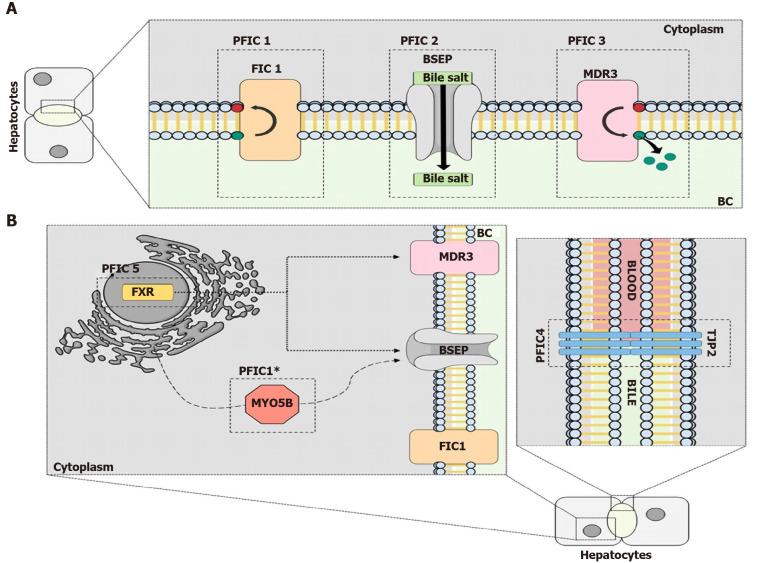
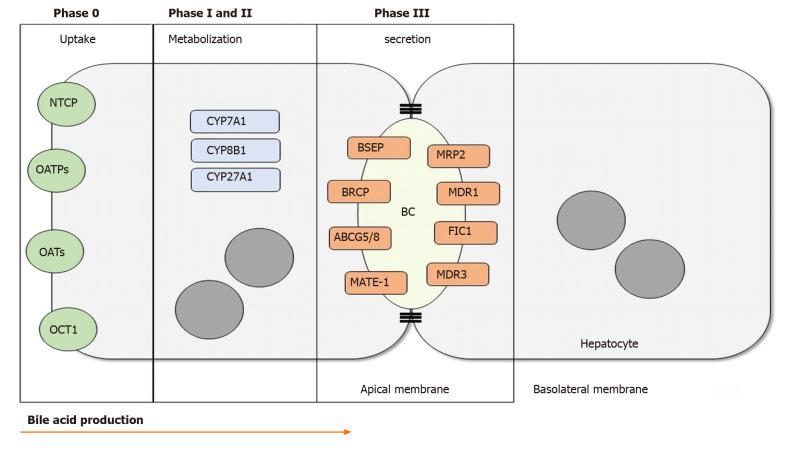
Cholestasis is a clinical condition resulting from the imapairment of bile flow. This condition could be caused by defects of the hepatocytes, which are responsible for the complex process of bile formation and secretion, and/or caused by defects in the secretory machinery of cholangiocytes. Several mutations and pathways that lead to cholestasis have been described. Progressive familial intrahepatic cholestasis (PFIC) is a group of rare diseases caused by autosomal recessive mutations in the genes that encode proteins expressed mainly in the apical membrane of the hepatocytes. PFIC 1, also known as Byler's disease, is caused by mutations of the gene, which encodes the familial intrahepatic cholestasis 1 protein. PFIC 2 is characterized by the downregulation or absence of functional bile salt export pump (BSEP) expression variations in the gene. Mutations of the gene result in lower expression of the multidrug resistance class 3 glycoprotein, leading to the third type of PFIC. Newer variations of this disease have been described. Loss of function of the tight junction protein 2 protein results in PFIC 4, while mutations of the gene, which encodes farnesoid X receptor, an important transcription factor for bile formation, cause PFIC 5. A recently described type of PFIC is associated with a mutation in the gene, important for the trafficking of BSEP and hepatocyte membrane polarization. In this review, we provide a brief overview of the molecular mechanisms and clinical features associated with each type of PFIC based on peer reviewed journals published between 1993 and 2020.
胆汁淤积是一种由胆汁流动受损引起的临床病症。这种病症可能由肝细胞缺陷导致,肝细胞负责胆汁形成和分泌的复杂过程,和/或由胆管细胞分泌机制的缺陷引起。已经描述了几种导致胆汁淤积的突变和途径。进行性家族性肝内胆汁淤积症(PFIC)是一组罕见疾病,由主要在肝细胞顶端膜表达的蛋白质编码基因中的常染色体隐性突变引起。PFIC 1,也称为比勒氏病,由编码家族性肝内胆汁淤积症1蛋白的基因发生突变引起。PFIC 2的特征是功能性胆盐输出泵(BSEP)表达下调或缺失,基因存在变异。该基因的突变导致多药耐药3类糖蛋白表达降低,从而导致第三种类型的PFIC。已经描述了这种疾病的新变异。紧密连接蛋白2功能丧失导致PFIC 4,而编码法尼醇X受体(胆汁形成的重要转录因子)的基因发生突变会导致PFIC 5。最近描述的一种PFIC类型与该基因的突变有关,该基因对BSEP的运输和肝细胞膜极化很重要。在本综述中,我们根据1993年至2020年发表的同行评审期刊,简要概述了与每种类型PFIC相关的分子机制和临床特征。
 Zotero 插件