Silva Jessy, Ferraz Ricardo, Dupree Paul, Showalter Allan M, Coimbra Sílvia
Departamento de Biologia, Faculdade de Ciências da Universidade do Porto, Porto, Portugal.
LAQV Requimte, Sustainable Chemistry, Universidade do Porto, Porto, Portugal.
Front Plant Sci. 2020 Dec 15;11:610377. doi: 10.3389/fpls.2020.610377. eCollection 2020.
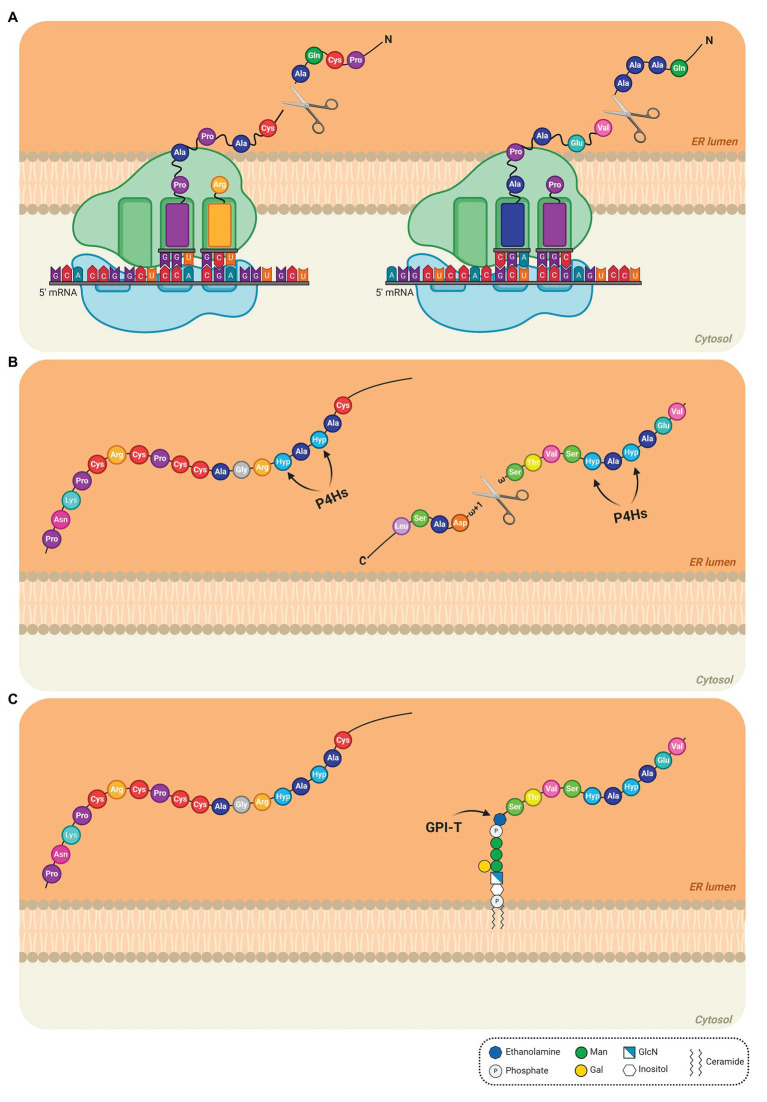
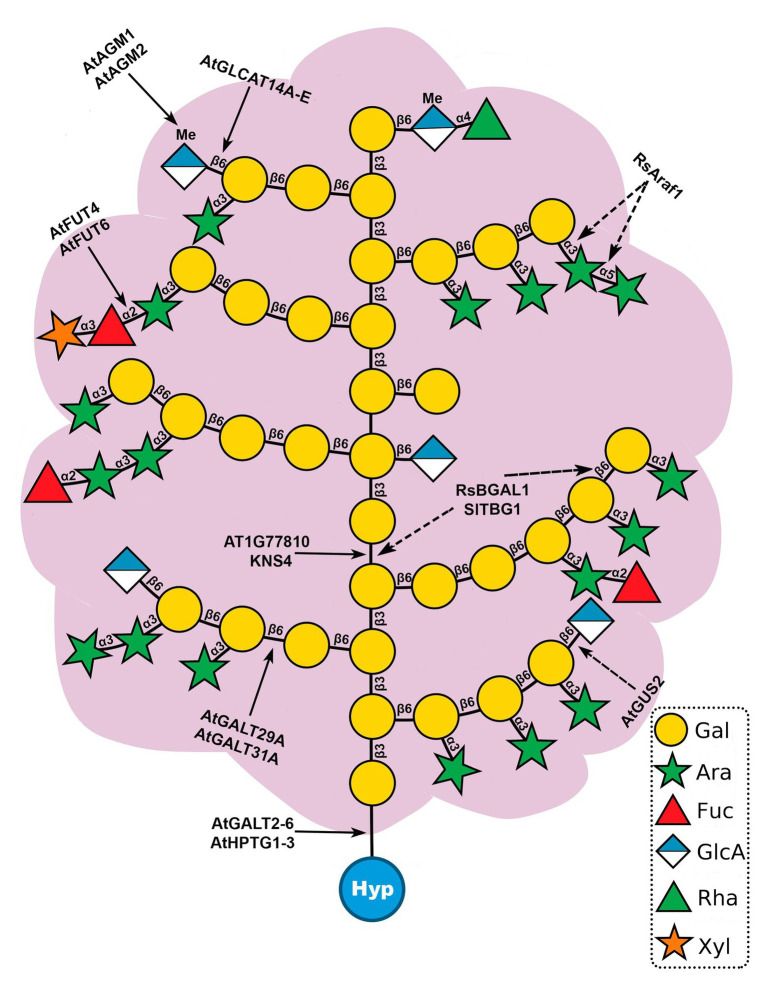
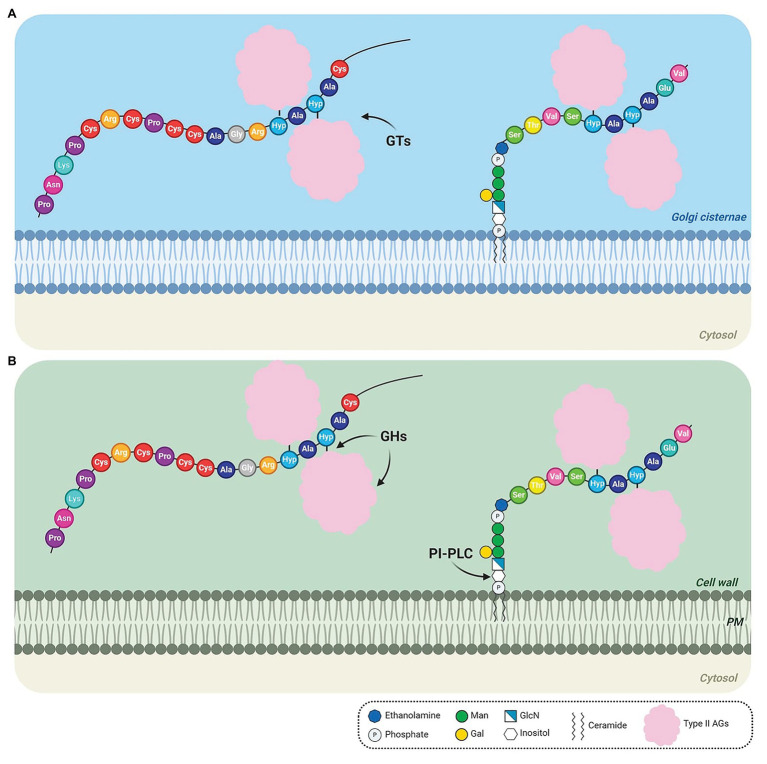
Arabinogalactan-proteins (AGPs) are a large, complex, and highly diverse class of heavily glycosylated proteins that belong to the family of cell wall hydroxyproline-rich glycoproteins. Approximately 90% of the molecules consist of arabinogalactan polysaccharides, which are composed of arabinose and galactose as major sugars and minor sugars such as glucuronic acid, fucose, and rhamnose. About half of the AGP family members contain a glycosylphosphatidylinositol (GPI) lipid anchor, which allows for an association with the outer leaflet of the plasma membrane. The mysterious AGP family has captivated the attention of plant biologists for several decades. This diverse family of glycoproteins is widely distributed in the plant kingdom, including many algae, where they play fundamental roles in growth and development processes. The journey of AGP biosynthesis begins with the assembly of amino acids into peptide chains of proteins. An N-terminal signal peptide directs AGPs toward the endoplasmic reticulum, where proline hydroxylation occurs and a GPI anchor may be added. GPI-anchored AGPs, as well as unanchored AGPs, are then transferred to the Golgi apparatus, where extensive glycosylation occurs by the action of a variety glycosyltransferase enzymes. Following glycosylation, AGPs are transported by secretory vesicles to the cell wall or to the extracellular face of the plasma membrane (in the case of GPI-anchored AGPs). GPI-anchored proteins can be released from the plasma membrane into the cell wall by phospholipases. In this review, we present an overview of the accumulated knowledge on AGP biosynthesis over the past three decades. Particular emphasis is placed on the glycosylation of AGPs as the sugar moiety is essential to their function. Recent genetics and genomics approaches have significantly contributed to a broader knowledge of AGP biosynthesis. However, many questions remain to be elucidated in the decades ahead.
阿拉伯半乳聚糖蛋白(AGPs)是一类庞大、复杂且高度多样的重度糖基化蛋白,属于细胞壁富含羟脯氨酸糖蛋白家族。大约90%的分子由阿拉伯半乳聚糖多糖组成,这些多糖主要由阿拉伯糖和半乳糖作为主要糖类,以及葡萄糖醛酸、岩藻糖和鼠李糖等次要糖类组成。大约一半的AGP家族成员含有糖基磷脂酰肌醇(GPI)脂质锚,这使得它们能够与质膜的外小叶结合。神秘的AGP家族几十年来一直吸引着植物生物学家的关注。这个多样的糖蛋白家族广泛分布于植物界,包括许多藻类,它们在生长和发育过程中发挥着重要作用。AGP生物合成的过程始于氨基酸组装成蛋白质的肽链。一个N端信号肽将AGPs导向内质网,在内质网中发生脯氨酸羟基化,并且可能添加一个GPI锚。然后,GPI锚定的AGPs以及非锚定的AGPs被转移到高尔基体,在那里通过多种糖基转移酶的作用发生广泛的糖基化。糖基化之后,AGPs通过分泌小泡被运输到细胞壁或质膜的细胞外表面(对于GPI锚定的AGPs而言)。GPI锚定蛋白可以通过磷脂酶从质膜释放到细胞壁中。在这篇综述中,我们概述了过去三十年中关于AGP生物合成积累的知识。特别强调AGPs的糖基化,因为糖部分对其功能至关重要。最近的遗传学和基因组学方法极大地促进了对AGP生物合成更广泛的了解。然而,在未来几十年中仍有许多问题有待阐明。