Roma Elia, Corsi Pietro, Willinger Max, Leitner Nikolaus Simon, Zirbs Ronald, Reimhult Erik, Capone Barbara, Gasperi Tecla
Dipartimento di Scienze, Universitá degli Studi Roma Tre, Via della Vasca Navale 84, 00146 Roma, Italy.
Department of Material Sciences and Process Engineering, University of Natural Resources and Life Sciences, Vienna, Peter-Jordan-Strasse 82, A-1190 Vienna, Austria.
ACS Appl Mater Interfaces. 2021 Jan 13;13(1):1386-1397. doi: 10.1021/acsami.0c17759. Epub 2021 Jan 3.
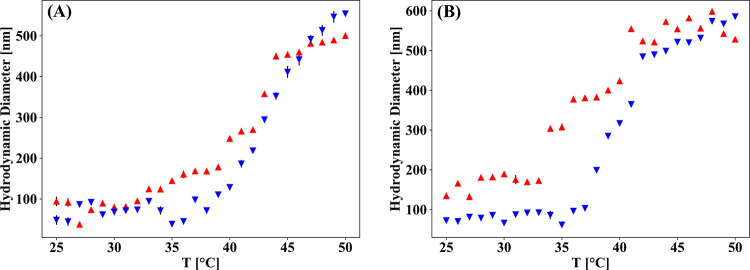
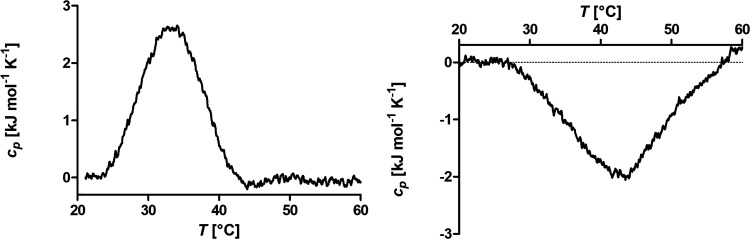
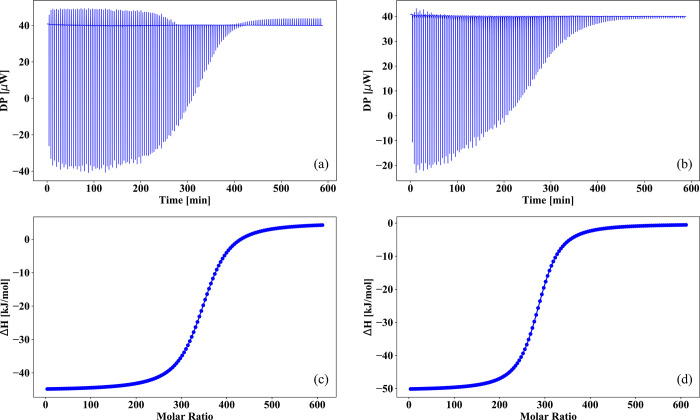
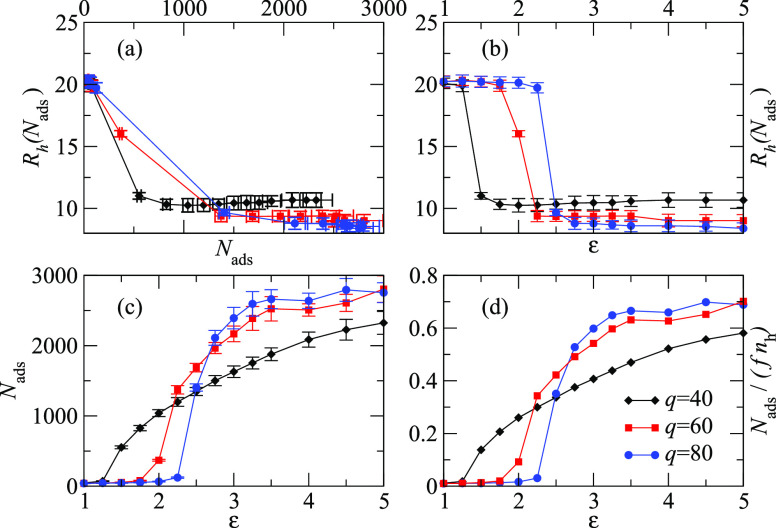
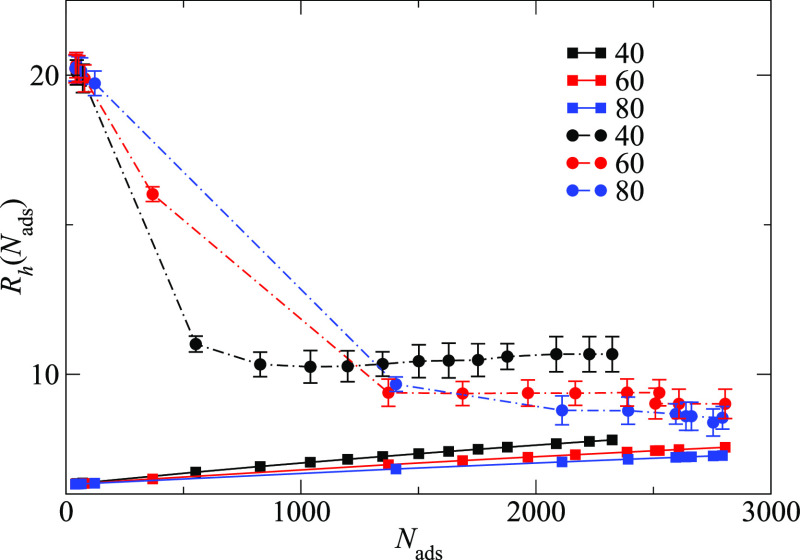
Herein, we show a comprehensive experimental, theoretical, and computational study aimed at designing macromolecules able to adsorb a cargo at the nanoscale. Specifically, we focus on the adsorption properties of star diblock copolymers, , macromolecules made by a number of diblock copolymer arms tethered on a central core; the monomeric heads, which are closer to the tethering point, are attractive toward a specific target, while the monomeric tails are neutral to the cargo. Experimentally, we exploited the adaptability of poly(2-oxazoline)s (POxs) to realize block copolymer-coated nanoparticles with a proper functionalization able to interact with heavy metals and show or exhibit a thermoresponsive behavior in aqueous solution. We here present the synthesis and analysis of the properties of a high molecular mass block copolymer featured by (i) a polar side chain, capable of exploiting electrostatic and hydrophilic interaction with a predetermined cargo, and (ii) a thermoresponsive scaffold, able to change the interaction with the media by tuning the temperature. Afterward, the obtained polymers were grafted onto iron oxide nanoparticles and the thermoresponsive properties were investigated. Through isothermal titration calorimetry, we then analyzed the adsorption properties of the synthesized superparamagnetic nanoparticles for heavy metal ions in aqueous solution. Additionally, we use a combination of scaling theories and simulations to link equilibrium properties of the system to a prediction of the loading properties as a function of size ratio and effective interactions between the considered species. The comparison between experimental results on adsorption and theoretical prediction validates the whole design process.
在此,我们展示了一项全面的实验、理论和计算研究,旨在设计能够在纳米尺度吸附货物的大分子。具体而言,我们关注星型二嵌段共聚物的吸附特性,星型二嵌段共聚物是由多个连接在中心核上的二嵌段共聚物臂组成的大分子;靠近连接点的单体头部对特定目标具有吸引力,而单体尾部对货物呈中性。在实验中,我们利用聚(2-恶唑啉)(POx)的适应性,实现了具有适当功能化的嵌段共聚物包覆纳米颗粒,该纳米颗粒能够与重金属相互作用,并在水溶液中表现出热响应行为。我们在此展示了一种高分子质量嵌段共聚物的合成及性能分析,其特点是:(i)一个极性侧链,能够与预定货物利用静电和亲水相互作用;(ii)一个热响应支架,能够通过调节温度改变与介质的相互作用。随后,将所得聚合物接枝到氧化铁纳米颗粒上,并研究其热响应性能。通过等温滴定量热法,我们分析了合成的超顺磁性纳米颗粒在水溶液中对重金属离子的吸附性能。此外,我们结合标度理论和模拟,将系统的平衡性质与作为尺寸比和所考虑物种之间有效相互作用函数的负载性质预测联系起来。吸附实验结果与理论预测之间的比较验证了整个设计过程。