D'Agostino Mattia, Motta Stefano, Romagnoli Alice, Orlando Patrick, Tiano Luca, La Teana Anna, Di Marino Daniele
Department of Life and Environmental Sciences, Polytechnic University of Marche, Ancona, Italy.
Department of Earth and Environmental Sciences, University of Milano-Bicocca, Milan, Italy.
Front Chem. 2020 Dec 17;8:609942. doi: 10.3389/fchem.2020.609942. eCollection 2020.
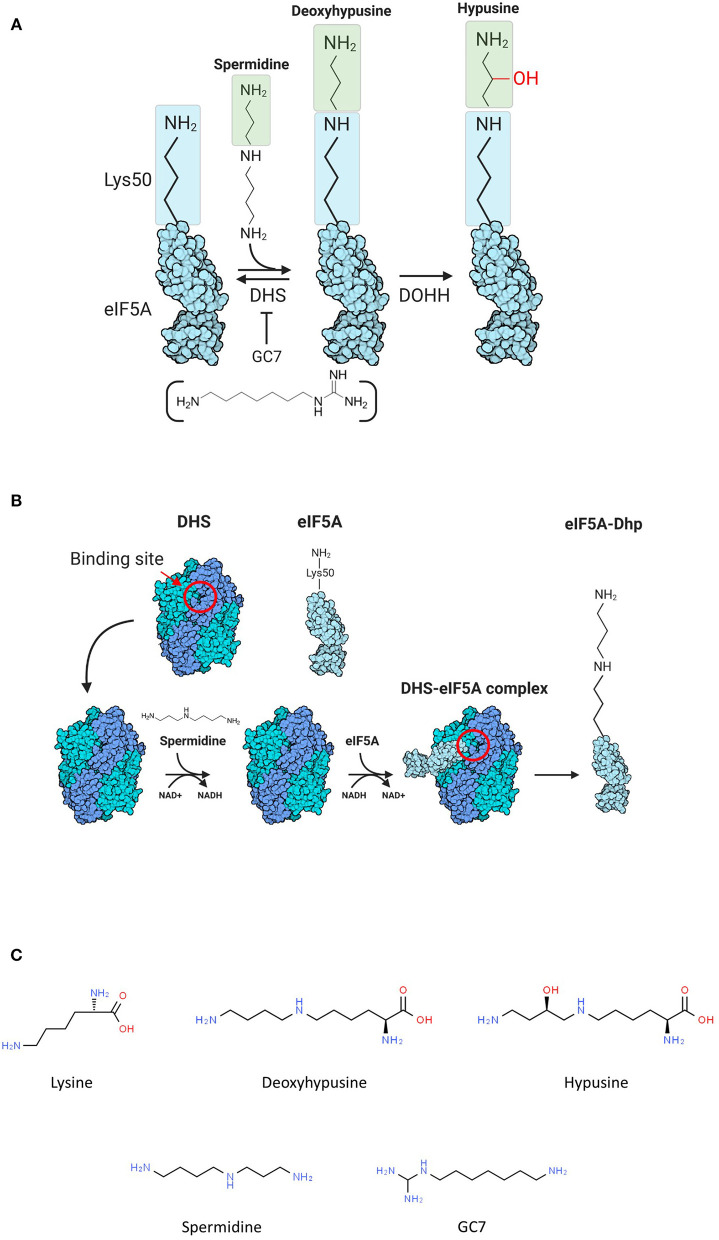
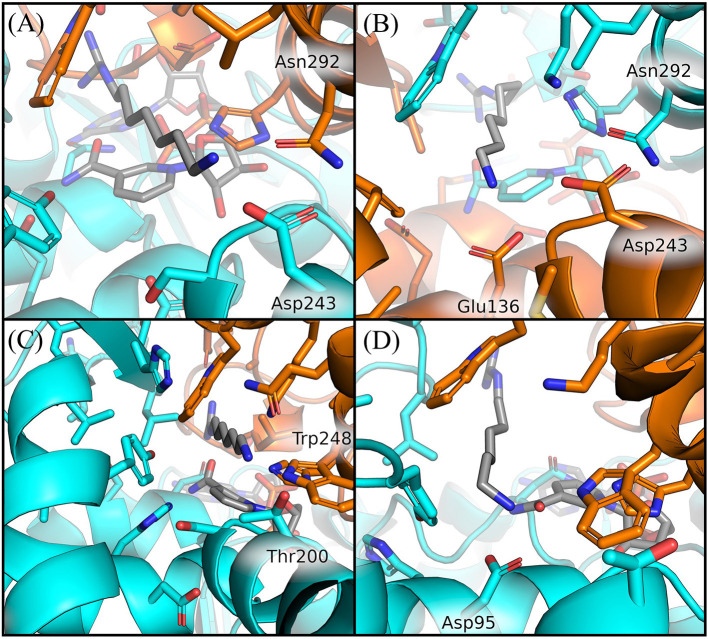
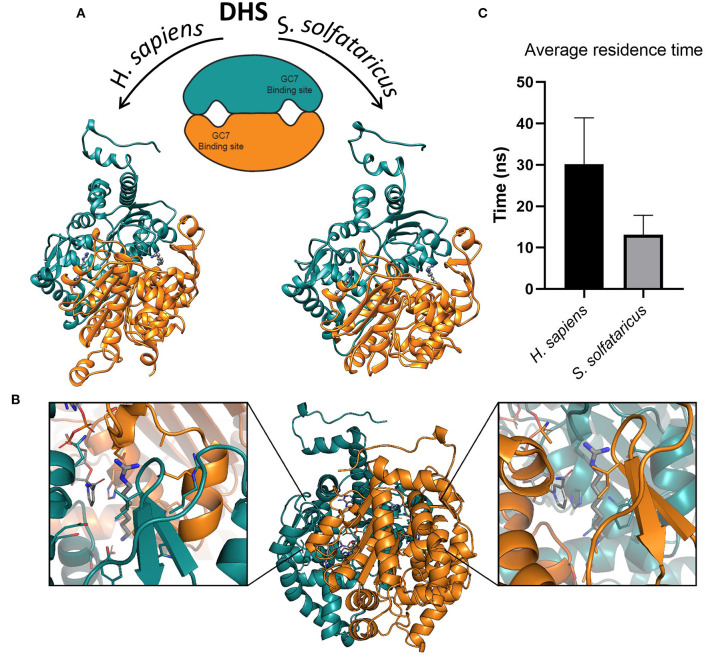
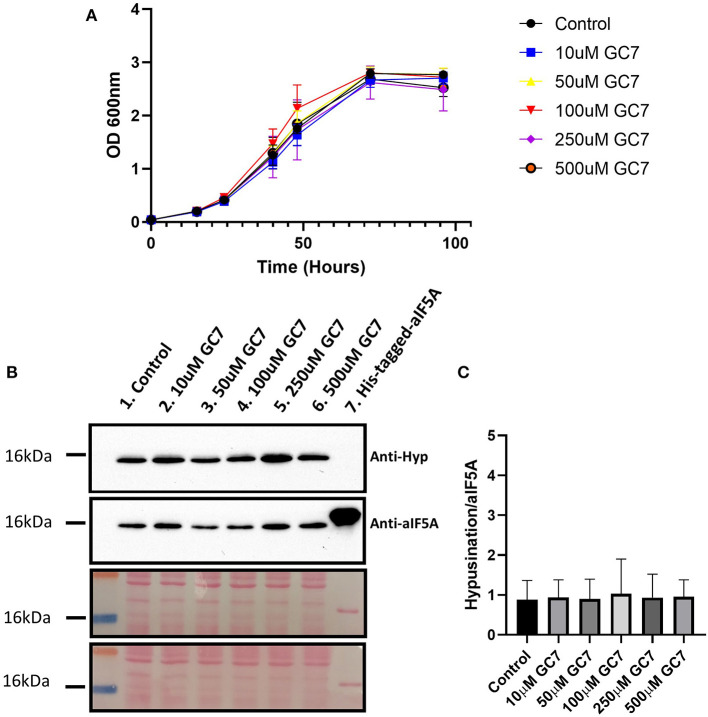
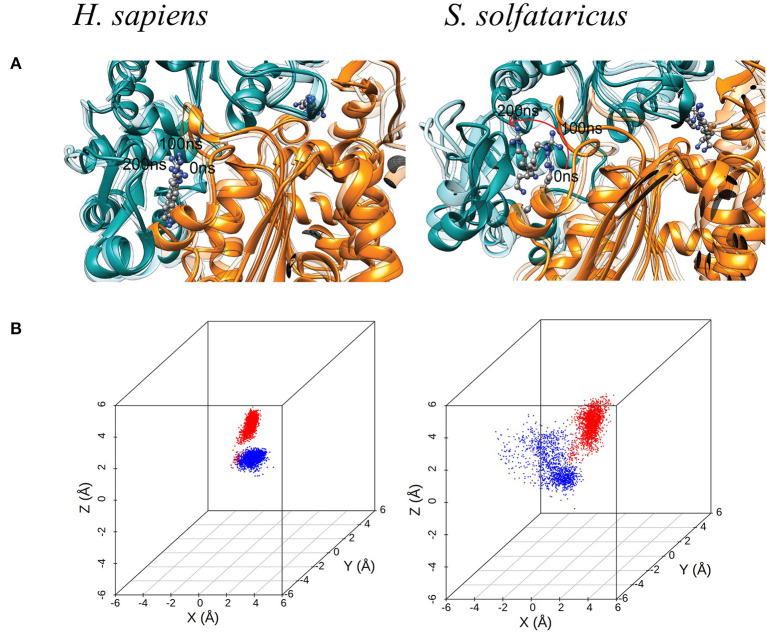
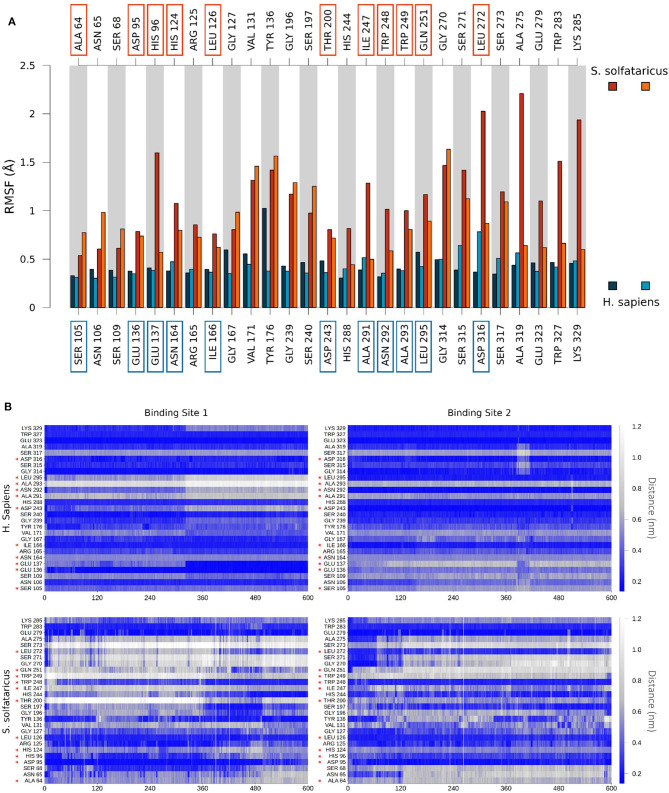
Translation factor 5A (eIF5A) is one of the most conserved proteins involved in protein synthesis. It plays a key role during the elongation of polypeptide chains, and its activity is critically dependent on hypusination, a post-translational modification of a specific lysine residue through two consecutive enzymatic steps carried out by deoxyhypusine synthase (DHS), with spermidine as substrate, and deoxyhypusine hydroxylase (DOHH). It is well-established that eIF5A is overexpressed in several cancer types, and it is involved in various diseases such as HIV-1 infection, malaria, and diabetes; therefore, the development of inhibitors targeting both steps of the hypusination process is considered a promising and challenging therapeutic strategy. One of the most efficient inhibitors of the hypusination process is the spermidine analog N1-guanyl-1,7-diaminoheptane (GC7). GC7 interacts in a specific binding pocket of the DHS completely blocking its activity; however, its therapeutic use is limited by poor selectivity and restricted bioavailability. Here we have performed a comparative study between human DHS (hDHS) and archaeal DHS from crenarchaeon (aDHS) to understand the structural and dynamical features of the GC7 inhibition. The advanced metadynamics (MetaD) classical molecular dynamics simulations show that the GC7 interaction is less stable in the thermophilic enzyme compared to hDHS that could underlie a lower inhibitory capacity of the hypusination process in . To confirm this hypothesis, we have tested GC7 activity on by measuring cellular growth, and results have shown the lack of inhibition of aIF5A hypusination in contrast to the established effect on eukaryotic cellular growth. These results provide, for the first time, detailed molecular insights into the binding mechanism of GC7 to aDHS generating the basis for the design of new and more specific DHS inhibitors.
翻译因子5A(eIF5A)是参与蛋白质合成的最保守的蛋白质之一。它在多肽链延伸过程中起关键作用,其活性严重依赖于hypusination,即通过脱氧hypusine合酶(DHS)以亚精胺为底物进行的两个连续酶促步骤对特定赖氨酸残基进行的翻译后修饰,以及脱氧hypusine羟化酶(DOHH)。众所周知,eIF5A在多种癌症类型中过表达,并参与多种疾病,如HIV-1感染、疟疾和糖尿病;因此,开发针对hypusination过程两个步骤的抑制剂被认为是一种有前景且具有挑战性的治疗策略。hypusination过程最有效的抑制剂之一是亚精胺类似物N1-胍基-1,7-二氨基庚烷(GC7)。GC7在DHS的特定结合口袋中相互作用,完全阻断其活性;然而,其治疗用途受到选择性差和生物利用度受限的限制。在这里,我们对人类DHS(hDHS)和来自泉古菌的古菌DHS(aDHS)进行了比较研究,以了解GC7抑制的结构和动力学特征。先进的元动力学(MetaD)经典分子动力学模拟表明,与hDHS相比,GC7在嗜热酶中的相互作用不太稳定,这可能是其在嗜热酶中对hypusination过程抑制能力较低的原因。为了证实这一假设,我们通过测量细胞生长来测试GC7对嗜热酶的活性,结果表明与对真核细胞生长的既定作用相反,GC7对aIF5A hypusination没有抑制作用。这些结果首次提供了关于GC7与aDHS结合机制的详细分子见解,为设计新的、更特异的DHS抑制剂奠定了基础。