Department of Nephrology and Transplantation Medicine, Wroclaw Medical University, Wroclaw, Poland.
Faculty of Medicine, Wroclaw Medical University, Wroclaw, Poland.
Ren Fail. 2021 Dec;43(1):113-122. doi: 10.1080/0886022X.2020.1865171.
Arteriovenous fistulae (AVFs) may remain patent after kidney transplantation (KTx), contributing to maladaptive cardiac remodeling. The flow in AVFs is associated with the diameter of its vessels and thus with the AVF location. The main objective of this study is to assess the influence of AVF location and its patency on the self-reported quality of life (QOL) of kidney transplant recipients (KTRs) with past history of hemodialysis.
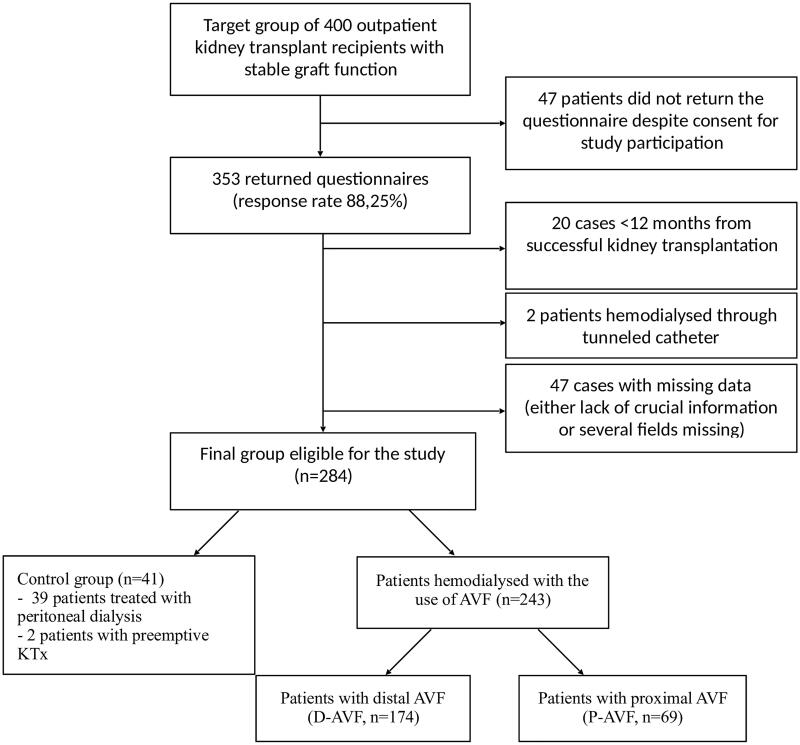
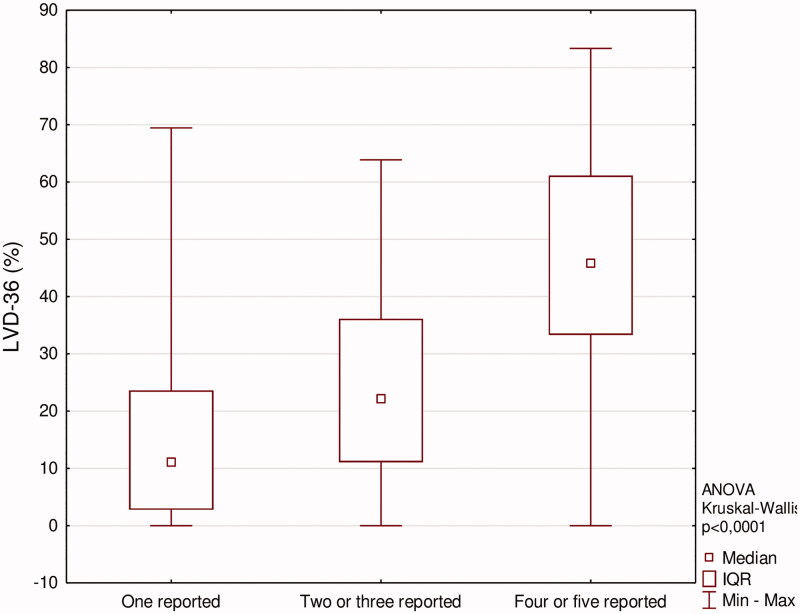
To gain clinical data, during a scheduled visit, 353 KTRs were asked to fill out an anonymous questionnaire. From this group, 284 respondents were found eligible for analysis. The outcome was defined as prevalence of symptoms and health status, measured with the Left Ventricular Dysfunction-36 (LVD-36) Questionnaire in symptomatic patients.
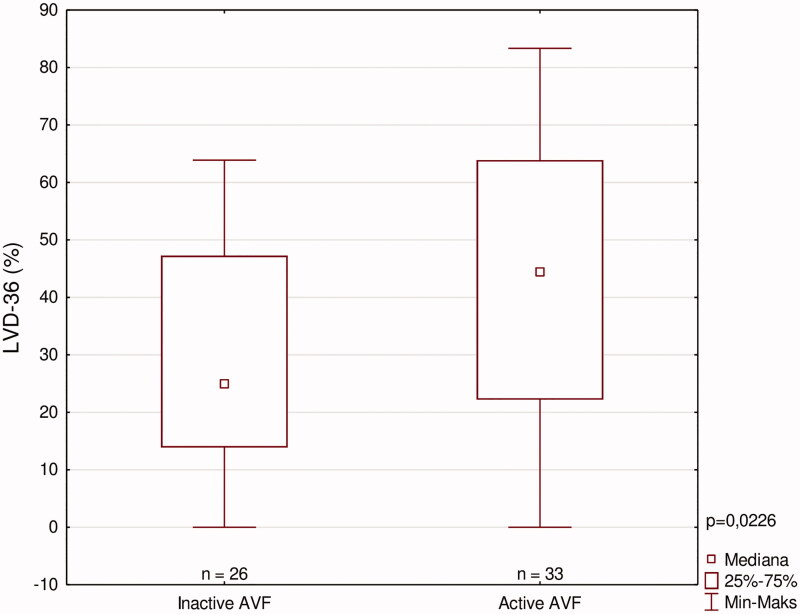
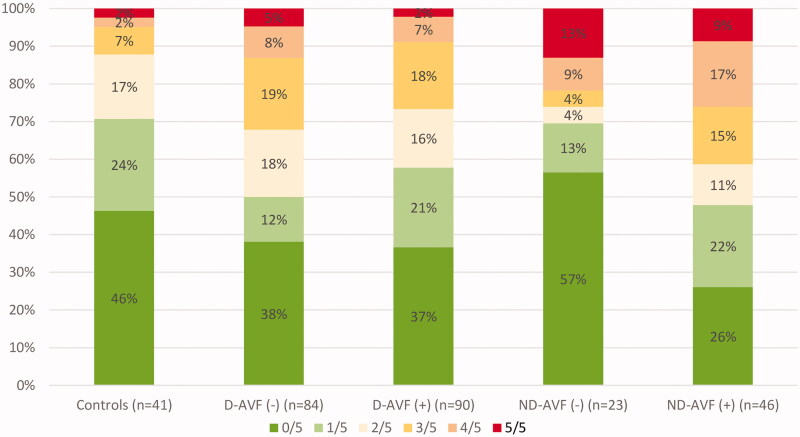
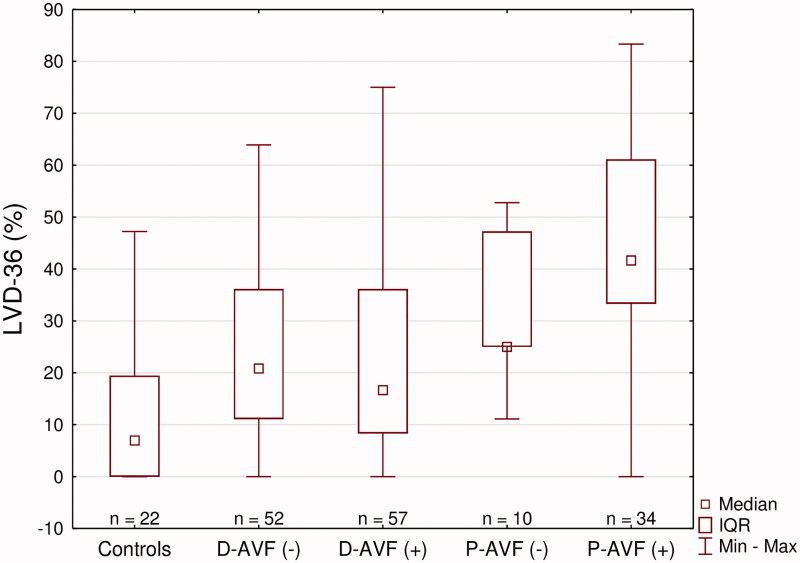
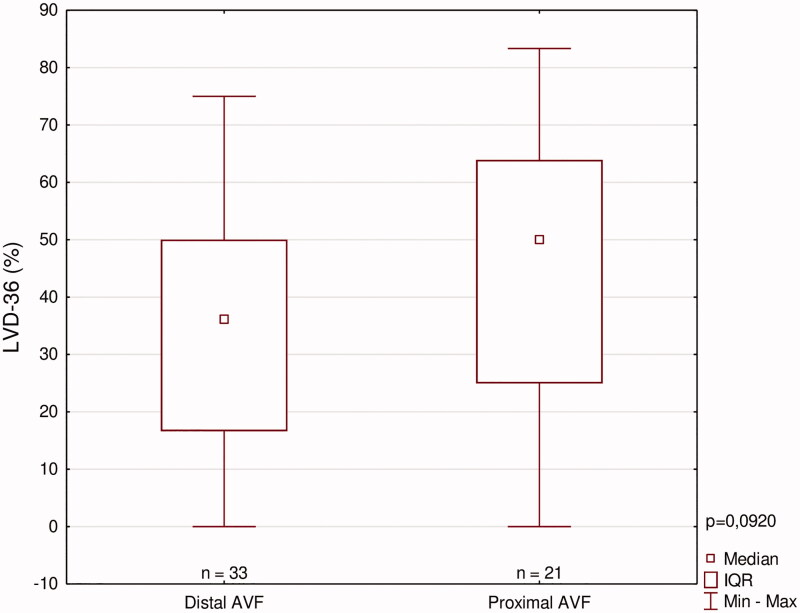
The hemodialysis patients ( = 243) were divided into two groups according to AVF location, i.e., DAVF - distally located AVF - ( = 174) and PAVF - proximally located AVF - ( = 69). The proportion of patients with heart failure (HF) was higher in PAVF group (24% vs. 12%, = 0.0482). In the multivariable regression, PAVF, serum creatinine levels, and the presence of HF or coronary artery disease (CAD) remained independent predictors of lower functional capacity. Among patients with heart disease, the presence of active AVF was independently associated with worse functional outcome (higher LVD-36 scores).
The influence of persistent PAVF in KTRs seems to be unfavorable, especially when coexisting with CAD or HF. AVF arteriovenous fistula; BMI body mass index; CAD coronary artery disease; D-AVF distally-located arteriovenous fistula; EC exercise capacity; HD hemodialysis; HF heart failure; KTx kidney transplantation; KTR kidney transplant recipient; LVD-36 Left Ventricle Disfunction - 36; LVEF left ventricle ejection fraction; LVH left ventricle hypertrophy; NYHA New York Heart Association; P-AVF proximally located arteriovenous fistula; PD peritoneal dialysis; PRO patient-reported outcomes; QOL quality of life.
动静脉瘘(AVF)在肾移植(KTx)后可能仍然通畅,导致适应性心脏重构。AVF 中的血流与血管直径相关,因此与 AVF 位置相关。本研究的主要目的是评估 AVF 位置及其通畅性对既往血液透析的肾移植受者(KTR)自我报告的生活质量(QOL)的影响。
为了获得临床数据,在一次预定的就诊中,353 名 KTR 被要求填写一份匿名问卷。从这组中,发现 284 名受访者符合分析条件。结果定义为症状和健康状况的患病率,通过左心室功能障碍 36 问卷(LVD-36)在有症状的患者中进行测量。
血液透析患者( = 243)根据 AVF 位置分为两组,即远位 AVF(DAVF)( = 174)和近位 AVF(PAVF)( = 69)。PAVF 组心力衰竭(HF)的患者比例更高(24%比 12%, = 0.0482)。在多变量回归中,PAVF、血清肌酐水平以及 HF 或冠状动脉疾病(CAD)的存在仍然是功能性容量降低的独立预测因素。在患有心脏病的患者中,活动性 AVF 的存在与较差的功能结果(更高的 LVD-36 评分)独立相关。
持续存在的 PAVF 在 KTR 中的影响似乎不利,尤其是在合并 CAD 或 HF 时。