School of Medicine, University of Leeds, Leeds, UK.
Department of Breast Surgery, Leeds Teaching Hospitals NHS Trust, Leeds, UK.
Br J Cancer. 2021 Mar;124(6):1110-1120. doi: 10.1038/s41416-020-01226-4. Epub 2021 Jan 4.
Triple negative breast cancers (TNBC) have poor prognoses despite aggressive treatment with cytotoxic chemotherapy. Cancer-associated fibroblasts (CAFs) are prominent in tumour stroma. Our hypothesis was that CAFs modulate chemotherapy sensitivity.
TNBC cells and breast fibroblasts were cultured; survival after chemotherapeutics was assessed using luciferase or clonogenic assays. Signalling was investigated using transcriptomics, reporters, recombinant proteins and blocking antibodies. Clinical relevance was investigated using immunohistochemistry.
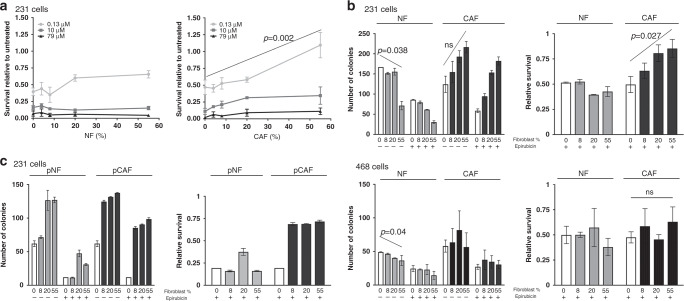
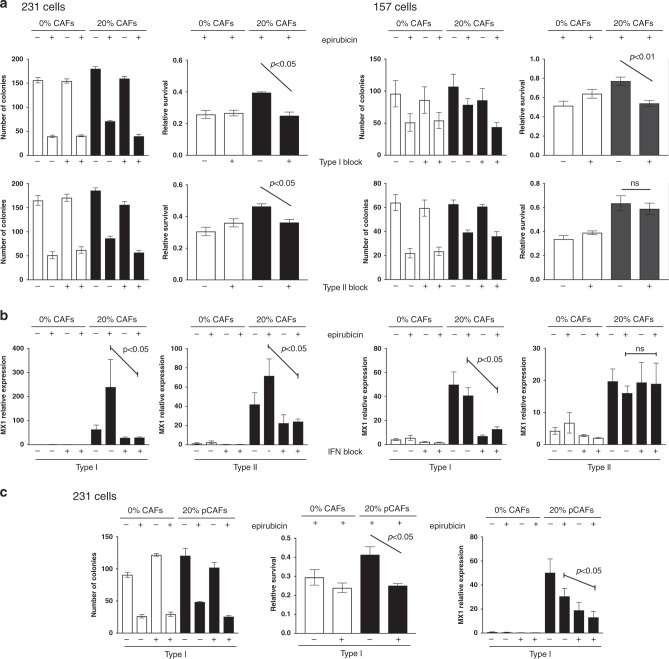
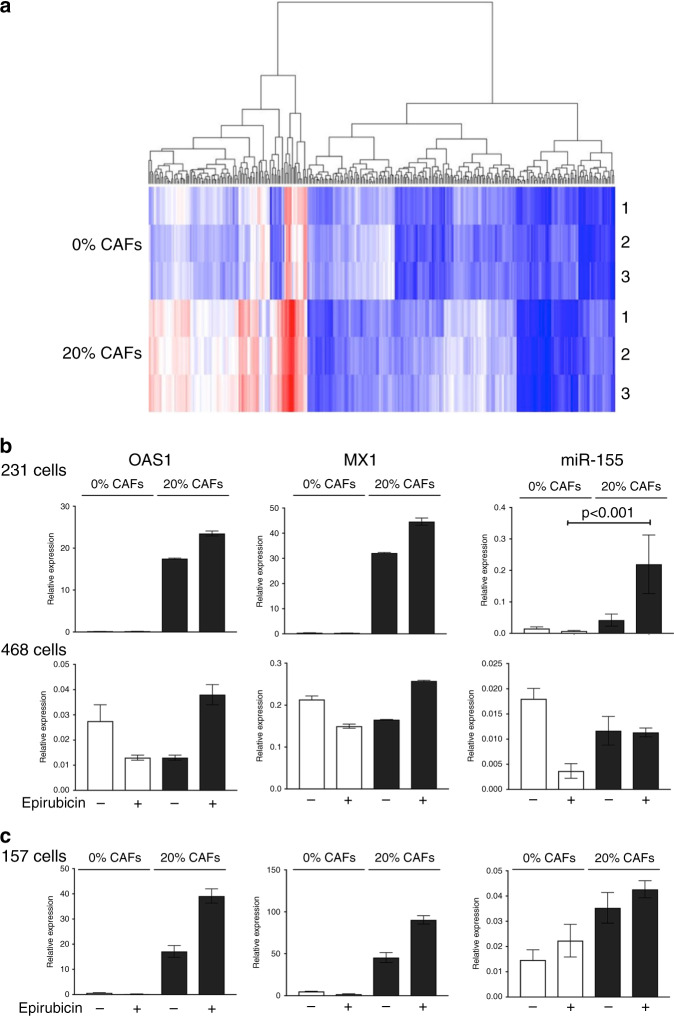
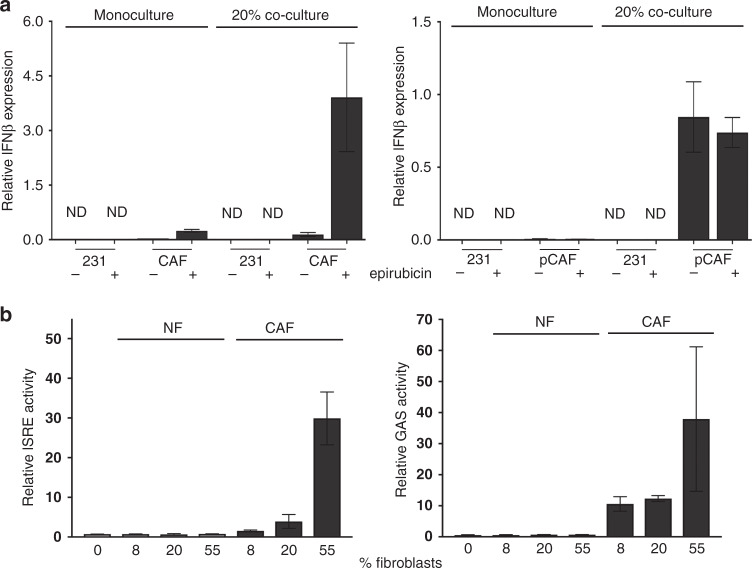
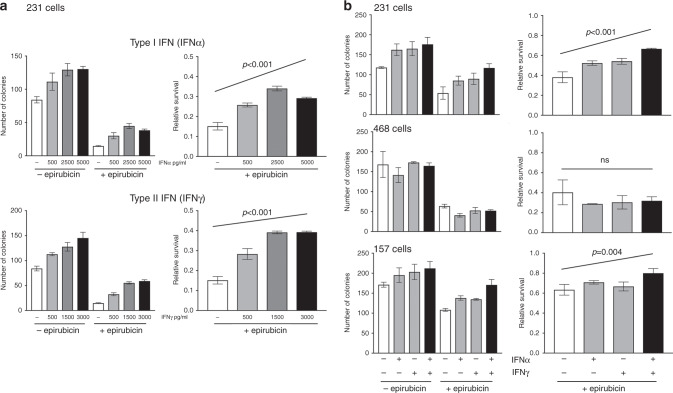
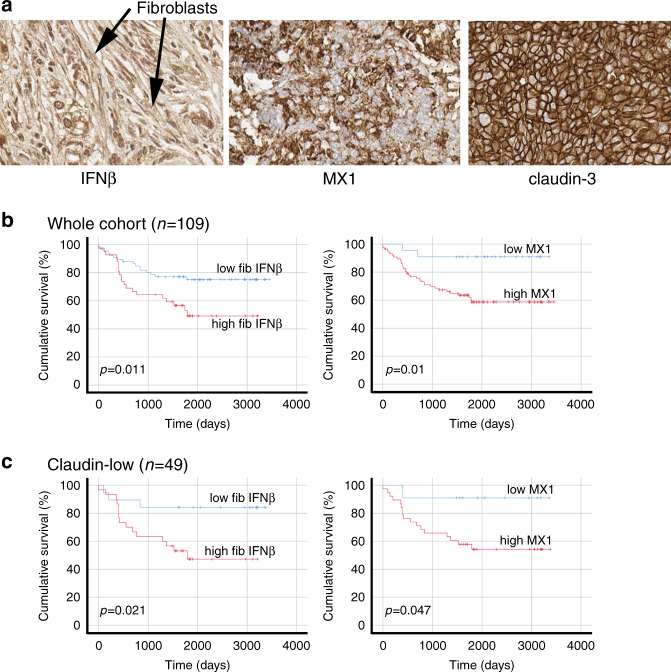
Breast CAFs dose-dependently protected TNBC cell lines MDA-MB-231 and MDA-MB-157, but not MDA-MB-468s, from chemotherapy. CAF-induced protection was associated with interferon (IFN) activation. CAFs were induced to express IFNβ1 by chemotherapy and TNBC co-culture, leading to paracrine activation in cancer cells. Recombinant IFNs were sufficient to protect MDA-MB-231 and MDA-MB-157 but not MDA-MB-468 cells. In TNBC patients, IFNβ1 expression in CAFs correlated with cancer cell expression of MX1, a marker of activated IFN signalling. High expression of IFNβ1 (CAFs) or MX1 (tumour cells) correlated with reduced survival after chemotherapy, especially in claudin-low tumours (which MDA-MB-231 and MDA-MB-157 cells represent). Antibodies that block IFN receptors reduced CAF-dependent chemoprotection.
CAF-induced activation of IFN signalling in claudin-low TNBCs results in chemoresistance. Inhibition of this pathway represents a novel method to improve breast cancer outcomes.
尽管采用细胞毒性化疗进行积极治疗,三阴性乳腺癌(TNBC)的预后仍较差。癌症相关成纤维细胞(CAF)在肿瘤基质中很突出。我们的假设是 CAF 调节化疗敏感性。
培养 TNBC 细胞和乳腺成纤维细胞;使用荧光素酶或集落形成测定法评估化疗后的存活率。使用转录组学、报告基因、重组蛋白和阻断抗体研究信号转导。使用免疫组织化学研究临床相关性。
乳腺 CAF 以剂量依赖的方式保护 TNBC 细胞系 MDA-MB-231 和 MDA-MB-157,但不能保护 MDA-MB-468s 免受化疗。CAF 诱导的保护与干扰素(IFN)激活有关。化疗和 TNBC 共培养诱导 CAF 表达 IFNβ1,导致癌细胞中的旁分泌激活。重组 IFN 足以保护 MDA-MB-231 和 MDA-MB-157 细胞,但不能保护 MDA-MB-468 细胞。在 TNBC 患者中,CAF 中 IFNβ1 的表达与癌症细胞中 MX1 的表达相关,MX1 是激活 IFN 信号的标志物。IFNβ1(CAFs)或 MX1(肿瘤细胞)高表达与化疗后生存时间缩短相关,尤其是在 Claudin-low 肿瘤中(MDA-MB-231 和 MDA-MB-157 细胞代表)。阻断 IFN 受体的抗体减少了 CAF 依赖性的化学保护。
CAF 在 Claudin-low TNBC 中诱导的 IFN 信号激活导致化疗耐药。抑制该途径代表了改善乳腺癌结局的新方法。