Yang Shuo, Tian Meijie, Dai Yulong, Feng Shengyong, Wang Yunyun, Chhangani Deepak, Ou Tiffany, Li Wenle, Yang Ze, McAdow Jennifer, Rincon-Limas Diego E, Yin Xin, Tai Wanbo, Cheng Gong, Johnson Aaron
Department of Developmental Biology, Washington University School of Medicine in St. Louis, St. Louis, MO 63110, USA.
Genetics Branch, Oncogenomics Section, National Cancer Institute, NIH, Bethesda, MD 20892, USA.
bioRxiv. 2022 Nov 9:2020.12.20.423533. doi: 10.1101/2020.12.20.423533.
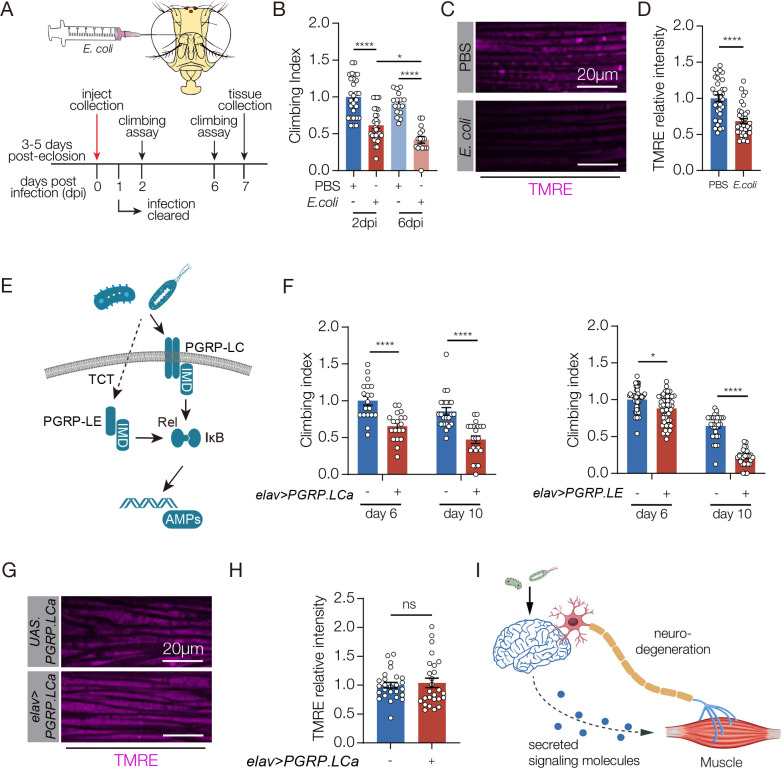
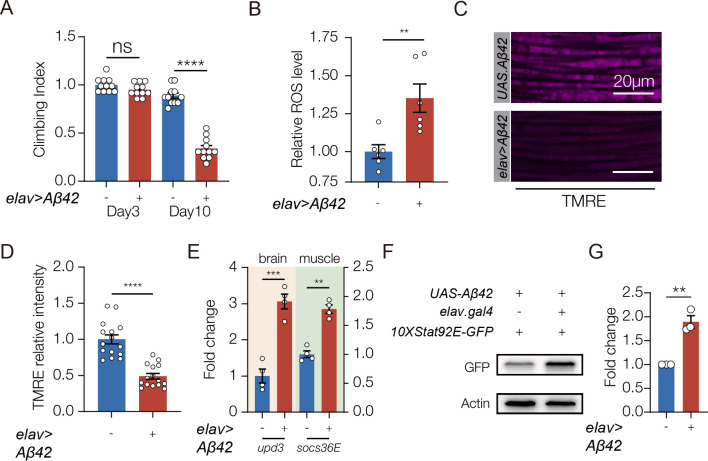
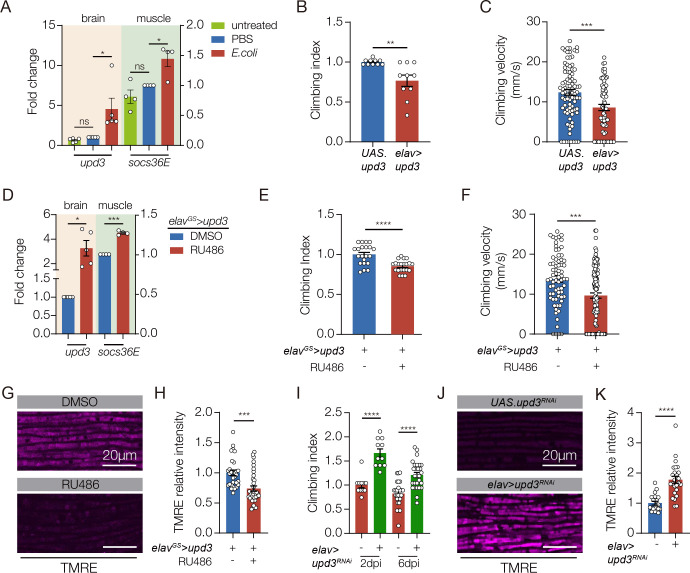
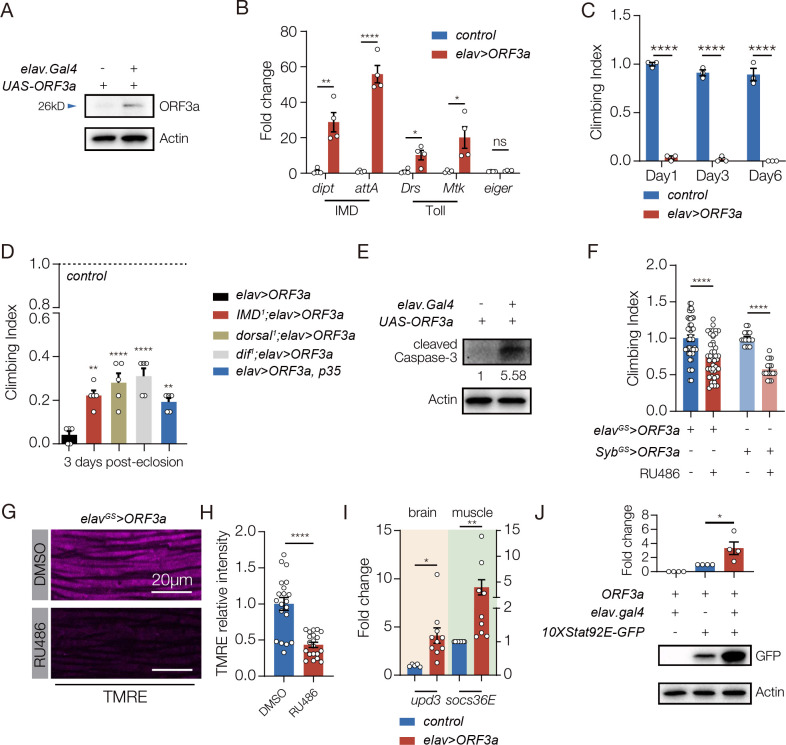
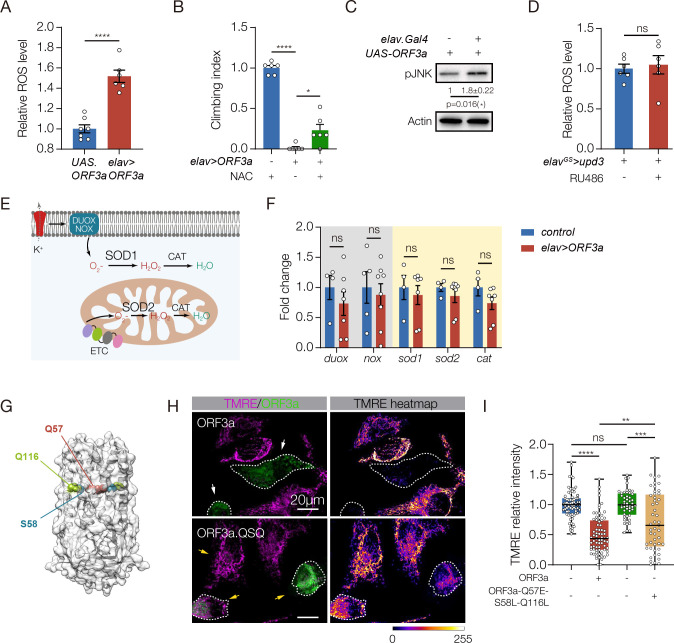
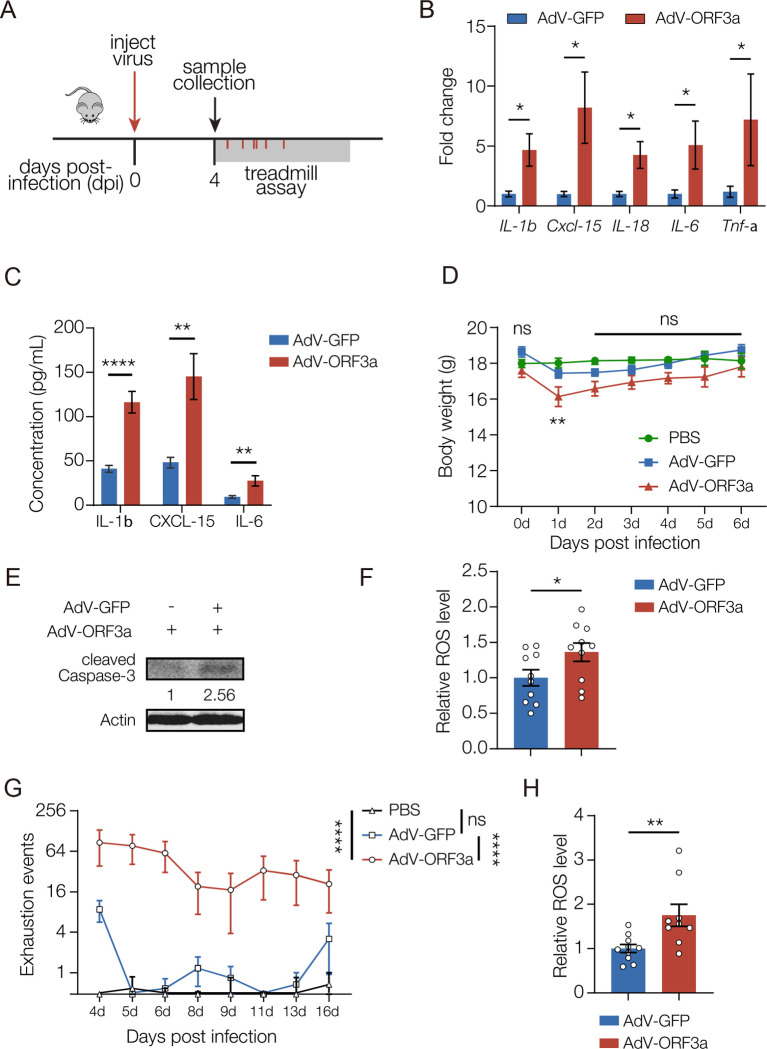
Infections and neurodegenerative diseases induce neuroinflammation, but affected individuals often show a number of non-neural symptoms including muscle pain and muscle fatigue. The molecular pathways by which neuroinflammation causes pathologies outside the central nervous system (CNS) are poorly understood, so we developed three models to investigate the impact of neuroinflammation on muscle performance. We found that bacterial infection, COVID-like viral infection, and expression of a neurotoxic protein associated with Alzheimer' s disease promoted the accumulation of reactive oxygen species (ROS) in the brain. Excessive ROS induces the expression of the cytokine Unpaired 3 (Upd3) in insects, or its orthologue IL-6 in mammals, and CNS-derived Upd3/IL-6 activates the JAK/Stat pathway in skeletal muscle. In response to JAK/Stat signaling, mitochondrial function is impaired and muscle performance is reduced. Our work uncovers a brain-muscle signaling axis in which infections and chronic diseases induce cytokine-dependent changes in muscle performance, suggesting IL-6 could be a therapeutic target to treat muscle weakness caused by neuroinflammation.
感染和神经退行性疾病会引发神经炎症,但受影响的个体通常会出现一些非神经症状,包括肌肉疼痛和肌肉疲劳。神经炎症导致中枢神经系统(CNS)以外部位病变的分子途径尚不清楚,因此我们开发了三种模型来研究神经炎症对肌肉性能的影响。我们发现细菌感染、类新冠病毒感染以及与阿尔茨海默病相关的神经毒性蛋白的表达会促进大脑中活性氧(ROS)的积累。过量的ROS会诱导昆虫体内细胞因子Unpaired 3(Upd3)的表达,或其在哺乳动物中的同源物白细胞介素-6(IL-6)的表达,并且源自中枢神经系统的Upd3/IL-6会激活骨骼肌中的JAK/Stat信号通路。作为对JAK/Stat信号的响应,线粒体功能受损,肌肉性能下降。我们的研究揭示了一条脑-肌肉信号轴,其中感染和慢性疾病会诱导肌肉性能发生细胞因子依赖性变化,这表明IL-6可能是治疗神经炎症引起的肌肉无力的一个治疗靶点。