Virga Federico, Quirico Lorena, Cucinelli Stefania, Mazzone Massimiliano, Taverna Daniela, Orso Francesca
Molecular Biotechnology Center (MBC), University of Torino, 10126 Torino, Italy.
Department Molecular Biotechnology and Health Sciences, University of Torino, 10126 Torino, Italy.
Cancers (Basel). 2021 Jan 3;13(1):127. doi: 10.3390/cancers13010127.
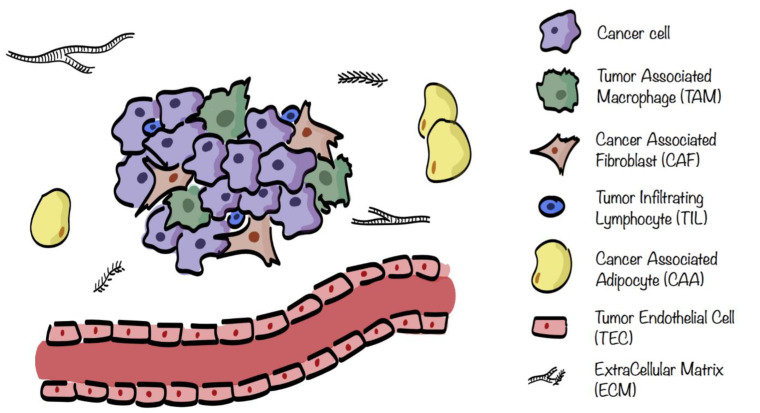
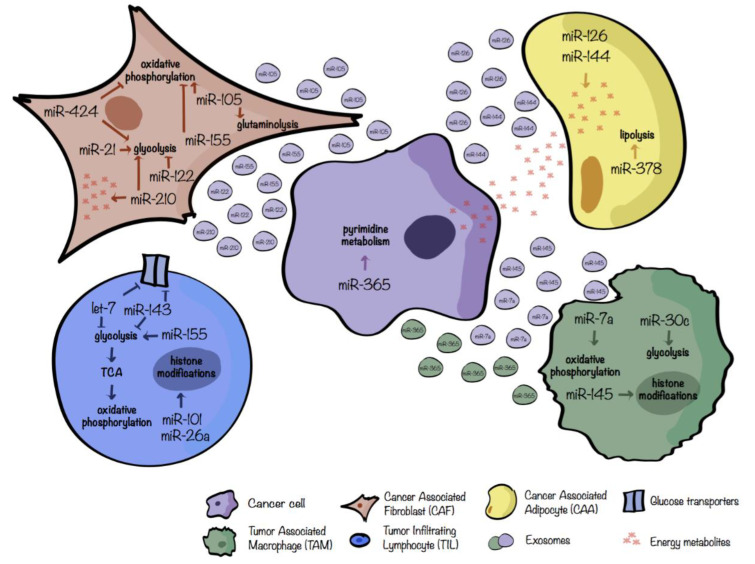
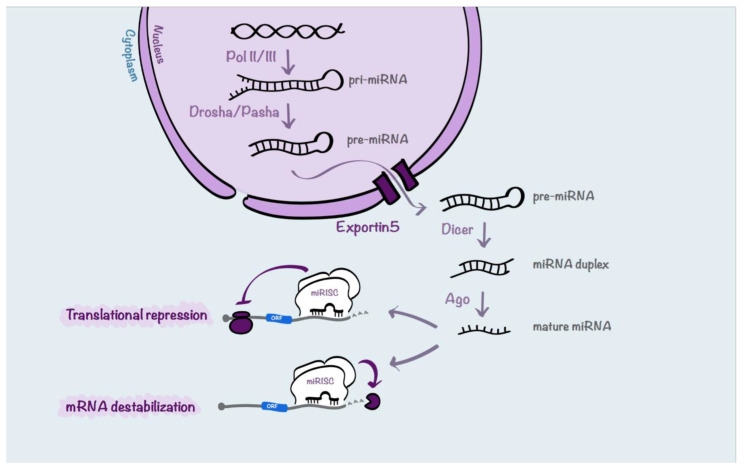
The metabolism of cancer cells is generally very different from what is found in normal counterparts. However, in a tumor mass, the continuous crosstalk and competition for nutrients and oxygen among different cells lead to metabolic alterations, not only in cancer cells, but also in the different stromal and immune cells of the tumor microenvironment (TME), which are highly relevant for tumor progression. MicroRNAs (miRs) are small non-coding RNAs that silence their mRNA targets post-transcriptionally and are involved in numerous physiological cell functions as well as in the adaptation to stress situations. Importantly, miRs can also be released via extracellular vesicles (EVs) and, consequently, take part in the bidirectional communication between tumor and surrounding cells under stress conditions. Certain miRs are abundantly expressed in stromal and immune cells where they can regulate various metabolic pathways by directly suppressing enzymes or transporters as well as by controlling important regulators (such as transcription factors) of metabolic processes. In this review, we discuss how miRs can induce metabolic reprogramming in stromal (fibroblasts and adipocytes) and immune (macrophages and T cells) cells and, in turn, how the biology of the different cells present in the TME is able to change. Finally, we debate the rebound of miR-dependent metabolic alterations on tumor progression and their implications for cancer management.
癌细胞的代谢通常与正常细胞有很大不同。然而,在肿瘤块中,不同细胞之间持续的串扰以及对营养物质和氧气的竞争会导致代谢改变,不仅癌细胞会发生这种改变,肿瘤微环境(TME)中不同的基质细胞和免疫细胞也会如此,而这些改变与肿瘤进展高度相关。微小RNA(miRs)是小的非编码RNA,它们在转录后使mRNA靶标沉默,并参与众多生理细胞功能以及对应激情况的适应。重要的是,miRs也可以通过细胞外囊泡(EVs)释放,因此,在应激条件下参与肿瘤细胞与周围细胞之间的双向通讯。某些miRs在基质细胞和免疫细胞中大量表达,在这些细胞中,它们可以通过直接抑制酶或转运蛋白以及控制代谢过程的重要调节因子(如转录因子)来调节各种代谢途径。在这篇综述中,我们讨论了miRs如何在基质细胞(成纤维细胞和脂肪细胞)和免疫细胞(巨噬细胞和T细胞)中诱导代谢重编程,以及反过来,TME中不同细胞的生物学特性如何发生变化。最后,我们探讨了miR依赖的代谢改变对肿瘤进展的影响及其对癌症治疗的意义。