Department of Biomedical Sciences, Istituto di Ricerca Pediatrica, University of Padova, Fondazione Città della Speranza, Padova, Italy.
Department of Biosciences, Biotechnologies and Biopharmaceutics, University of Bari, Bari, Italy.
Front Immunol. 2019 Jul 3;10:1462. doi: 10.3389/fimmu.2019.01462. eCollection 2019.
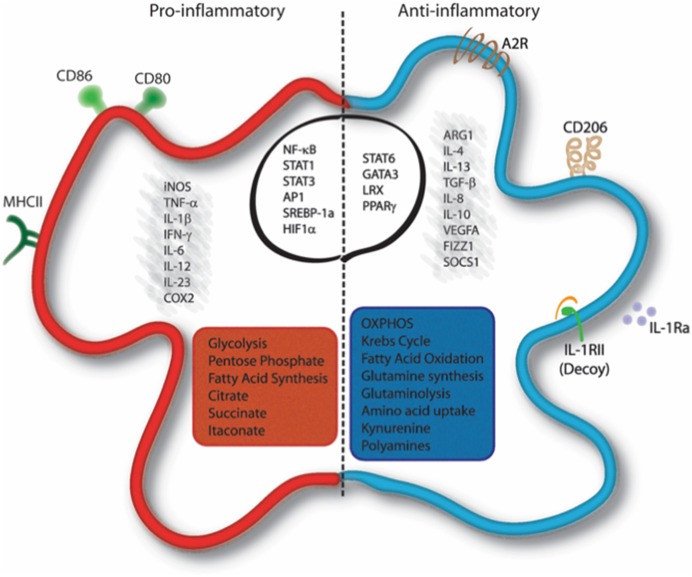
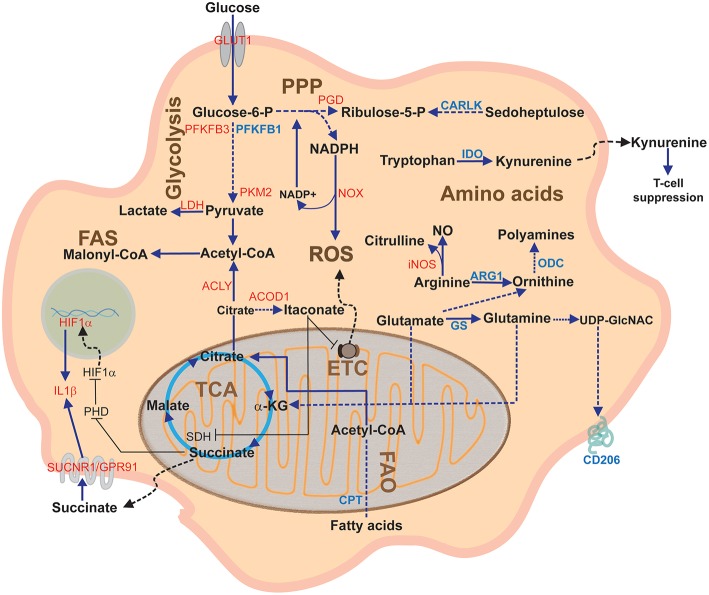
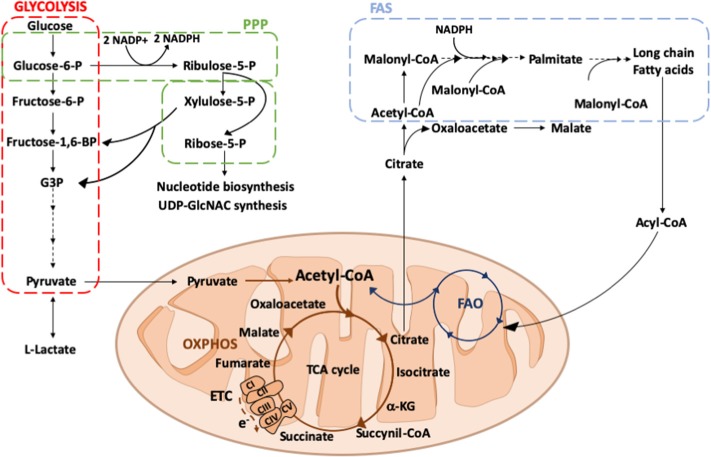
Macrophages are a heterogeneous population of immune cells playing several and diverse functions in homeostatic and immune responses. The broad spectrum of macrophage functions depends on both heterogeneity and plasticity of these cells, which are highly specialized in sensing the microenvironment and modify their properties accordingly. Although it is clear that macrophage phenotypes are difficult to categorize and should be seen as plastic and adaptable, they can be simplified into two extremes: a pro-inflammatory (M1) and an anti-inflammatory/pro-resolving (M2) profile. Based on this definition, M1 macrophages are able to start and sustain inflammatory responses, secreting pro-inflammatory cytokines, activating endothelial cells, and inducing the recruitment of other immune cells into the inflamed tissue; on the other hand, M2 macrophages promote the resolution of inflammation, phagocytose apoptotic cells, drive collagen deposition, coordinate tissue integrity, and release anti-inflammatory mediators. Dramatic switches in cell metabolism accompany these phenotypic and functional changes of macrophages. In particular, M1 macrophages rely mainly on glycolysis and present two breaks on the TCA cycle that result in accumulation of itaconate (a microbicide compound) and succinate. Excess of succinate leads to Hypoxia Inducible Factor 1α (HIF1α) stabilization that, in turn, activates the transcription of glycolytic genes, thus sustaining the glycolytic metabolism of M1 macrophages. On the contrary, M2 cells are more dependent on oxidative phosphorylation (OXPHOS), their TCA cycle is intact and provides the substrates for the complexes of the electron transport chain (ETC). Moreover, pro- and anti-inflammatory macrophages are characterized by specific pathways that regulate the metabolism of lipids and amino acids and affect their responses. All these metabolic adaptations are functional to support macrophage activities as well as to sustain their polarization in specific contexts. The aim of this review is to discuss recent findings linking macrophage functions and metabolism.
巨噬细胞是一种异质性的免疫细胞群体,在维持内稳态和免疫反应中发挥着多种不同的功能。巨噬细胞功能的广泛谱取决于这些细胞的异质性和可塑性,它们高度专门化于感知微环境并相应地改变其特性。尽管很明显,巨噬细胞表型难以归类,并且应该被视为具有可塑性和适应性,但它们可以简化为两个极端:促炎(M1)和抗炎/促解决(M2)表型。基于这个定义,M1 巨噬细胞能够启动和维持炎症反应,分泌促炎细胞因子,激活内皮细胞,并诱导其他免疫细胞招募到炎症组织中;另一方面,M2 巨噬细胞促进炎症的解决,吞噬凋亡细胞,驱动胶原蛋白沉积,协调组织完整性,并释放抗炎介质。巨噬细胞的表型和功能变化伴随着细胞代谢的剧烈转变。特别是,M1 巨噬细胞主要依赖糖酵解,并且 TCA 循环中有两个断裂,导致异丁酸盐(一种抑菌化合物)和琥珀酸的积累。琥珀酸过量导致缺氧诱导因子 1α(HIF1α)的稳定化,进而激活糖酵解基因的转录,从而维持 M1 巨噬细胞的糖酵解代谢。相反,M2 细胞更依赖于氧化磷酸化(OXPHOS),它们的 TCA 循环完整,并为电子传递链(ETC)的复合物提供底物。此外,促炎和抗炎巨噬细胞具有调节脂质和氨基酸代谢的特定途径,并影响它们的反应。所有这些代谢适应都是为了支持巨噬细胞的活动并在特定环境中维持它们的极化。本综述的目的是讨论将巨噬细胞功能和代谢联系起来的最新发现。